


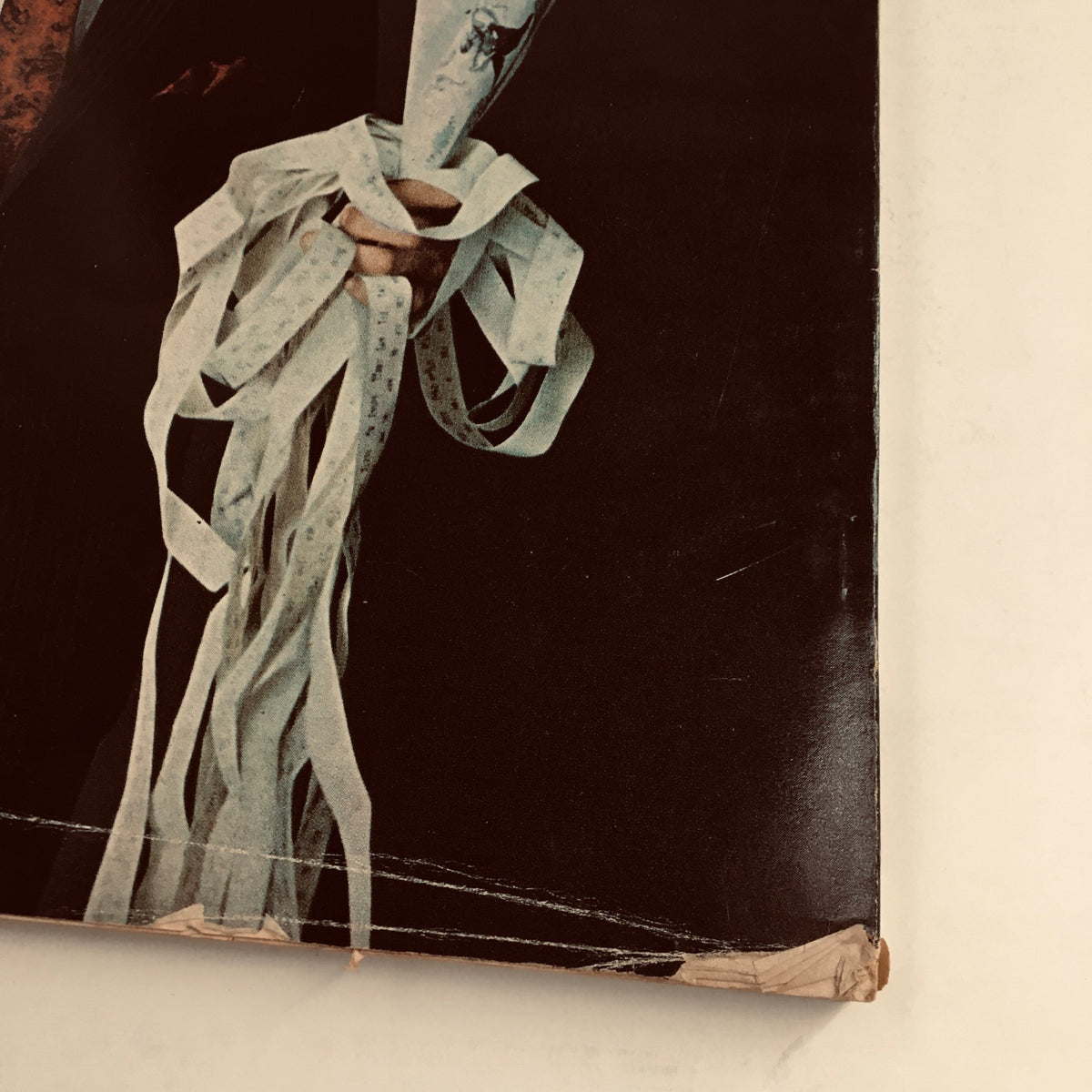


Description
Collector's Note – Why This Issue Matters
The April 1966 issue of Esquire featuring the cover story "The Problems of Power" on Frank Sinatra arrived at a fascinating and complicated moment in the singer's public life. By 1966, Sinatra was 50 years old and operating at a level of cultural authority that few entertainers had ever achieved or sustained. He had rebuilt his career spectacularly after the early 1950s nadir, won an Academy Award for From Here to Eternity, founded Reprise Records, released a string of landmark Capitol albums that redefined the American popular song, and accumulated a degree of social and political influence — through his connections to the Kennedy White House, the Rat Pack's dominance of Las Vegas, and his sheer gravitational pull on the entertainment industry — that made him genuinely unusual among celebrities of any era. The framing of an Esquire cover story around "the problems of power" rather than fame or music signals something important: by 1966, Sinatra was being written about not merely as an entertainer but as a kind of institution, a figure whose relationship to authority, influence, and control was itself a subject worthy of serious examination. For collectors tracing Sinatra's arc through the American press across four decades, the Frank Sinatra magazine archive documents that presence with remarkable depth and range.
The mid-1960s were also a period of genuine creative renewal for Sinatra. In 1966 alone he would release Strangers in the Night — his first number-one single in over a decade — and record September of My Years had just won him Grammy Awards for Album of the Year and Best Male Vocal Performance in February of that year. He was simultaneously a figure of the establishment and someone the counterculture couldn't quite dismiss, too talented and too forceful a personality to be written off as yesterday's news even as rock and roll was reshaping the entire landscape of American popular music. Esquire in 1966 was precisely the right publication to take the measure of that contradictory cultural position — serious, literary, and willing to engage with celebrity as a subject of genuine intellectual inquiry. Collectors building a comprehensive record of 1960s American magazine culture will find the Esquire magazine archive one of the most substantive resources available, and the 1966 magazine collection provides essential context for the broader cultural landscape in which this issue appeared.
About the Publication
Esquire was founded in 1933 by Arnold Gingrich and David Smart, and by the mid-1960s had established itself as the most intellectually ambitious men's magazine in the United States. Under editor Harold Hayes, who led the publication from 1961 to 1973, Esquire became a central venue for the New Journalism — publishing landmark work by Tom Wolfe, Gay Talese, Norman Mailer, and Garry Wills, among others — while maintaining its authority on fashion, culture, and the intersection of celebrity with American life. Its covers, designed largely by art director George Lois during this period, were among the most provocative and visually striking in American publishing. The magazine's readership in 1966 was educated, culturally engaged, and broadly interested in the kind of serious long-form writing about power, fame, and American identity that a Frank Sinatra cover story represented at its best.
Key Highlights Inside
- "The Problems of Power" — Frank Sinatra cover story: The issue's central feature examines Sinatra's complex relationship with power and influence, treating him as a cultural and quasi-political figure rather than simply an entertainer — a framing consistent with Esquire's New Journalism approach to celebrity in this period.
- Sinatra at a career peak: The issue appeared in the same year Sinatra released Strangers in the Night and received Grammy recognition for September of My Years, placing this profile at the intersection of his commercial resurgence and his deepening establishment authority.
- Label-free newsstand presentation: The absence of a subscription label means the cover — including whatever George Lois-era visual treatment accompanied the Sinatra story — is presented exactly as it appeared on newsstands in April 1966.
- Note on interior specifics: Detailed article titles, additional features, and page-by-page editorial content beyond the Sinatra cover story are unconfirmed in available listing documentation. The above reflects what is verifiable from the cover subject, publication date, and known editorial character of Esquire during the Hayes era.
Condition & Rarity
Esquire issues from the mid-1960s Hayes era are among the more actively collected of any American magazine from the decade, driven by the combination of landmark journalism, iconic cover art, and the publication's central role in the New Journalism movement. The condition profile described here — good overall with minor wear typical for age, no subscription label, and a protective plastic sleeve — represents a solid example of a nearly sixty-year-old coated-paper magazine that has been stored rather than discarded. The absence of a label is a meaningful positive attribute: Esquire covers from this period frequently featured bold, graphically distinctive designs by art director George Lois, and label adhesive damage to the cover face is among the most common condition problems encountered on subscriber copies. A clean, label-free cover preserves the visual integrity of what was, in this era, genuinely significant graphic design work. Minor age-related wear is expected and accepted on issues of this vintage; what collectors prioritize is spine integrity, page completeness, and cover surface condition, all of which appear satisfactory here. The plastic sleeve housing is the correct long-term storage approach for ungraded magazines of this period.
Looking for More Issues Like This?
Mid-1960s Esquire issues with major celebrity cover stories are among the most sought-after in the vintage American magazine market, and Sinatra-specific issues draw collectors from multiple directions — music history, film history, political history, and the New Journalism tradition all converge on a single cover. The Frank Sinatra magazine collection is the most direct place to continue the search, bringing together his most significant press appearances across decades and publications. The full Esquire archive is essential browsing for anyone serious about mid-century American magazine history, and the 1966 magazines collection offers a rich broader picture of what was on American newsstands during one of the most turbulent and creatively fertile years of the decade.