


Description
Collector's Note – Why This Issue Matters
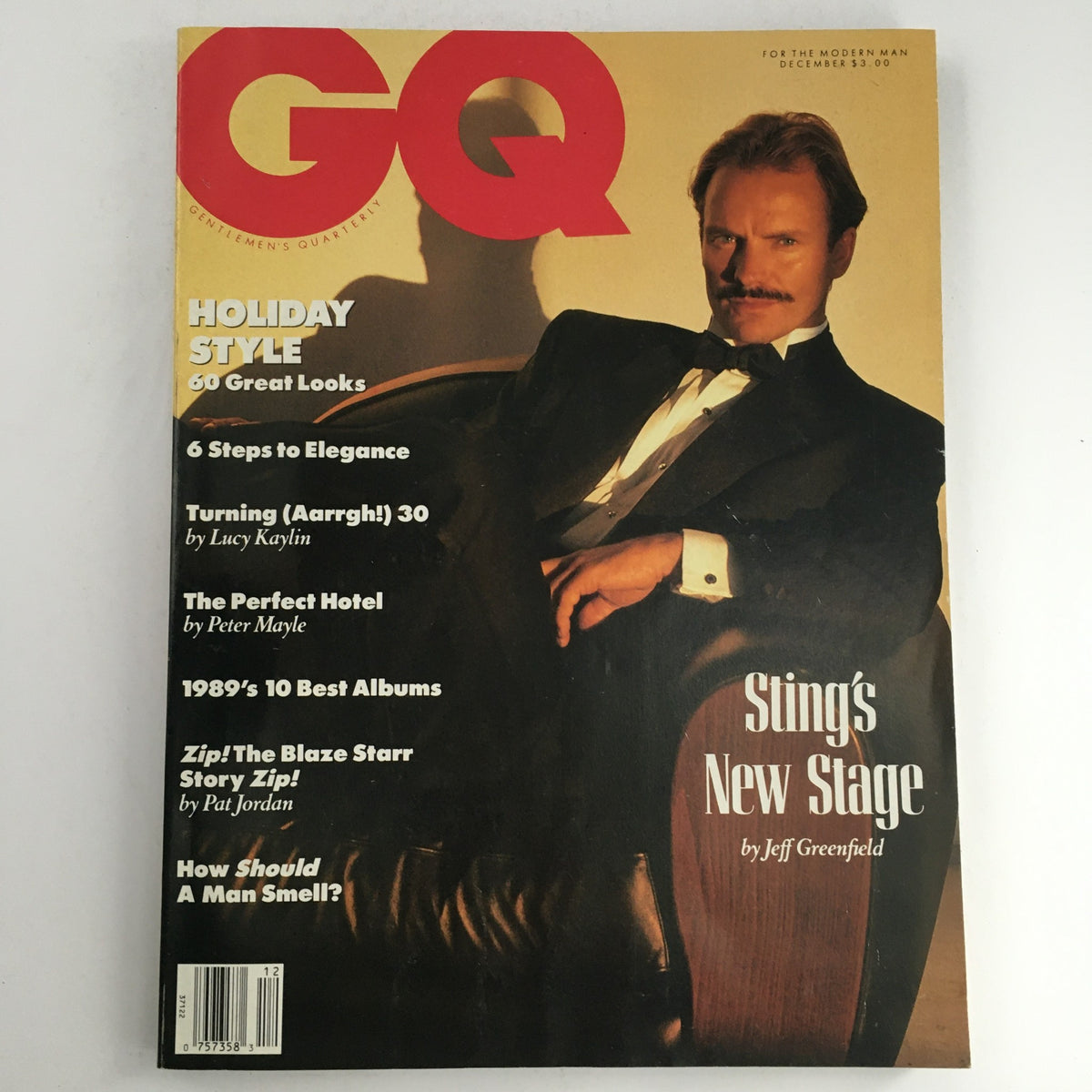
The December 1989 issue of GQ featuring Sting with the cover lines "Sting's New Stage" and "The Perfect Hotel" documents one of the most creatively fertile and publicly visible periods in the musician's solo career — and the specific framing of the feature as being about a "new stage" captures something precise about where Sting stood in December 1989. He had released ...Nothing Like the Sun in 1987, the second of his critically acclaimed solo albums, and was at work on what would become The Soul Cages, eventually released in 1991 — an album widely regarded as one of his most personal and artistically ambitious works, a meditation on grief, his relationship with his father, and the industrial landscape of his Tyneside childhood. The reference to a "new stage" in late 1989 therefore catches him in a genuinely transitional moment, between the commercial success and creative momentum of his mid-1980s solo breakthrough and the deeper, more introspective work that was taking shape. Sting had also, by 1989, become one of the most prominent celebrity activists of the decade — his work with Amnesty International, his advocacy for the Amazon rainforest and the Kayapó people of Brazil, and his visible engagement with political causes had given him a public identity that extended well beyond music into culture, politics, and lifestyle in precisely the way that a GQ cover profile was suited to explore. For collectors building a comprehensive archive of Sting's appearances in major American print media across his solo career, this December 1989 GQ cover is a primary document of one of the most multi-dimensional public figures of the era at a specific and historically interesting career moment.
The broader editorial context of December 1989 GQ rewards attention for the historical dimensions it adds to this issue's significance. Art Cooper's editorial reinvention of the magazine — which had begun when he took over as editor-in-chief in 1983 — had by 1989 produced a publication that was genuinely serious about the cultural and political dimensions of masculinity in ways that distinguished it from conventional men's lifestyle publishing. A Sting cover in this context was not simply a celebrity placement but an editorial statement about what an ambitious, culturally engaged man in 1989 looked like — an artist who made genuinely ambitious music, engaged seriously with political causes, maintained a distinctive public aesthetic, and had opinions about the world that went beyond his professional specialization. "The Perfect Hotel" as a co-cover line reflects the lifestyle journalism that gave the Cooper-era GQ its commercial foundation alongside its more serious cultural content, but the pairing of that lifestyle aspiration with the Sting profile is itself characteristic of the magazine's editorial sensibility — treating good taste in hotels and serious cultural engagement as aspects of the same coherent masculine identity. The full GQ archive under Art Cooper reveals this December 1989 issue as a strong representative of the magazine's most fully realized editorial period. The full magazine landscape of 1989 captures the closing year of the decade at its most culturally self-conscious and commercially confident moment.
December 1989 is itself a historically charged date that adds a layer of resonance to any primary document from that month. The Berlin Wall had fallen on November 9, just weeks before this issue's publication date, and the world was processing the most dramatic geopolitical transformation since World War II — the beginning of the end of the Cold War, the liberation of Eastern Europe, and the first glimpses of a post-Soviet world whose shape was entirely unknowable. Sting, who had been politically engaged throughout the decade, was a figure whose public persona was deeply invested in the kind of global human rights and environmental causes that the fall of the Wall and the end of Communist repression in Eastern Europe directly affected. A December 1989 GQ profile of him, published in this extraordinary historical moment, carries a layer of contextual resonance that gives it a documentary value beyond its immediate celebrity journalism function.
About the Publication
GQ — Gentlemen's Quarterly — was founded in 1931 and had undergone a significant editorial reinvention under Art Cooper, who took over as editor-in-chief in 1983 and was transforming the magazine from a fashion-trade-oriented publication into a serious men's lifestyle and cultural magazine with genuine longform journalism ambitions. By December 1989, the Cooper-era GQ was producing some of its most editorially distinguished work — combining ambitious fashion photography and men's style coverage with the kind of substantive celebrity profiles, cultural commentary, and lifestyle journalism that attracted readers who wanted their magazine to take them seriously as adults with complex interests. Its audience was educated, professionally ambitious, and broadly culturally engaged, and the magazine's cover selections from this period reflected a publication that understood its cultural authority and was using it deliberately — choosing cover subjects who embodied something interesting and specific about a particular vision of contemporary masculinity.
Key Highlights Inside
- "Sting's New Stage" — a cover profile of the musician in December 1989, capturing him between the commercial and critical success of ...Nothing Like the Sun (1987) and the deeply personal The Soul Cages (1991), at a moment when his career, his public activism, and his cultural identity as one of the decade's most multi-dimensional figures were all in active development.
- "The Perfect Hotel" — a lifestyle feature consistent with the Cooper-era GQ's established approach of treating aspirational travel and accommodation as aspects of serious cultural engagement rather than purely commercial consumer guidance, paired with the Sting profile to present a coherent editorial vision of sophisticated, culturally engaged contemporary masculinity.
- Fashion and lifestyle editorial content consistent with GQ's December 1989 format — the year-closing issue with its combination of fall-into-winter fashion coverage, gift guide material, and the retrospective cultural commentary that year-end publishing traditionally invites, produced at the end of the decade that had most dramatically defined and transformed the magazine's editorial identity.
- Cultural and journalistic content reflecting the specific atmosphere of December 1989 — the month after the fall of the Berlin Wall, a moment of extraordinary geopolitical transformation that affected the public discourse surrounding the kind of human rights and environmental activism with which Sting had been publicly identified throughout the decade.
- Note: Specific additional article titles, contributing writers, and interior features beyond the Sting cover story and "The Perfect Hotel" feature have not been confirmed for this issue. The above reflects only what is verifiable from the listing, the cover lines, and the magazine's well-documented editorial approach during this period.
Condition & Rarity
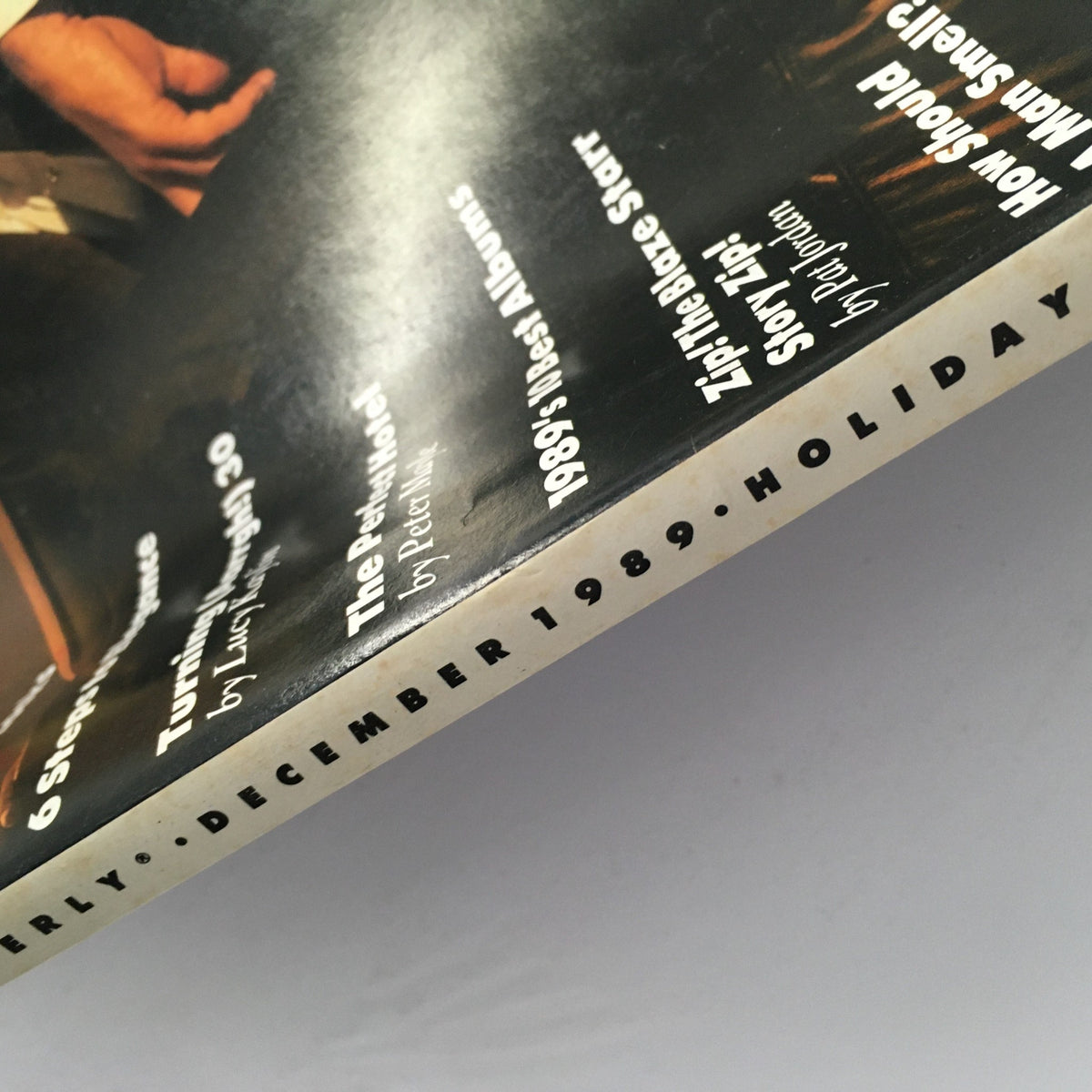
This issue is graded in good condition with light wear including minor creases or marks — characteristics entirely consistent with honest survival across more than thirty-five years for a men's lifestyle magazine produced for active reading and handling rather than archival preservation. The absence of a mailing label on the cover confirms newsstand origin, preserving the full visual presentation of the Sting cover portrait and the cover typography without the adhesive damage or paper obstruction that subscriber labels frequently caused on publications of this type — a meaningful distinction for collectors who prioritize cover presentation and the full visual integrity of historically significant covers. The plastic protective covering present on surviving copies in this condition provides ongoing preservation support for the cover stock and interior pages, limiting further exposure to the environmental factors that affect paper quality in publications of this age. When evaluating any surviving copy of this December 1989 issue, collectors should examine the cover condition and color retention around the Sting portrait, the spine integrity along the perfect binding, the overall evenness of interior page tanning, and whether any pages show the brittleness or moisture damage that affects magazines from this period that were stored in variable conditions over the intervening decades.
Looking for More Issues Like This?
Late-1980s GQ issues featuring major rock musicians at the intersection of cultural celebrity and genuine artistic seriousness are a specific and actively collected segment of the Cooper-era magazine market — and a December 1989 Sting cover, published in the month after the Berlin Wall fell, captures both the musician and the decade at an extraordinarily charged historical moment. The full Sting magazine archive at OriginalMagazines.com is the most focused place to explore his other significant appearances in American print media across the full arc of his solo career. The complete GQ magazine collection spans the full range of the title's publishing history and is essential browsing for anyone building a serious run of the Cooper-era issues that represent the magazine's editorial peak. For collectors working through the broader American magazine landscape of the decade's final year, the complete 1989 magazine collection covers the full range of titles from a year whose closing month was among the most historically extraordinary of the entire postwar era.