


Description
Collector's Note – Why This Issue Matters
Mad No. 107, dated December 1966, comes from one of the magazine’s classic mid-century periods, when its brand of satire had already become a defining force in American humor. By the mid-1960s, Mad was widely recognized for parody, visual absurdity, and its ability to turn everyday culture into comedy. That matters here because a late-1966 issue sits in the heart of the era when the magazine’s voice was fully established and its influence on popular satire was unmistakable. For collectors researching vintage MAD Magazines, issue-specific entries like this are valuable not only for nostalgia, but for understanding how the publication evolved month by month during its most culturally resonant decades.
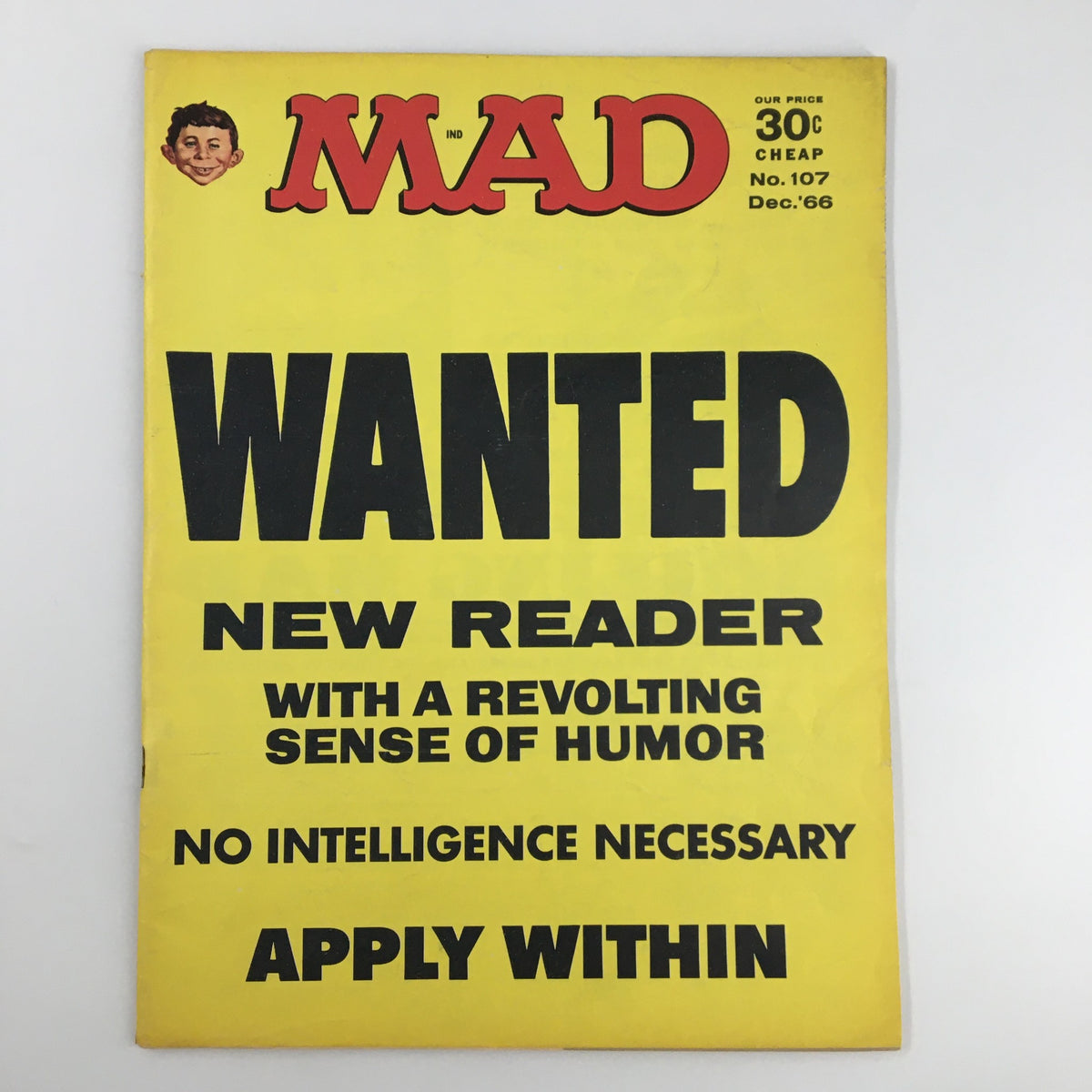
The listing identifies this as December 1966, issue No. 107, with a Fine grade of FN 6.0 and a cover line reading “Wanted New Reader.” Even without a full table of contents, those details already place it within the familiar collecting framework that Mad readers know well: numbered issues, strong cover identity, and a magazine format built around humor, parody, and visual personality. A graded mid-1960s Mad issue also appeals to collectors because the title was never just about one article or one celebrity feature. Its significance usually comes from the overall editorial experience — the cover joke, the pacing of the satire, the art, and the unmistakable tone that made the magazine a fixture of American pop culture.
The date matters, too. December 1966 falls at the end of a year deeply marked by generational change, television culture, advertising saturation, and rising social tension — all subjects that Mad was especially good at turning inside out. For anyone interested in magazines from 1966, this issue belongs to a moment when humor magazines could still act as a running commentary on the way Americans talked, consumed, and saw themselves. That larger cultural setting gives the issue lasting reference value even when the listing does not document every interior feature.
About the Publication
Mad was an American humor magazine known for satire, parody, caricature, and recurring editorial features that skewered entertainment, advertising, politics, and everyday life. After beginning as a comic book in the early 1950s, it shifted into magazine format and became one of the most influential satirical publications in the United States. Its audience included teenagers, young adults, and older readers drawn to irreverent humor and pop-culture parody, and by the 1960s it had established a recognizable editorial formula: a bold cover concept, illustrated features, spoof articles, and a tone that mocked both mass media and social convention with equal enthusiasm.
Key Highlights Inside
- Dated December 1966 and identified as Mad No. 107.
- The listing presents the issue as a classic example of Mad's mix of satire, humor, and cultural commentary.
- The cover line “Wanted New Reader” is one of the issue’s clearest identifying details from the title information provided.
- Graded Fine / FN 6.0, which is significant to collectors who organize Mad issues by both number and condition tier.
- The source listing emphasizes whimsical illustrations and parodic humor as central to the issue’s appeal.
- Specific interior article titles and departments are unconfirmed from the provided listing and should be verified from the table of contents or interior pages.
Condition & Rarity
The listing describes surviving examples of this issue as Fine / FN 6.0, a grade that generally suggests an above-average vintage copy with moderate but not excessive signs of handling. In collector terms, that places the issue in a desirable middle-to-upper range for a magazine originally printed for regular reading rather than archival preservation. For Mad, condition often turns on cover presentation, spine wear, edge stress, page quality, and overall completeness, since the visual humor begins on the front cover and carries through the entire issue. A numeric or descriptive grade matters because numbered Mad issues are frequently collected in long runs, and consistent preservation becomes part of how collectors evaluate them. Even when an issue shows normal age, a Fine copy is generally understood as a solid, respectable survivor from the period.
Looking for More Issues Like This?
Collectors who start with a single numbered issue often end up wanting to place it within the broader run of the magazine. The wider MAD Magazine collection is the best place to compare neighboring issues, cover concepts, and the magazine’s evolving visual style across different decades.
It also helps to look at the larger group of 1966 magazines, especially for collectors who organize their research by year as much as by title. That broader context shows how a December 1966 humor magazine fits into the wider print culture of its time.