


Description
Collector's Note – Why This Issue Matters
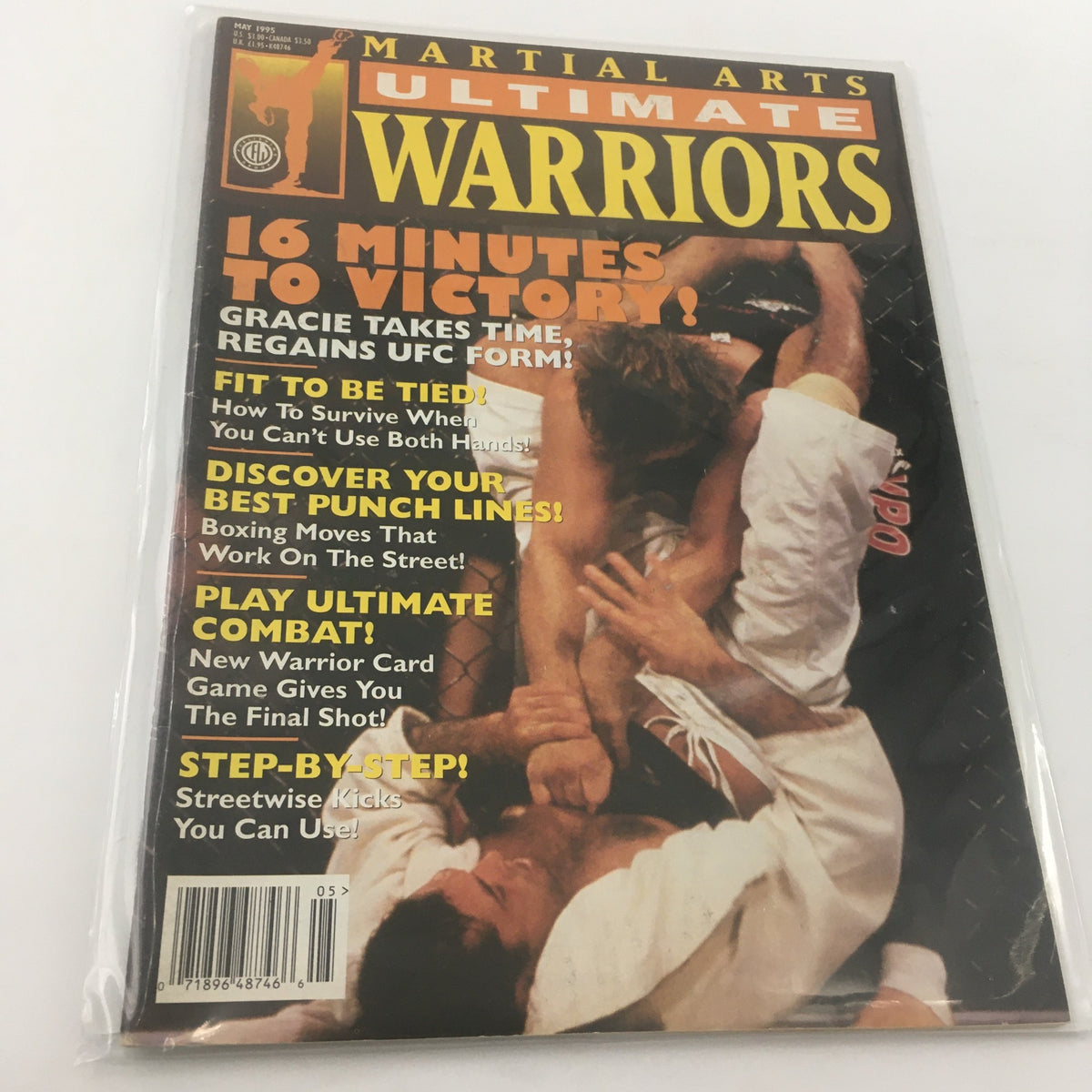
Martial Arts Ultimate Warriors Magazine’s May 1995 issue is centered on Royce Gracie, placing it within one of the most important periods in modern combat-sports history. By the mid-1990s, Gracie had become one of the defining figures associated with Brazilian Jiu-Jitsu’s rise in global visibility, especially through early mixed martial arts competition. A 1995 martial arts magazine feature on Gracie is therefore historically meaningful because it captures the moment when many traditional martial arts readers were beginning to reassess grappling, ground fighting, and real-style-versus-style combat through the lens of his success. It reflects a major shift in martial arts thinking, when effectiveness under pressure became a central question for practitioners, instructors, and fans.
For collectors of vintage martial arts magazines, this issue is significant because it reflects the shift from purely style-based martial arts coverage toward the emerging language of mixed martial arts. Royce Gracie’s influence was not limited to tournament results; he changed how many practitioners thought about leverage, submissions, positional control, and the importance of ground fighting in practical combat. A magazine issue from May 1995 featuring Gracie documents that turning point while it was still unfolding in print, before MMA became a mainstream sports category with its own established media ecosystem. That timing gives the issue strong archival value because it preserves how Gracie was being discussed before later histories fully defined his place in combat-sports culture.
The May 1995 date also matters because martial arts publishing was still one of the main ways readers encountered new combat-sports ideas outside their own schools and training circles. For collectors studying magazines from 1995, this issue belongs to the early era of modern MMA awareness, when Brazilian Jiu-Jitsu was being introduced to a much wider audience through magazines, videos, seminars, and word-of-mouth reputation. It stands as a period artifact from a time when the martial arts world was actively debating effectiveness, tradition, competition, and the future direction of combat training. Issues like this help document the print-era conversation that surrounded the early development of MMA and the broader reevaluation of traditional martial arts assumptions.
About the Publication
Martial Arts Ultimate Warriors Magazine was a specialty martial arts periodical focused on fighters, combat systems, martial arts personalities, training culture, and the evolving world of full-contact and competitive fighting. Its audience would have included practitioners, instructors, combat-sports fans, collectors, and readers interested in the athletes and systems shaping the martial arts landscape of the 1990s. Based on the listing, this May 1995 issue followed the classic martial arts magazine format of the period by spotlighting a major figure and connecting that subject to the broader culture of martial arts achievement, technique, and competition. Publications like this are especially valuable to collectors because they preserve how early MMA-related figures were presented before the sport developed the mainstream visibility and media infrastructure it would gain later. They also show how specialty magazines helped translate new combat-sports ideas for readers who were still grounded in older martial arts categories such as karate, kung fu, judo, kickboxing, and self-defense.
Key Highlights Inside
- May 1995 issue of Martial Arts Ultimate Warriors Magazine, representing martial arts publishing during a pivotal decade for combat sports.
- Features Royce Gracie, identified in the listing as the central spotlight subject.
- Connects the issue to Brazilian Jiu-Jitsu, early mixed martial arts history, and the changing understanding of practical combat effectiveness.
- Represents a period when Royce Gracie’s influence was reshaping martial arts discussions around grappling, submissions, positional control, and ground fighting.
- Reflects the early print-era conversation around MMA before the sport became a fully mainstream combat-sports category.
- Newsstand edition, as noted in the listing, which is relevant for collectors who value original retail-distributed magazine formats.
- Very good condition is noted, with bright pages, vibrant colors, no wear, and a like-new presentation according to the listing.
- Bagged and boarded preservation is noted, with the magazine protected in boarded plastic.
- Specific interior article titles and full contents are not confirmed from the listing, so additional features cannot be identified without a table of contents or interior page images.
Condition & Rarity
Surviving examples of the May 1995 Martial Arts Ultimate Warriors Magazine issue should be evaluated by cover gloss, color brightness, spine tightness, page completeness, corner sharpness, edge condition, and evidence of handling wear. The listing describes the magazine as being in very good condition, newsstand format, bagged and boarded, protected in boarded plastic, and appearing like new with no wear. For collectors, those details are meaningful because martial arts magazines from the 1990s were often read repeatedly, carried to gyms or training spaces, stored casually, or used as reference material by practitioners. A clean newsstand example with bright pages and strong color is especially desirable when the featured subject is Royce Gracie, since the issue appeals to both martial arts magazine collectors and early MMA history researchers. Condition is especially important for issues tied to major combat-sports figures because the cover subject, article presentation, and overall visual integrity help determine long-term archival usefulness. Bagging and boarding are also positive preservation factors, helping protect against bending, edge abrasion, surface wear, and storage damage over time.
Looking for More Issues Like This?
The May 1995 Royce Gracie issue is a strong reference point for collectors interested in Brazilian Jiu-Jitsu, early MMA history, and the transformation of martial arts culture during the 1990s. Related material can be explored through the broader martial arts magazine collection, especially for readers tracing fighters, systems, and combat-sports figures across different eras. That broader archive is useful for comparing how traditional martial arts, emerging MMA, kickboxing, grappling, and self-defense topics were presented during a decade of major change.
For collectors placing this issue within its original publication year, the 1995 magazine collection offers useful context across other titles from the same period. Looking across that year helps situate this issue within a wider print environment shaped by martial arts, action culture, fitness, sports, and the early public rise of mixed martial arts. Issues like this remain valuable because they preserve the language and presentation of a combat-sports revolution while it was still being understood by the wider martial arts community.