


Description
Collector's Note – Why This Issue Matters
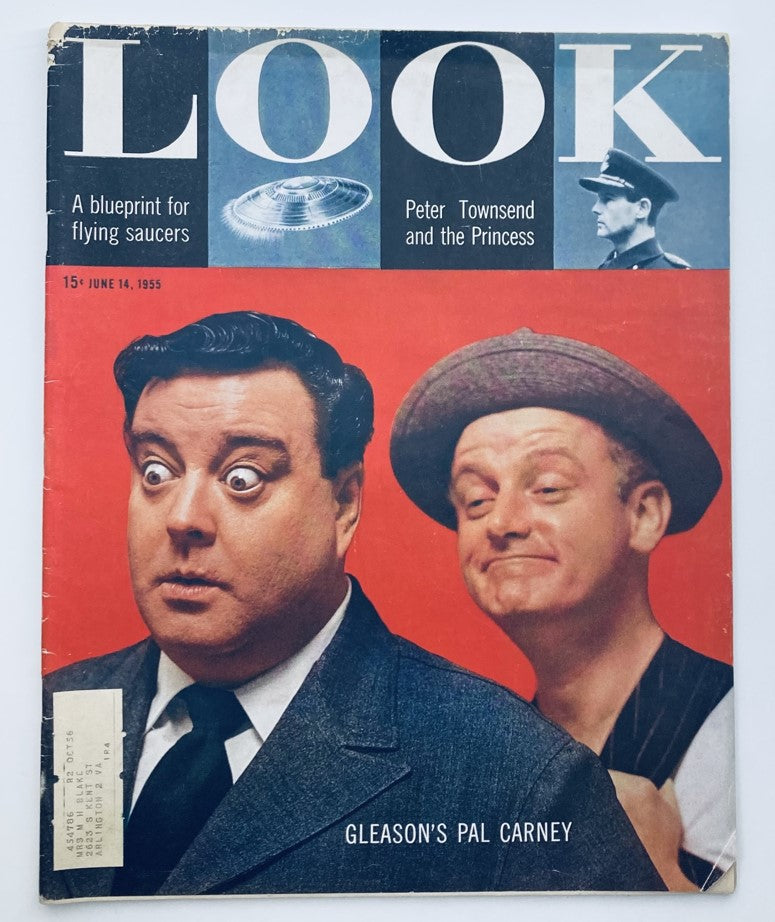
The June 14, 1955 issue of Look Magazine — Volume 19, Number 12 — featuring Art Carney and Jackie Gleason on the cover, documents one of the most beloved partnerships in American television history at a specific and historically resonant moment. The Honeymooners had not yet premiered as a standalone series — that would happen in October 1955, just four months after this issue's publication — but Gleason and Carney had already been performing their iconic Ralph Kramden and Ed Norton characters as recurring sketches within The Jackie Gleason Show since 1951. By June 1955, their chemistry had become one of the most recognized and beloved fixtures of American television, generating the kind of public affection that put them on the cover of a major national magazine four months before the standalone series that would immortalize them had even premiered. The Look feature "Gleason's Pal Carney" captures that relationship as it existed in the summer of 1955, at the threshold of the television moment that would define both men's legacies permanently. Note that this listing places Carney's name first in the title — a reversal of the more standard billing that itself reflects Carney's extraordinary standing with the American public by mid-1955, his supporting role having become so beloved that it rivaled the star's own prominence. For collectors building archives around Art Carney's presence in American print media or Jackie Gleason's magazine history, this June 1955 Look cover is among the most historically significant entries in either collection.
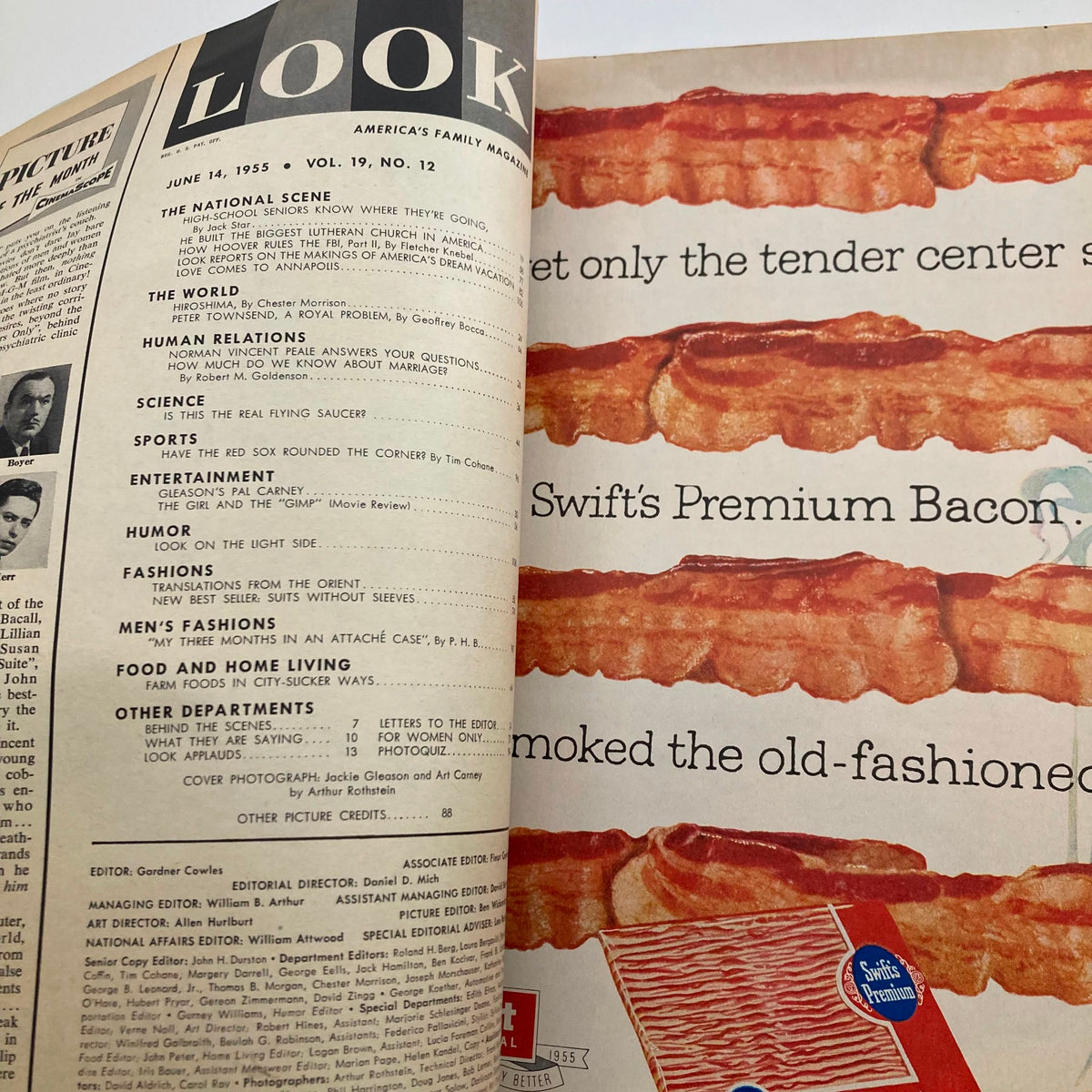
The broader editorial content of this issue is as substantive as its entertainment cover. The World section's Hiroshima feature by Chester Morrison engages with the atomic bombings' long-term human consequences approximately ten years after the fact — one of the early mainstream American journalistic attempts to reckon seriously with Hiroshima's ongoing human reality at a moment still complicated by Cold War politics. The Peter Townsend profile documents the ongoing drama of his romance with Princess Margaret in the months before her October 1955 announcement that she would not marry him. Norman Vincent Peale's advice column captures the degree to which his brand of Christian self-improvement — launched into mass consciousness by the 1952 publication of The Power of Positive Thinking — had become a fixture of mainstream American cultural life. The flying saucer science feature reflects the era's genuine popular fascination with unidentified aerial phenomena. Taken together, this table of contents is a primary document of American cultural preoccupations in the summer of 1955, ranging from the comedic warmth of the Gleason-Carney partnership to the unresolved moral weight of the atomic age. Collectors building a comprehensive Look Magazine archive will find this issue among the richer editorial entries from the publication's mid-decade output, and those documenting American publishing from 1955 will find it one of the year's more substantive general-interest documents.
The timing of this issue within television history deserves particular attention from entertainment collectors. June 1955 was the final summer before American network television committed fully to the 39-week schedule of original programming that the Classic 39 Honeymooners episodes represent. The transition from variety show sketches to standalone sitcom format was not inevitable or obvious in June 1955, and the Look feature "Gleason's Pal Carney" documents the partnership in the form it had taken before that transition occurred — making this issue primary documentation of the pre-Classic-39 moment that makes the Classic 39's achievement fully comprehensible in historical terms.
About the Publication
Look Magazine was founded by Gardner Cowles Jr. in 1937 as a direct competitor to Life Magazine, developing its own distinct editorial identity as a biweekly publication with strong photojournalism, celebrity coverage, and a somewhat more populist sensibility than its chief rival. By June 1955, Look had established itself as one of the three or four most widely read general-interest magazines in the United States, with a circulation that competed directly with Life and a readership that spanned virtually every demographic of literate American households. Its entertainment coverage was particularly strong and genuinely well-connected to the television industry that was reshaping American popular culture in the early to mid-1950s — Look's access to major television stars and its willingness to devote serious editorial resources to television personalities reflected its editorial team's understanding that the medium was becoming central to American life. The June 14, 1955 issue's combination of a Gleason-Carney television cover with substantive journalism on Hiroshima, royal romance, Norman Vincent Peale, and the flying saucer phenomenon reflects Look's characteristic editorial range — a publication genuinely committed to covering the full spectrum of what its enormous readership cared about within a single biweekly package.
Key Highlights Inside
- The "Gleason's Pal Carney" entertainment feature documents Art Carney and Jackie Gleason's partnership in June 1955 — four months before the premiere of The Honeymooners Classic 39 episodes that would permanently define both men's television legacies, making this a primary document of the Gleason-Carney relationship as it existed before the standalone series transformed it into an American institution.
- The Hiroshima feature by Chester Morrison in the World section is a primary document of mainstream American journalistic reckoning with the atomic bombings approximately ten years after the fact — produced at a moment when that reckoning was still deeply complicated by Cold War politics and national self-perception in ways that later decades would not fully replicate.
- The Peter Townsend profile documents the final months of his publicly followed romance with Princess Margaret before her October 1955 announcement — a primary source for one of the most widely discussed royal stories of the postwar decade at its emotionally charged conclusion.
- Norman Vincent Peale's presence in Look's advice pages in June 1955 documents the degree to which his brand of Christian positive thinking had moved from religious publishing niche into mainstream American cultural fixture — a social history data point about the mid-1950s self-improvement culture that researchers find consistently useful.
- The confirmed full table of contents verifies the editorial completeness of this issue across its eight sections — a meaningful attribute for a 1955 biweekly where clipping of celebrity features, fashion spreads, or photographic content by original readers was common practice and frequently reduces the documentary value of surviving copies.
Condition & Rarity
Surviving copies of this issue present with binding wear as the primary noted condition factor — an attribute collectors should evaluate against the provided photographs to understand its specific severity, since binding wear in biweekly magazines from this era can range from minor spine softening to more significant separation of the cover from the interior block. Binding wear is among the most common condition issues for Look Magazine issues from the mid-1950s, resulting from the biweekly publication schedule's lightweight binding construction and the active reading and repeated handling that characterized the magazine's original use in American households. The binding condition should be assessed in conjunction with the overall cover integrity and interior page preservation — for a publication of this age, complete interior pages with readable content are a more consequential preservation factor than cosmetic binding wear for most research and collection purposes. The plastic protective covering currently housing this copy is appropriate stabilization for a seventy-year-old biweekly, helping to prevent further cover surface deterioration and reducing the risk of additional binding stress during handling and storage. The confirmed full table of contents preserved in the listing is a meaningful completeness note — Look Magazine issues from this era frequently lost pages to clipping, and issues that retain their complete editorial content are proportionally more valuable as archival documents regardless of their physical condition grade.
Looking for More Issues Like This?
Look Magazine covers featuring Art Carney and Jackie Gleason from the pre-Classic-39 period are among the more historically specific and collector-recognized entries in either star's magazine archive, and the June 14, 1955 issue — published four months before The Honeymooners standalone premiere — documents their partnership at a uniquely significant transitional moment in American television history. The Art Carney magazine collection and the Jackie Gleason magazine collection at OriginalMagazines.com are the most focused places to explore each performer's individual print media history. The Look Magazine collection offers the broadest view of the publication's remarkable archive, and the 1955 magazines collection provides a wide cross-section of American publishing from one of the most culturally eventful years of the postwar decade.