
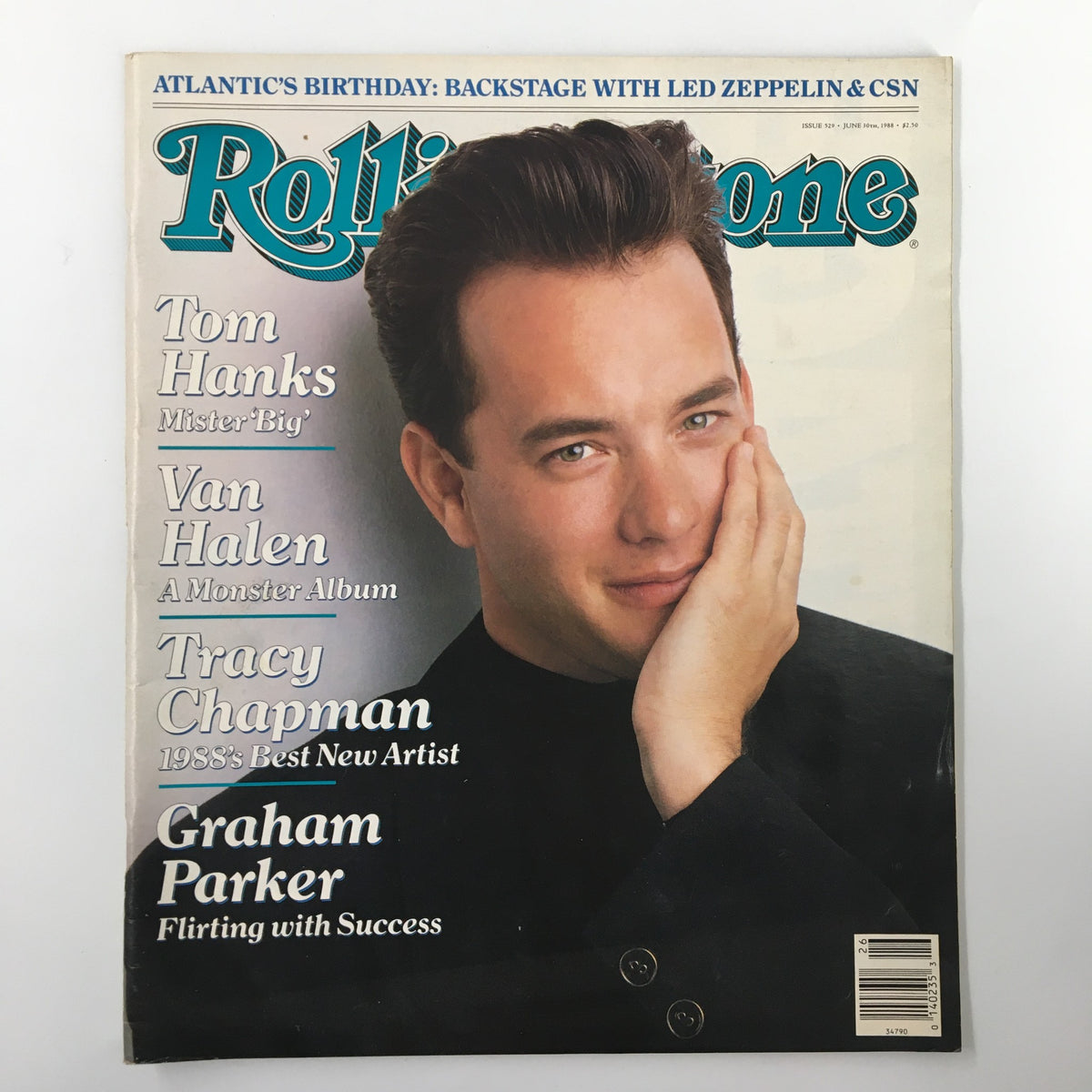

Description
Collector's Note – Why This Issue Matters
The June 30, 1988 issue of Rolling Stone captures a dynamic moment in late-1980s popular culture, where film, rock music, and emerging voices in songwriting intersected in meaningful ways. Featuring Tom Hanks, Van Halen, and Tracy Chapman, this issue reflects the breadth of the entertainment landscape during a period defined by both mainstream success and artistic evolution. By 1988, Tom Hanks was transitioning into more prominent leading roles, while Van Halen remained a dominant force in rock, and Tracy Chapman was emerging as a powerful new voice with socially conscious songwriting that resonated with a wide audience.
This convergence of established and rising figures highlights the shifting tone of the era. Rock music continued to command massive audiences, yet artists like Chapman introduced a more introspective and politically aware dimension to the mainstream. At the same time, Hollywood was producing a new generation of recognizable stars, with Hanks representing a shift toward more versatile and relatable leading men. Rolling Stone, known for documenting these cultural movements in real time, provided readers with a platform where music, film, and social commentary were presented side by side.
For collectors and researchers, this issue offers a clear snapshot of how late-1980s media framed its most influential figures. Within the broader context of Tom Hanks magazine appearances across his early career, Rolling Stone issues chronicling music and pop culture, and magazines from 1988 reflecting the cultural tone of the late 1980s, it stands as a representative artifact of a period when entertainment and cultural commentary were deeply intertwined.
About the Publication
Founded in 1967, Rolling Stone quickly became one of the most influential publications in music journalism, expanding over time to include film, politics, and broader cultural reporting. Its editorial style combined in-depth interviews, long-form features, and critical commentary, appealing to readers interested in both the artistic and social dimensions of popular culture. By the late 1980s, the magazine had established itself as a central voice in documenting the evolving entertainment landscape, consistently bridging music, film, and cultural discourse.
Key Highlights Inside
- Coverage featuring Tom Hanks, reflecting his growing presence in late-1980s cinema. His career during this period marked a transition toward more prominent and varied roles. The issue captures his place within the evolving film landscape of the time.
- Inclusion of Van Halen, representing the enduring popularity of arena rock during the decade. The band’s influence on mainstream rock music remained significant throughout the late 1980s. Their presence highlights the continued dominance of high-energy, commercially successful rock acts.
- Feature attention on Tracy Chapman, whose emergence introduced a more introspective and socially conscious voice to popular music. Her work resonated with audiences seeking meaningful lyrical content. The issue reflects her early impact within a rapidly changing musical environment.
- Editorial content consistent with Rolling Stone’s blend of music, film, and cultural commentary. The magazine’s format brought together diverse elements of entertainment into a single narrative space. This approach helped define how audiences engaged with popular culture during the era.
Condition & Rarity
Copies of this issue are typically evaluated based on overall wear, page integrity, and surface condition. A designation of good condition with minor wear suggests standard handling for its age, with intact pages and a presentable cover. The absence of an address label is a notable feature, as label-free copies are often preferred for their cleaner appearance. The inclusion of a protective plastic covering indicates an effort to preserve the magazine from environmental exposure and handling wear. For late-1980s issues of Rolling Stone, collector interest is influenced by both condition quality and the cultural significance of the featured personalities.
Looking for More Issues Like This?
Issues from the late 1980s offer a rich perspective on how music, film, and culture intersected during a transformative period. For those interested in exploring similar material, the Rolling Stone magazine collection provides a broader archive of influential coverage, while magazines from 1988 help place this issue within its wider cultural context. Exploring Tom Hanks-related issues also offers insight into his evolving presence in media during this era.