


Description
Collector's Note – Why This Issue Matters
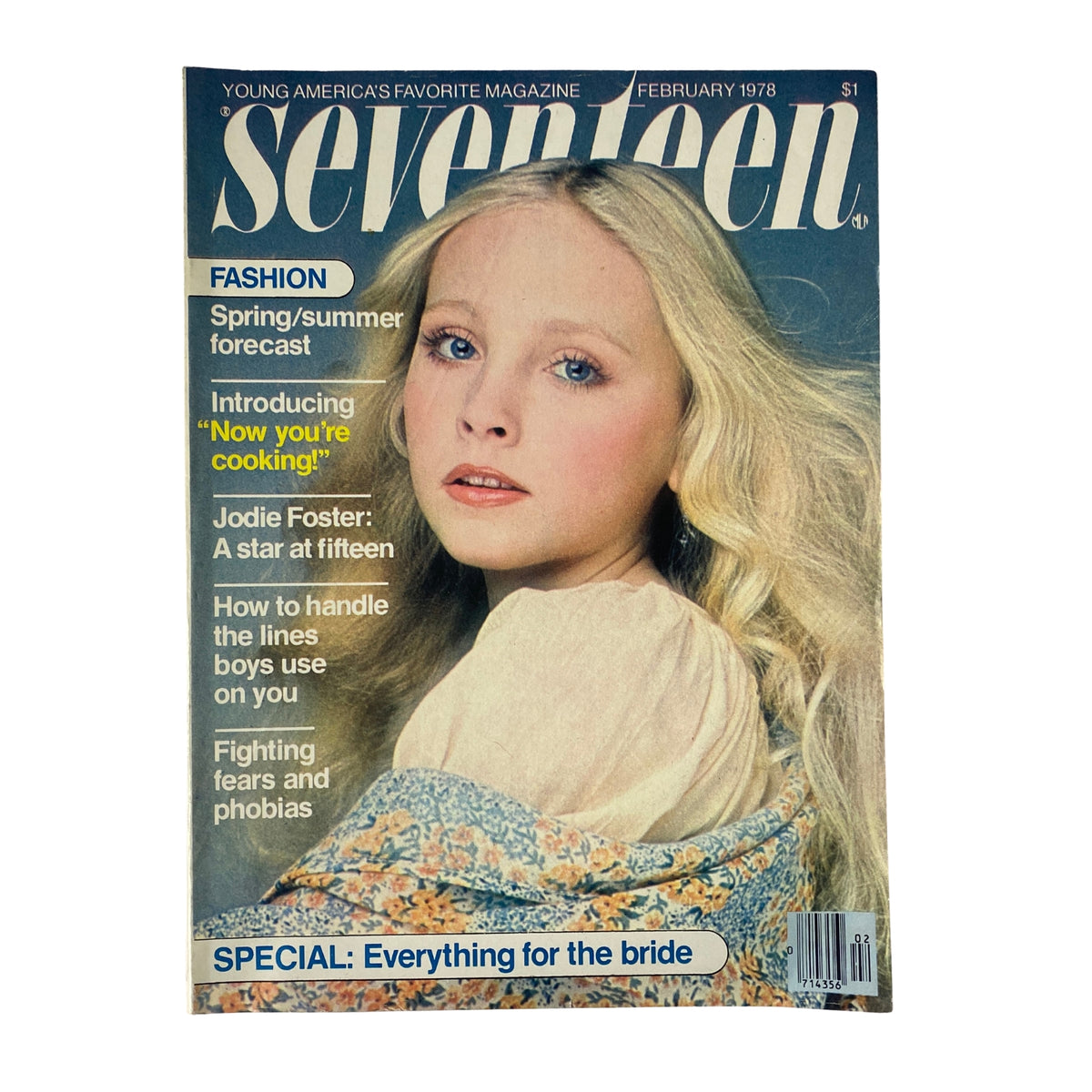
February 1978 is a historically precise and significant moment in Jodie Foster's career, and the Seventeen cover story framing her as "A Star at Fifteen" is a primary document of her public identity at one of the most complex and consequential periods of her early life. Foster had already accumulated a career of extraordinary range by the time she turned fifteen in November 1977 — Alice Doesn't Live Here Anymore in 1974, Taxi Driver in 1976, Bugsy Malone in 1976, and The Little Girl Who Lives Down the Lane in 1977 had established her as the most talented and critically regarded young actress in American cinema. But February 1978 arrived in the immediate aftermath of a critical and public reckoning with what her career meant — Taxi Driver had brought her roles of uncomfortable maturity to mainstream attention, and the moral and cultural conversation about what it meant for a child actress to take on the work she had been taking on was fully active in the cultural press. Seventeen's decision to feature Foster in a February 1978 cover story framed as "A Cult Movie Star at 15" was an editorial choice of considerable intelligence — placing her in a teen magazine that was her actual peer group's primary fashion and culture publication, treating her as a teenager while acknowledging her extraordinary professional achievements. For collectors building an archive of Jodie Foster magazine covers and features, this Seventeen issue is a primary document of her at the most biographical charged moment of her early career, through the specific editorial lens of the publication that spoke most directly to her actual age demographic.
The content surrounding the Foster feature adds multiple layers of cultural and historical interest that make this issue more richly documented than a single-subject celebrity cover would typically justify. The extensive bridal special — wedding preparation, home hunting, honeymoon destinations, ring selection, and furniture guides — is itself a primary document of the specific editorial territory that Seventeen was navigating in the late seventies: the tension between addressing its readership as genuinely young women whose lives included fashion, entertainment, and celebrity, and simultaneously addressing them as future wives and homemakers in a cultural framework that was itself being actively contested by second-wave feminism. That tension is visible throughout the issue's structure — Foster as a professional teenager of extraordinary accomplishment on the cover, alongside detailed wedding planning content inside — and makes this February 1978 edition a particularly interesting primary source for researchers studying how teen magazines navigated gender expectations in the late Carter era. Collectors researching Seventeen Magazine issues from this period will find this February 1978 edition a well-documented and editorially revealing primary artifact of the publication at a specific cultural moment.
The documented table of contents preserved in the listing is itself a research asset of considerable value. The Kristy McNichol feature "It's Kind of Fun" documents another of late-seventies teen television's most prominent figures in the same issue as the Foster cover — McNichol was at the peak of her Family fame in 1978 and was a regular presence in the teen press of this period. The "How Stars Face Teen Years" feature by Janet Chase-Marshall and the "Lies Boys Use on Girls" lifestyle piece capture the specific editorial voice of late-seventies Seventeen at its most characteristically direct — a publication that consistently addressed its readership's actual social experiences with more candor than its competitors. The athletic scholarship feature by Janice Kaplan reflects the post-Title IX landscape of women's athletics in the late seventies, documenting a genuinely new opportunity for young women that Seventeen was among the first teen publications to cover seriously. Collectors researching teen and cultural magazines from 1978 will find this issue a comprehensively documented primary source of late-seventies American youth culture at one of its most interesting transitional moments.
About the Publication
Seventeen Magazine was founded in 1944 and by February 1978 had sustained more than three decades as the dominant American magazine publication aimed at teenage girls. Its editorial format balanced fashion and beauty coverage with features on relationships, school, career aspirations, health, and the cultural questions most immediately relevant to its adolescent readership. By the late seventies Seventeen was navigating a cultural landscape in which the feminist movement's achievements of the preceding decade were being absorbed into mainstream teen culture in complex and sometimes contradictory ways — the bridal special and the athletic scholarship feature appearing in the same issue of this February 1978 edition is a precise illustration of that complexity. Its fiction tradition, its celebrity coverage, and its social commentary features gave individual issues from this period a range and depth that distinguished it from purely fashion-focused competitors and made it a genuinely complex primary source for researchers of American teen culture and women's history.
Key Highlights Inside
- Jodie Foster cover and "A Cult Movie Star at 15" feature — a primary document of Foster's public identity at the most biographically charged moment of her early career, published in February 1978 in the immediate aftermath of Taxi Driver's moral and cultural controversies and placing her in her actual age demographic's primary publication at the specific moment when that age demographic's relationship to her work was most complex and most discussed.
- Comprehensive bridal special spanning wedding preparation, ring selection, honeymoon destinations, first home hunting, and affordable furniture — a documented editorial package reflecting the specific cultural assumptions Seventeen was simultaneously inheriting and contesting in 1978, and constituting a primary source record of how a major teen publication addressed the topic of marriage and domesticity in the post-second-wave-feminism late seventies.
- Kristy McNichol "It's Kind of Fun" feature — a documented engagement with one of late-seventies teen television's most prominent figures in the same issue as the Foster cover, representing the specific cross-media celebrity landscape of 1978 teen culture and providing a confirmed secondary celebrity documentation alongside the primary Foster cover content.
- "Is an Athletic Scholarship for You?" by Janice Kaplan — a feature documenting the post-Title IX expansion of women's athletic opportunity that Seventeen was addressing seriously in 1978, representing a genuinely new cultural and legal landscape for young women that distinguishes late-seventies teen magazine content from the preceding decade's equivalent editorial territory.
- Valentine's Day content, fashion forecasts spanning Hawaiian prints and California-style exercises, "Fashion Classics" antique-inspired styling, and "Lies Boys Use on Girls" by Dana Cainsky — the full editorial architecture of a February 1978 Seventeen documented across fashion, social commentary, and lifestyle content with the attribution and page-level specificity that makes this table of contents an unusually complete research resource.
- Fiction by Greg Yeo and Patricia L. Lewis, poetry selections, food features, and regular departments including the Relating column and Spotlight on entertainment — the complete literary and departmental structure of a late-seventies Seventeen issue at its characteristic editorial range, documented here with the completeness that distinguishes this listing's content record from the undocumented copies that represent the majority of surviving examples.
Condition & Rarity
Seventeen Magazine issues from February 1978 present a condition profile shaped by the publication's paper stock, its readership's active engagement with the content, and nearly forty-eight years of elapsed time. Very Good condition with only minor edge wear is an honest and strong grade for a forty-seven-year-old monthly teen magazine, indicating a copy that retains full structural integrity, displays cleanly, and shows no significant cover damage or interior page loss beyond the minimal evidence of its age. The absence of a mailing label is a meaningful condition positive — it preserves the full Jodie Foster cover design without adhesive damage, identifying this as a newsstand copy and distinguishing it from the subscriber examples that constitute the majority of surviving Seventeen issues. For a celebrity cover from this period, the unobstructed newsstand presentation of the cover subject is the condition attribute most directly relevant to both display value and documentary completeness. The plastic protective sleeve provides ongoing archival protection. Collectors evaluating surviving examples of this issue should prioritize cover surface quality and the Foster image integrity, spine condition, and the completeness of all interior pages as primary condition criteria, with the documented table of contents' completeness — particularly the bridal special content and the McNichol feature — as secondary criteria relevant to the issue's research utility.
Looking for More Issues Like This?
A Very Good newsstand copy of Seventeen from February 1978 with the Jodie Foster cover, confirmed Kristy McNichol secondary feature, and a fully documented table of contents is a specifically valuable find that sits at the intersection of Foster memorabilia collecting, late-seventies teen magazine collecting, and the broader research interest in how popular media engaged young women's culture during this complex transitional period. If this issue is no longer available, the Jodie Foster magazine collection at OriginalMagazines.com is the most focused resource for other cover appearances and features from her early career. The full Seventeen Magazine collection offers surviving issues from across the publication's history for collectors building a broader archive of its late-seventies run, and the 1978 magazine collection brings together issues from across that year's major publications for collectors interested in the full range of American teen and cultural print journalism during the late Carter era.