


Description
Collector's Note – Why This Issue Matters
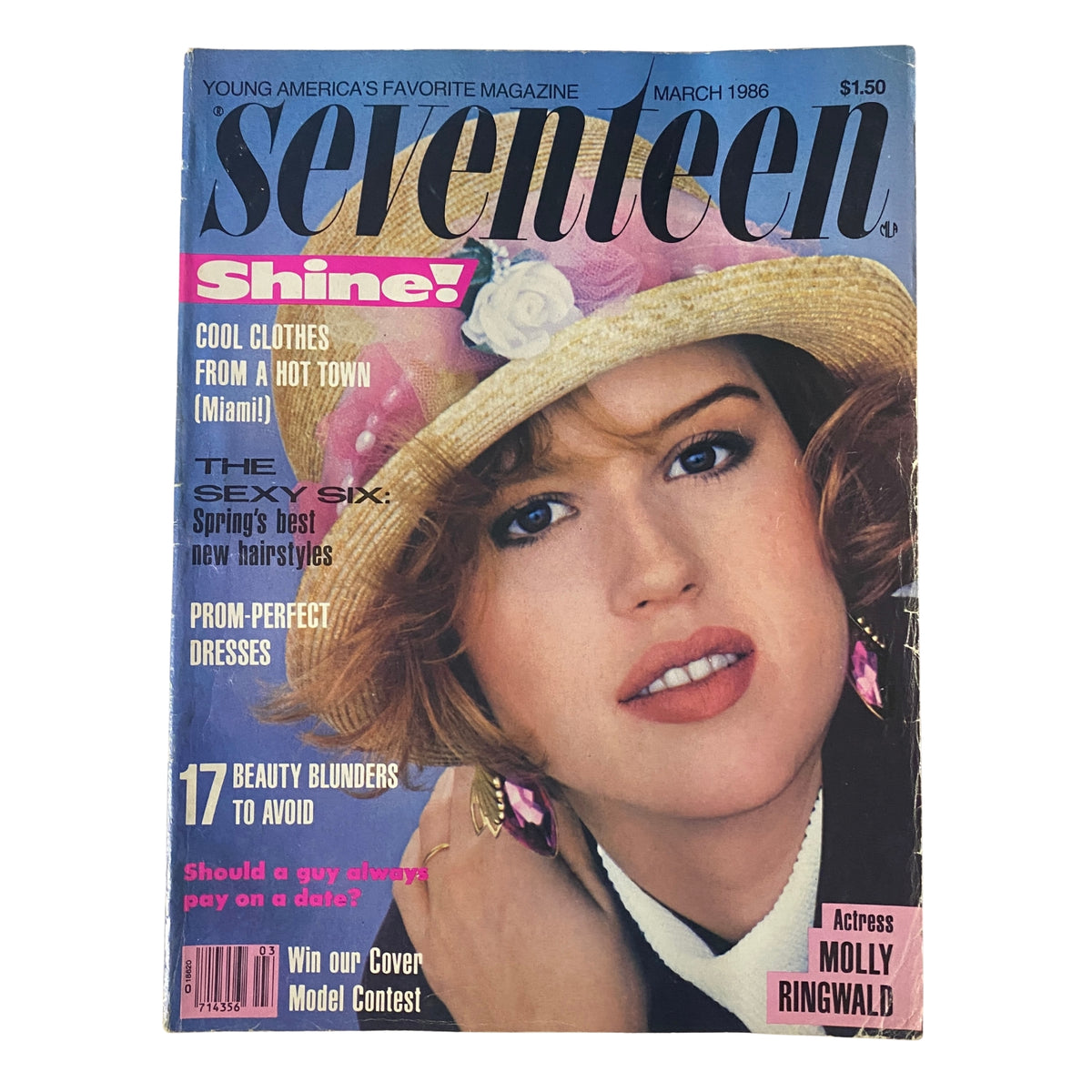
March 1986 is one of the most precisely significant dates available for a Molly Ringwald cover. Pretty in Pink was released on February 28, 1986 — just days before this issue would have reached newsstands. Ringwald was therefore on the cover of Seventeen at the exact moment her third John Hughes collaboration was opening in theaters, completing the trilogy of films that had defined her as the preeminent face of 1980s teen cinema. Sixteen Candles (1984) and The Breakfast Club (1985) had already established her as a generational icon; Pretty in Pink was the culmination. The table of contents even notes the cover feature on page 240 as "Molly Ringwald, 'Pretty in Pink'" — making the film tie-in explicit and giving this issue a documentary precision that few celebrity magazine covers can claim. For collectors building a serious archive through Molly Ringwald magazine covers, this March 1986 Seventeen is the most historically situated cover of her entire run — the one published at the opening weekend of her defining film.
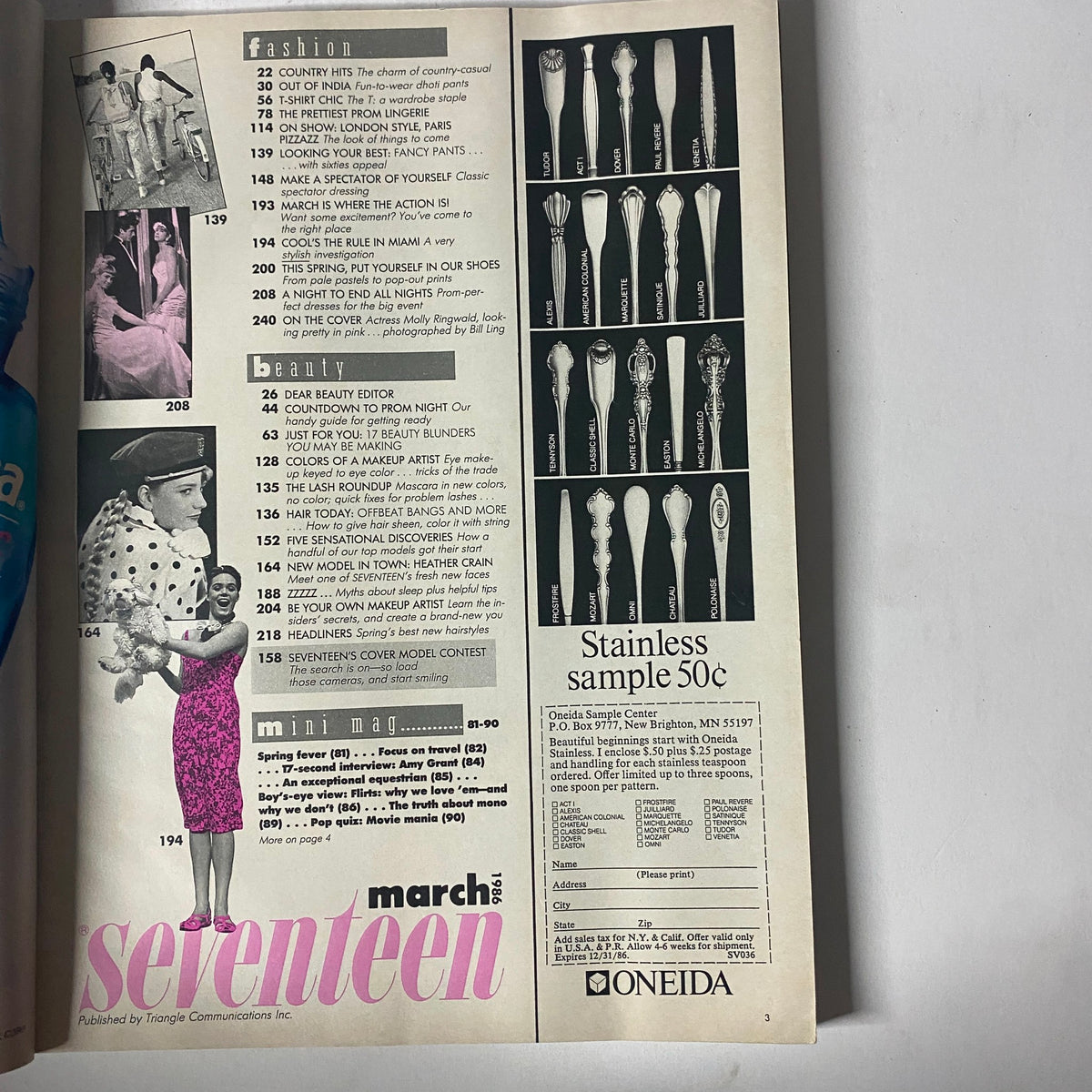
The broader cultural context of March 1986 adds further layers. The 1980s teen film genre that Ringwald and Hughes had essentially created was at its absolute commercial and cultural peak. The Brat Pack phenomenon was fully established in the public consciousness. And Seventeen magazine, as the dominant teen publication of the era, was the natural home for Ringwald's cover presence — the intersection of the film industry's most prominent teen star and the magazine world's most influential teen publication, at the precise moment of maximum cultural convergence. The table of contents reveals a magazine operating at the height of its editorial ambition for the era: an interview with Amy Grant alongside extensive prom fashion coverage, international runway looks alongside practical beauty guides, all wrapped around a cover story tied to the biggest teen film of the year. For collectors exploring original Seventeen magazine issues or magazines from 1986, this issue represents the publication at its most culturally resonant convergence point of the decade.
The cover was photographed by Bill Ling — a specific credit worth noting for collectors of both Ringwald imagery and 1980s fashion photography. The photographer credit places this cover within the professional infrastructure of the era's teen magazine industry and provides an additional layer of documentation for those researching the visual culture of mid-1980s American youth publishing.
About the Publication
Seventeen magazine was founded in 1944 and established itself as the most widely read and culturally influential American magazine for teenage girls across the postwar decades, addressing its readership with fashion, beauty, entertainment, relationships, and cultural commentary calibrated for adolescent female experience. By 1986, the magazine was in its fourth decade of publication and at the height of its influence on teen consumer culture, with a readership that represented the primary audience for the 1980s teen film phenomenon that Molly Ringwald had come to personify. Its editorial format combined fashion spreads, beauty guidance, celebrity interviews, and teen-focused features in a package that defined the aspirations and interests of its audience more comprehensively than any competing publication of the era.
Key Highlights Inside
- Molly Ringwald cover and feature (p. 240) — "Pretty in Pink": Published at the opening of Pretty in Pink in late February/early March 1986, this cover feature is the primary documentary record of Ringwald's Seventeen presence at the exact cultural peak of her career — the third John Hughes collaboration completing her defining trilogy of 1980s teen films.
- Cover photography by Bill Ling: The photographer credit is specifically noted in the listing, providing documentary precision about the cover's production and placing it within the professional visual culture of mid-1980s teen magazine publishing.
- Interview with Amy Grant (p. 84): As listed in the table of contents — Grant was a significant crossover figure in 1986, at the intersection of contemporary Christian music and mainstream pop, making this interview a document of her cultural reach at a specific career moment.
- Extensive prom fashion coverage: The table of contents confirms multiple prom-focused fashion features — "The Prettiest Prom Lingerie" (p.78), "Prom-Perfect Dresses" (p.208), and "Countdown to Prom Night" (p.44) — characteristic of Seventeen's March issues and valuable as documents of mid-1980s teen fashion at the season's most commercially significant moment.
- International fashion features: "On Show: London Style, Paris Pizzazz" (p.114) and "Out of India — Fun-to-wear dhoti pants" (p.30) document the international fashion currents influencing American teen style in 1986, including the dhoti pant trend that reflected broader world fashion influences on mainstream American clothing.
- No address label and plastic protective covering: The listing confirms no label and an applied protective covering — both meaningful positive condition attributes for a teen magazine from this era, where label adhesive damage and unprotected storage are the most common preservation failures.
Condition & Rarity
The listing describes this issue as in good condition with light wear consistent with age, no address label, and a protective plastic covering applied. In collector-grade terms, this is an honestly described copy at a solid baseline grade for a publication from 1986. The absence of an address label is a genuine positive — subscription label adhesive causes irreversible surface damage to the cover that affects display value and is present on the majority of surviving copies from this era. The applied plastic covering indicates that the issue's collectible value was recognized at some point in its custodial history. Light age-consistent wear is the expected and honest condition for a nearly forty-year-old newsstand publication printed on paper stock not designed for archival storage. When evaluating any surviving copy of this issue, the meaningful criteria are the integrity and color vibrancy of the Ringwald cover photograph, the completeness of all interior pages including the full table of contents confirmed in the listing, and the absence of moisture damage or significant toning to the interior pages.
Looking for More Issues Like This?
A Molly Ringwald Seventeen cover from the opening weekend of Pretty in Pink is the most precisely historically situated Ringwald cover in the teen magazine market, and March 1986 is a date that serious collectors of both Ringwald memorabilia and 1980s teen culture find worth pursuing with patience. If this issue is no longer available, the Molly Ringwald magazine collection at OriginalMagazines.com is worth exploring for other significant cover appearances across her career. The broader original Seventeen magazine archive is also one of the most comprehensive collections of the publication accessible to collectors, and the 1986 magazine collection captures the mid-decade pop culture moment that this issue so precisely documents.