


Description
Collector's Note – Why This Issue Matters
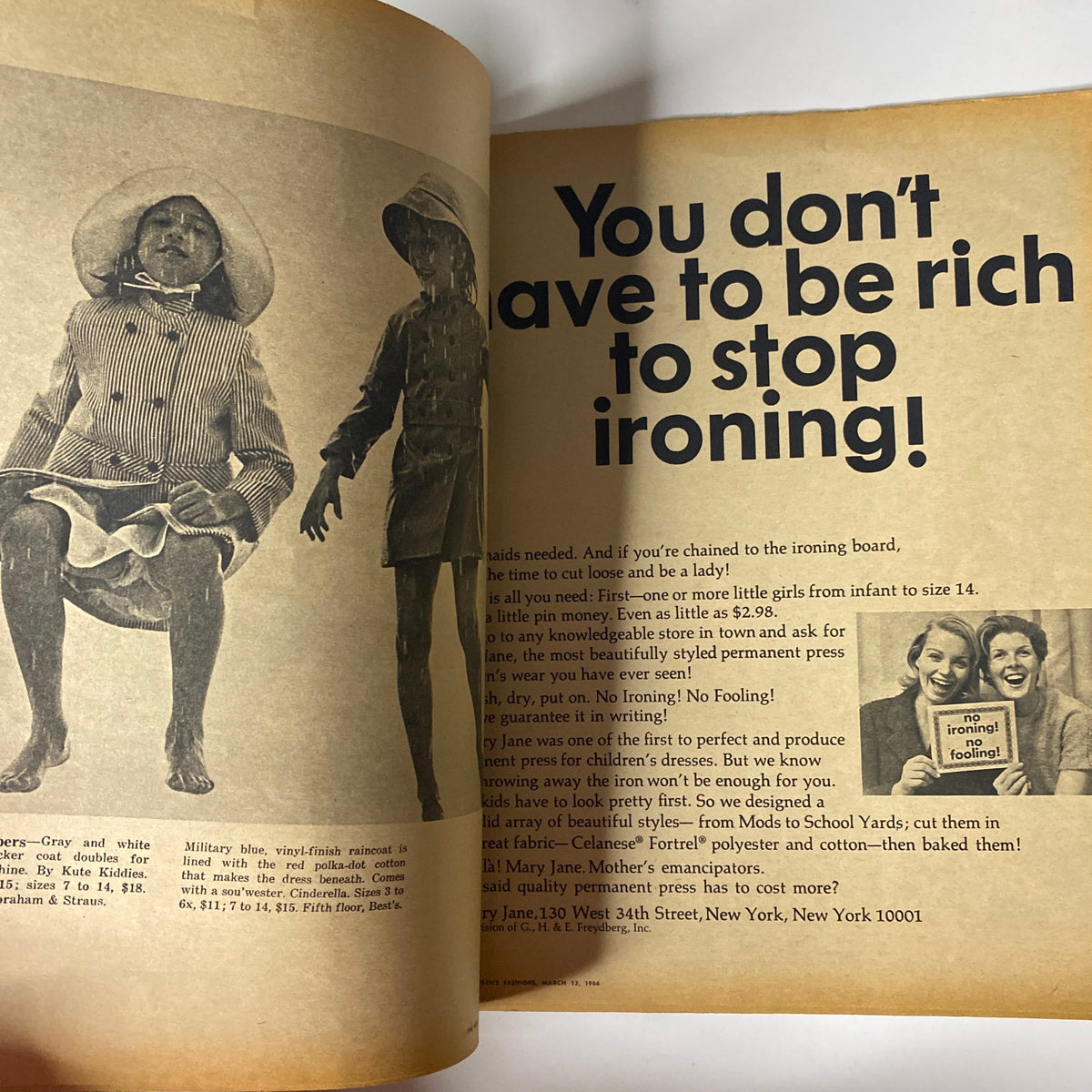
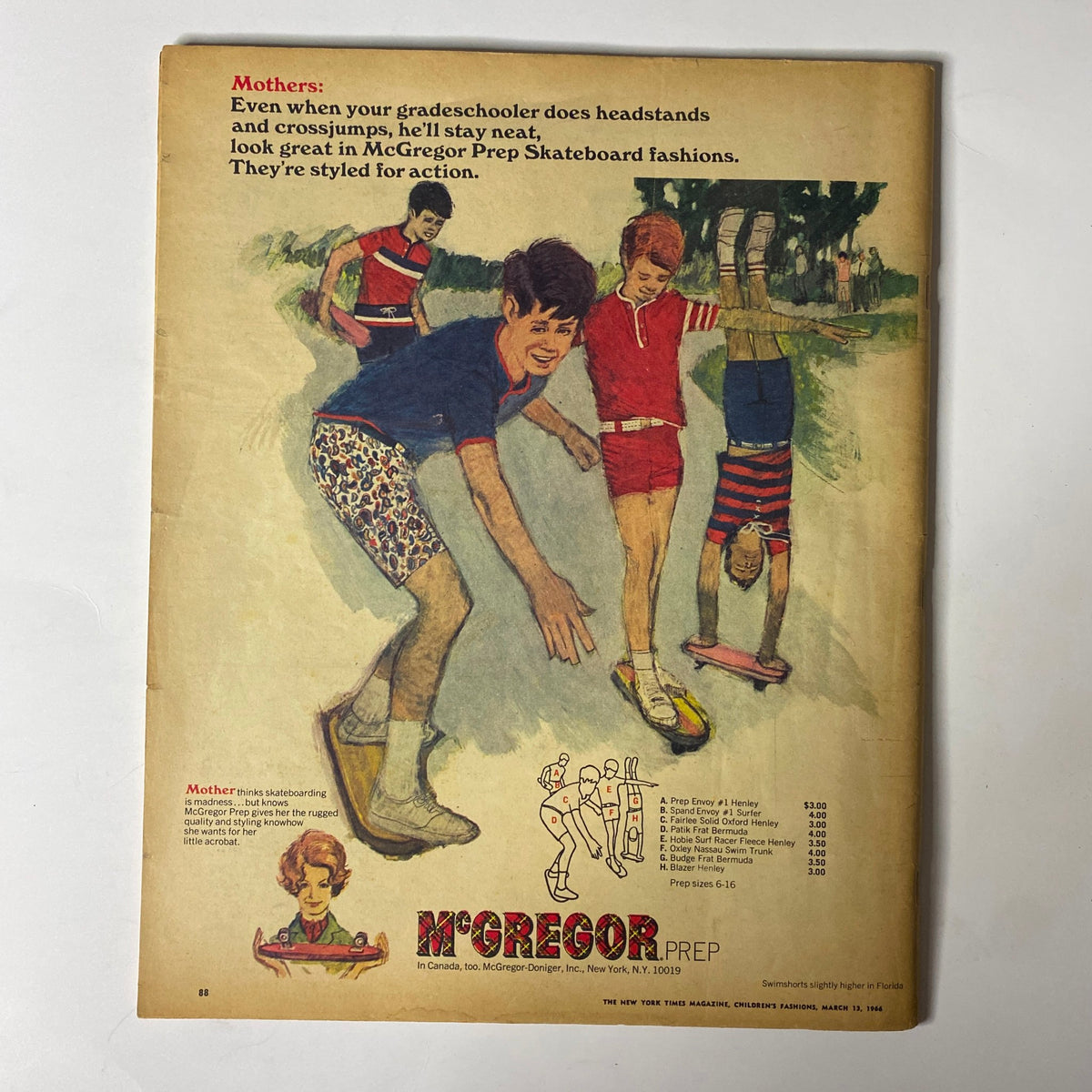
March 13, 1966 is a historically specific and editorially interesting publication date for a New York Times Magazine issue dedicated to children's fashion, and the specific content documented in the listing rewards careful examination as a primary source of mid-sixties American consumer culture. The children's fashion focus of this issue arrives at a precise moment in the history of American clothing manufacturing and retail — 1966 was the year when permanent press technology, developed in the early sixties, was achieving its broadest mainstream commercial penetration and was being marketed directly to American mothers as a genuine domestic liberation. The Mary Jane dresses advertisement documented in the listing — "You don't have to be rich to stop ironing!" — is a primary document of that marketing moment, with its specific claim about Celanese Fortrel polyester-cotton blends "baked" to maintain form capturing the specific language through which fabric technology was being sold to the American consumer at the precise moment of its mainstream arrival. The advertisement's price point ($2.98 and up) and its range from infant to age 14 reflect the democratic aspirational marketing of permanent press — a technology that promised middle-class mothers the domestic convenience previously available only through expensive tailored garments or extensive labor. For collectors building an archive of New York Times Magazine issues from the mid-sixties, this March 1966 edition is a primary document of American consumer culture at a specific and historically interesting technological and commercial transition point in the history of clothing.
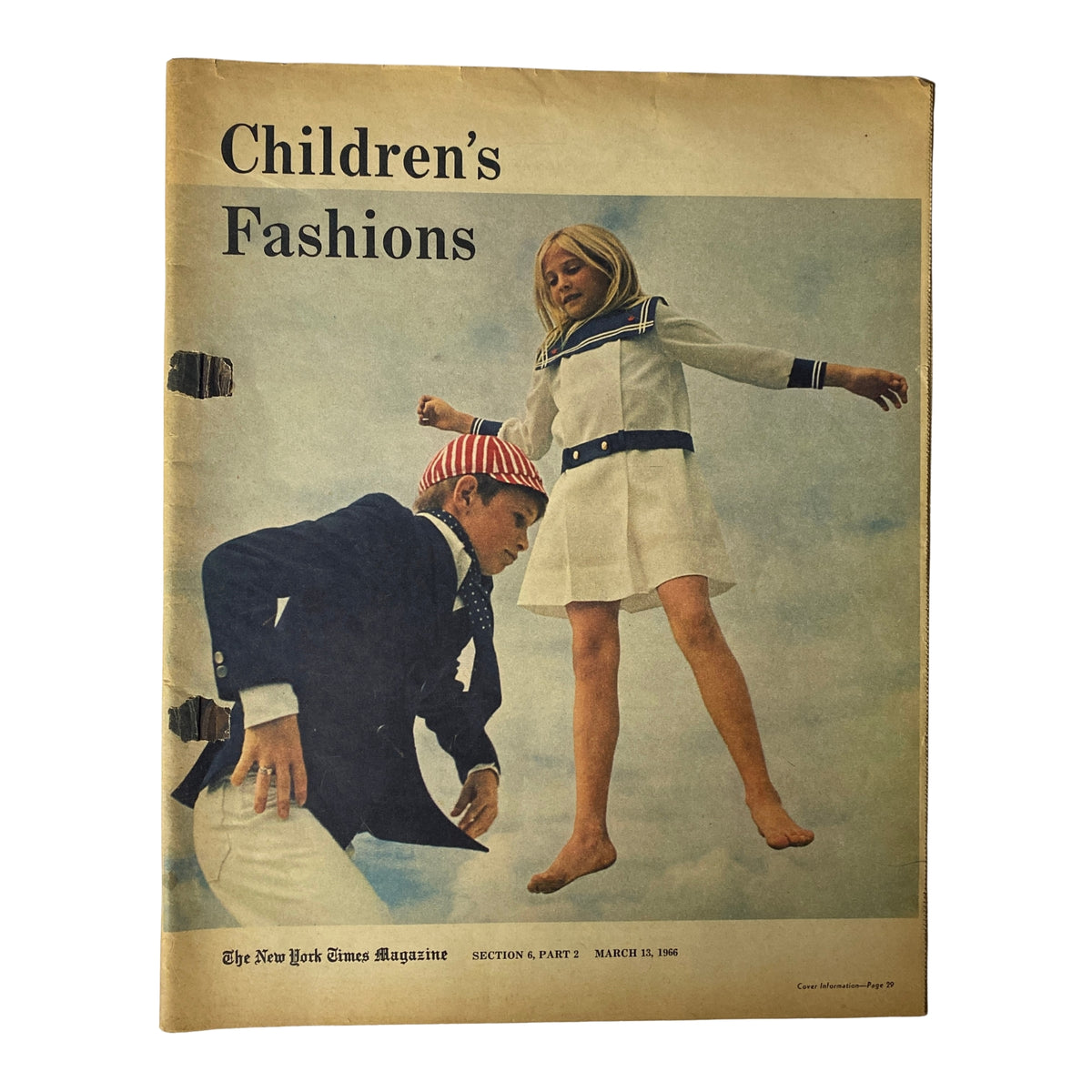
The specific children's outerwear documented in the listing's cover descriptions adds a further layer of primary source documentation that rewards fashion historians and collectors. The gray and white striped double-breasted coat from Kute Kiddies at $18 at Abraham & Strauss and the military blue vinyl raincoat with red polka-dot cotton lining paired with a Cinderella dress at Best & Company together document several significant aspects of mid-1960s children's fashion simultaneously: the use of vinyl as a fashionable material for children's outerwear — a trend driven by the mod aesthetic that was transforming adult fashion in exactly this period — and the department store retail geography of mid-sixties New York, where Abraham & Strauss and Best & Company were both significant institutions in the city's retail landscape. The Cinderella dress brand pairing and the military-inspired colorway reflect the specific early-sixties design language that was being applied to children's clothing as the mod influences from London's Carnaby Street were beginning their American commercial penetration. The price documentation — $11 to $18 for outerwear items — provides a primary source record of children's clothing retail economics in March 1966 that has genuine historical research utility for economic historians and fashion historians studying the mid-century American consumer market. Collectors researching American cultural and consumer magazines from 1966 will find this New York Times Magazine issue a specifically documented primary artifact of mid-sixties fashion and consumer culture.
The New York Times Magazine's specific position in the American media landscape of March 1966 gives this children's fashion issue a cultural authority that a purely commercial fashion publication could not have claimed. The Times Magazine in this period was read by an educated, affluent, culturally engaged New York and national readership that included the designers, buyers, retailers, and consumers who shaped American fashion culture, and a Times Magazine children's fashion issue was addressing that readership as both aspirational consumers and informed participants in a broader cultural conversation about how American children dressed and what that dress communicated about family values, consumer choices, and cultural identity. The specific combination of department store advertising, brand documentation, price point information, and fabric technology marketing preserved in this issue constitutes a primary source record of that cultural conversation from the most authoritative mainstream print venue in which it was conducted in March 1966.
About the Publication
The New York Times Magazine has been published as a weekly supplement to the Sunday New York Times since 1896, establishing itself over more than a century as one of the most widely read and institutionally authoritative weekly magazine publications in American journalism. Its editorial format combined long-form journalism, cultural commentary, and feature reporting with the specific authority of the Times brand, and its advertising environment — attracting the most significant American brands and retailers as advertisers — gave its fashion and consumer issues a commercial documentation value alongside their editorial significance. By March 1966 the Times Magazine was read by millions of Sunday Times subscribers and was one of the primary venues through which educated, affluent American consumers encountered fashion, design, technology, and cultural trend information in a format that balanced journalistic authority with commercial utility.
Key Highlights Inside
- Children's outerwear cover editorial featuring a gray and white striped double-breasted Kute Kiddies coat ($18 at Abraham & Strauss) and a military blue vinyl raincoat with red polka-dot lining paired with a Cinderella dress ($11-$15 at Best & Co.) — a primary source record of mid-sixties children's outerwear retail, pricing, and the specific mod and military-inspired design vocabulary being applied to children's fashion in Spring 1966.
- Mary Jane dresses permanent press advertisement — "You don't have to be rich to stop ironing!" — a primary document of the commercial marketing of Celanese Fortrel polyester-cotton permanent press technology to American mothers at the precise moment of its mainstream consumer penetration, with specific price points, size ranges, and fabric technology claims that constitute a primary source record of the American textile and clothing industry's mid-sixties technological marketing strategy.
- Department store retail geography documentation — Abraham & Strauss and Best & Company as named retail venues — providing a primary record of the New York department store retail landscape in March 1966 and the specific distribution channels through which mid-sixties children's fashion was reaching its consumer market.
- Mod-inspired and school-staple children's dress styles documented in the Mary Jane advertising content — a primary source of the specific aesthetic vocabulary being applied to children's clothing as Carnaby Street influences were beginning their American commercial penetration in early 1966, with Mod-inspired girls' clothing documented at the mass market price point that distinguished the American commercial adoption from the London original.
- Note: Specific editorial article titles, photographs beyond the described outerwear, and confirmed interior content details beyond the documented fashion and advertising features have not been individually verified for this issue. The highlights above reflect the verified cover and advertising content, the New York Times Magazine's well-established editorial format, and the historical context of March 13, 1966.
Condition & Rarity
New York Times Magazine issues from March 1966 are approaching their sixtieth year of existence, and the condition landscape for surviving copies from this period reflects both the general attrition of that age and the specific characteristics of a weekly supplement printed on newsprint-quality paper that was not designed for long-term preservation. Very Good condition with minor edge wear is an honest and strong grade for a fifty-nine-year-old weekly supplement, indicating a copy that retains full structural integrity, displays cleanly, and shows no significant cover damage or interior page loss beyond the minimal evidence of its age. The absence of a mailing label is a meaningful condition positive that preserves the full cover design without adhesive damage, identifying this as a newsstand or carefully preserved subscriber copy whose cover is unobstructed. For a publication whose primary collector value rests on its documented fashion editorial and advertising content, the condition described represents a complete and fully accessible primary source. The plastic protective sleeve provides ongoing archival protection for a publication whose paper chemistry benefits from protection against the continued oxidation and brittleness that affect all mid-century newsprint-based publications. Collectors evaluating surviving examples should prioritize cover integrity, the completeness of the advertising pages, and overall structural soundness as primary condition criteria.
Looking for More Issues Like This?
A Very Good, label-free copy of the March 13, 1966 New York Times Magazine with the children's fashion outerwear editorial and the documented permanent press advertising content is a specifically dated mid-sixties consumer culture primary source — issues from the Times Magazine's fashion-focused editions with this level of documented advertising and retail content surface infrequently in strong condition. If this issue is no longer available, the full New York Times Magazine collection at OriginalMagazines.com is the most comprehensive place to browse surviving issues from across the publication's history and locate other fashion editions, consumer culture issues, or significant dates from the magazine's mid-sixties run. The 1966 magazine collection brings together surviving issues from across that year's major publications for collectors interested in the full range of American fashion, design, and consumer culture journalism during the mid-sixties' most commercially and aesthetically dynamic period.