


Description
Collector's Note – Why This Issue Matters
February 19, 1966 is a publication date of specific historical significance for The New Yorker, arriving in the middle of what would prove one of the most consequential years in the magazine's engagement with American political and social life. The Vietnam War's escalation was dominating the political conversation — the Senate Foreign Relations Committee hearings on Vietnam, chaired by Senator J. William Fulbright, had begun on February 4 of that year and were generating the most sustained public examination of American war policy that the Johnson administration had yet faced. A New Yorker from February 19, 1966 was therefore produced in the specific atmosphere of those hearings' first two weeks, when the question of whether the United States could sustain both its Great Society domestic ambitions and its Vietnam military commitment was being asked with unusual directness in a public forum. The "Letter from Washington" documented on page 146 is a primary document of particular significance in this context — a New Yorker Washington correspondence produced during the Fulbright hearings' first fortnight is a contemporaneous primary source of how the magazine's most trusted Washington observer was reading the political landscape at a historically specific and consequential moment. For collectors building an archive of New Yorker issues from the Shawn-era sixties, this February 19, 1966 edition is a precisely dated primary document of the publication at one of the more politically charged moments of its most historically engaged decade.
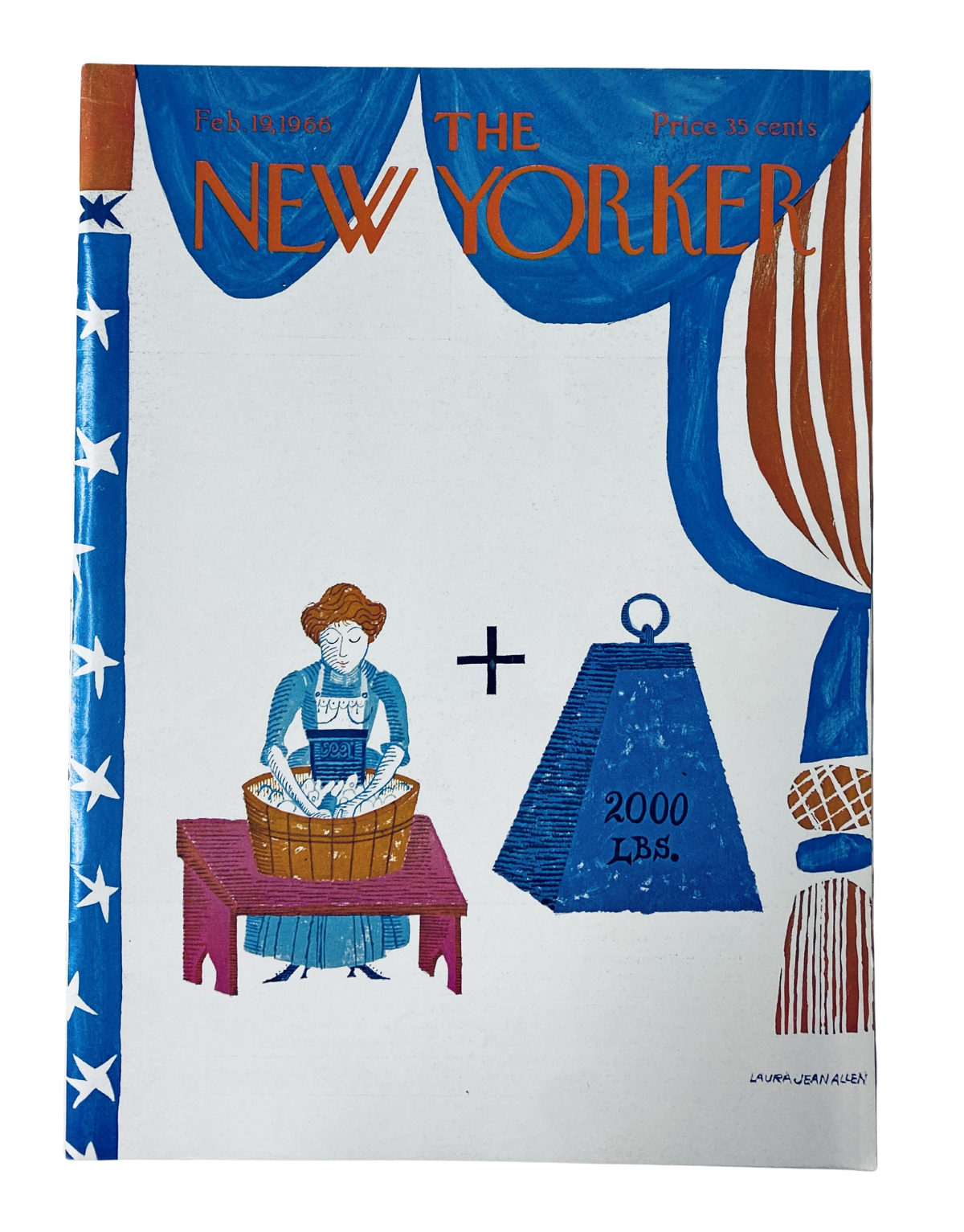
The Laura Jean Allen cover is a primary visual document of a New Yorker cover artist whose specific aesthetic contribution to the magazine's visual tradition in the 1960s is now recognized as one of the more distinctive of the period. Allen contributed covers to the New Yorker through the sixties and into the seventies, her work characterized by a specific quality of gentle domestic observation — the intimate urban details of New York life, the particular texture of seasonal change in the city — that gave her covers a character simultaneously modest and precise. A February 1966 Allen cover arriving in mid-winter New York would have engaged the specific visual vocabulary of late-winter urban life that was her characteristic subject matter, and the cover's preservation in newsstand form without label obstruction — as confirmed by the Very Good condition description with only light edge wear — preserves Allen's original visual statement in its most complete form. The full cultural criticism departments documented in the table of contents add the editorial depth that makes individual New Yorker issues primary research resources rather than merely collectible objects: Musical Events on page 134, The Theatre on page 130, The Current Cinema on page 145, The Art Galleries on page 140, and Books on page 159 collectively constitute a primary source record of the New York cultural landscape in the third week of February 1966, produced by a critical roster whose collective judgment made the New Yorker's departments the most authoritative in the country. Collectors researching New Yorker issues from 1966 will find this February 19 edition a primary document of both the publication's visual tradition and its political journalism at a historically specific moment.
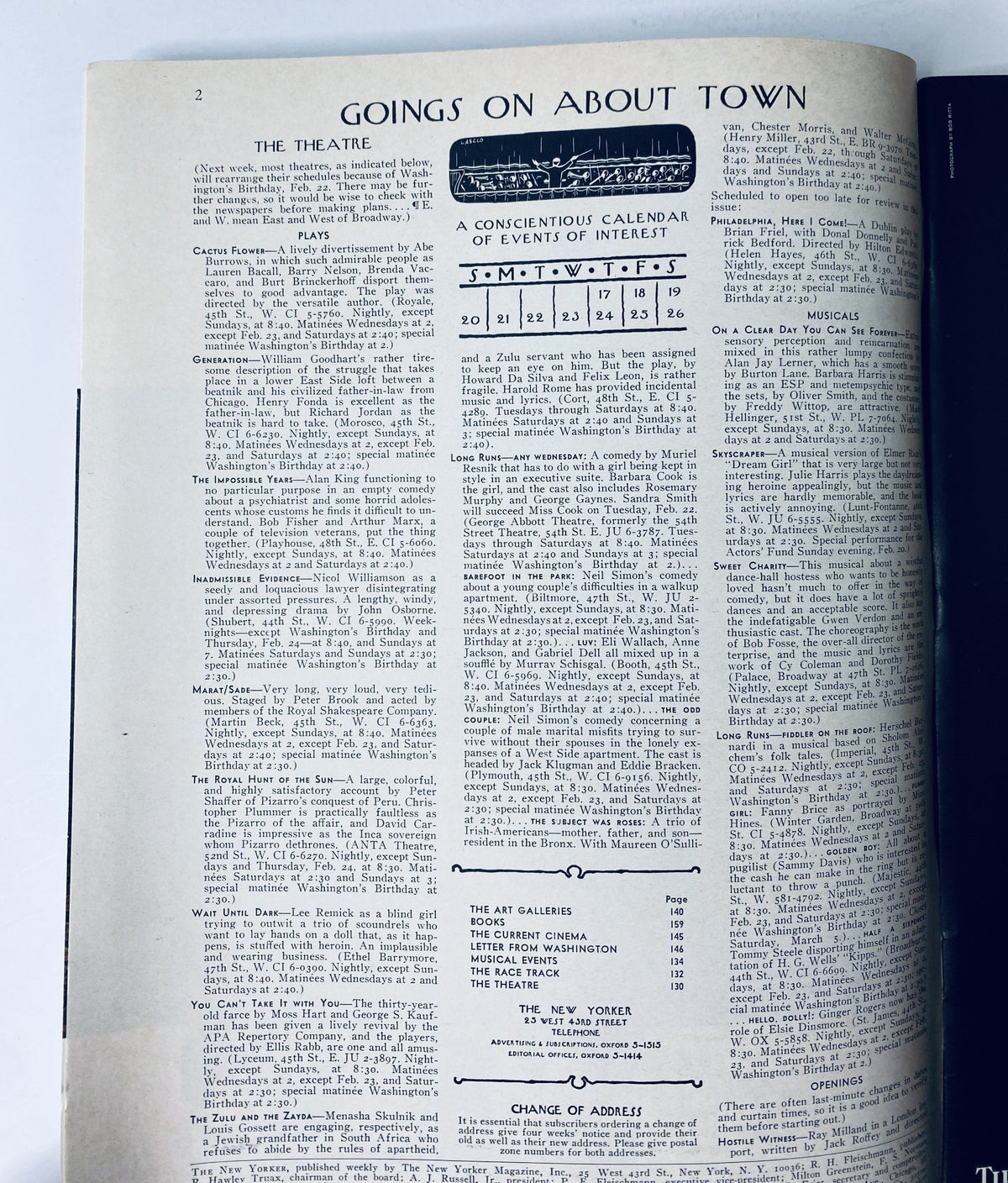
February 1966 is a specific and interesting moment in the New York theatrical and musical season, and the critical departments documented in this issue's table of contents would have engaged the season's most significant productions. The Broadway season of 1965-1966 was one of the more notable in the decade — Sweet Charity had just opened in January 1966, and the theatrical landscape of the period included productions that would define the era. The cinema column in mid-February 1966 would have engaged a film release calendar that was in the middle of one of the decade's most commercially and critically significant years, with films arriving in New York that represented the full range of the period's cinematographic ambition. The art galleries coverage reflects the specific New York gallery scene of 1966, when the pop art movement that had defined the early decade was giving way to minimalism and conceptual art in ways that the New Yorker's critics were documenting in real time. The Race Track column on page 132 adds the seasonal sports journalism that the New Yorker integrated within its cultural framework, reflecting the publication's consistent editorial judgment that the full range of New York life — from Vietnam policy to thoroughbred racing — deserved the same analytical intelligence.
About the Publication
The New Yorker was founded in 1925 by Harold Ross and by February 1966 had been publishing for forty-one years under the editorship of William Shawn, who had succeeded Ross in 1952 and whose tenure had deepened the magazine's commitment to long-form journalism, literary fiction, and cultural criticism while maintaining the visual humor and illustration tradition that had defined it from the beginning. The mid-sixties New Yorker under Shawn was producing some of the most significant journalism and criticism in its history, its engagement with Vietnam, civil rights, and the decade's cultural upheavals placing it at the center of the most important conversations in American public life. The February 19, 1966 issue represents the publication navigating the specific political crisis of the Fulbright hearings' opening weeks with the editorial intelligence and moral seriousness that had characterized Shawn's tenure at its most consequential.
Key Highlights Inside
- Laura Jean Allen cover — a primary visual document of one of the New Yorker's distinctive sixties cover artists, whose specific aesthetic of intimate domestic urban observation gave her covers a particular character within the publication's mid-decade visual tradition, preserved here in newsstand form with the full cover design unobstructed by label adhesion.
- "Letter from Washington" on page 146 — a documented New Yorker political correspondence produced during the opening weeks of Senator Fulbright's Senate Foreign Relations Committee hearings on Vietnam (begun February 4, 1966), constituting a contemporaneous primary source of the magazine's most trusted Washington observer engaging the most significant public examination of American war policy that the Johnson administration had yet faced.
- Musical Events on page 134, The Theatre on page 130, The Current Cinema on page 145, The Art Galleries on page 140, and Books on page 159 — the full cultural criticism architecture of a February 19, 1966 New Yorker, collectively constituting a primary source record of the New York performing arts, cinema, visual art, and literary landscape in the third week of February 1966, produced by the critical roster that made the magazine's departments the most authoritative in the country.
- The Race Track on page 132 — the New Yorker's sports journalism tradition represented in this specific issue, reflecting the publication's consistent editorial judgment that the full range of New York life deserved the same analytical intelligence brought to politics, theater, and literature.
- Note: Specific article titles within the departments, individual bylines, and confirmed secondary content details have not been individually verified for this issue beyond the documented table of contents entries. The highlights above reflect the New Yorker's well-established editorial format, the verified cover artist and publication date, and the historical context of February 19, 1966.
Condition & Rarity
New Yorker issues from February 1966 are approaching their sixtieth year of existence, and the condition landscape for surviving copies from this mid-Shawn-era period reflects both the general attrition of that age and the specific collector significance of issues from one of the publication's most historically engaged years. Very Good condition with only light edge wear is an honest and strong grade for a fifty-nine-year-old weekly literary magazine, indicating a copy that retains full structural integrity, displays cleanly, and shows no significant cover damage or interior page loss beyond the minimal evidence of its age. The Laura Jean Allen cover is preserved in this grade with the full visual integrity that allows both display and documentary appreciation of her specific contribution to the New Yorker's mid-sixties visual tradition. The plastic protective sleeve provides ongoing archival protection for a publication whose staple-bound format benefits from protection against cover separation and page stress over long-term storage. Collectors evaluating surviving examples of this issue should prioritize the Allen cover image integrity, the completeness of the Washington and cultural criticism departments, and overall structural soundness as primary condition criteria for a mid-sixties New Yorker of this editorial and documentary significance.
Looking for More Issues Like This?
A Very Good copy of The New Yorker from February 19, 1966 with the Laura Jean Allen cover and a Letter from Washington produced during the Fulbright Vietnam hearings' opening weeks is a specifically dated mid-sixties literary and political journalism primary source — issues from this editorially engaged Shawn-era year with confirmed cultural criticism table of contents and newsstand condition attract consistent collector interest. If this issue is no longer available, the full New Yorker collection at OriginalMagazines.com is the most comprehensive place to browse surviving issues from across the publication's history and locate other mid-sixties cover art issues, Vietnam-era Washington correspondence, or significant dates from the Shawn era's most consequential decade. The 1966 magazine collection brings together surviving issues from across that year's major publications for collectors working to document the full breadth of American print culture during one of the decade's most historically charged years.