



Description
Collector's Note – Why This Issue Matters
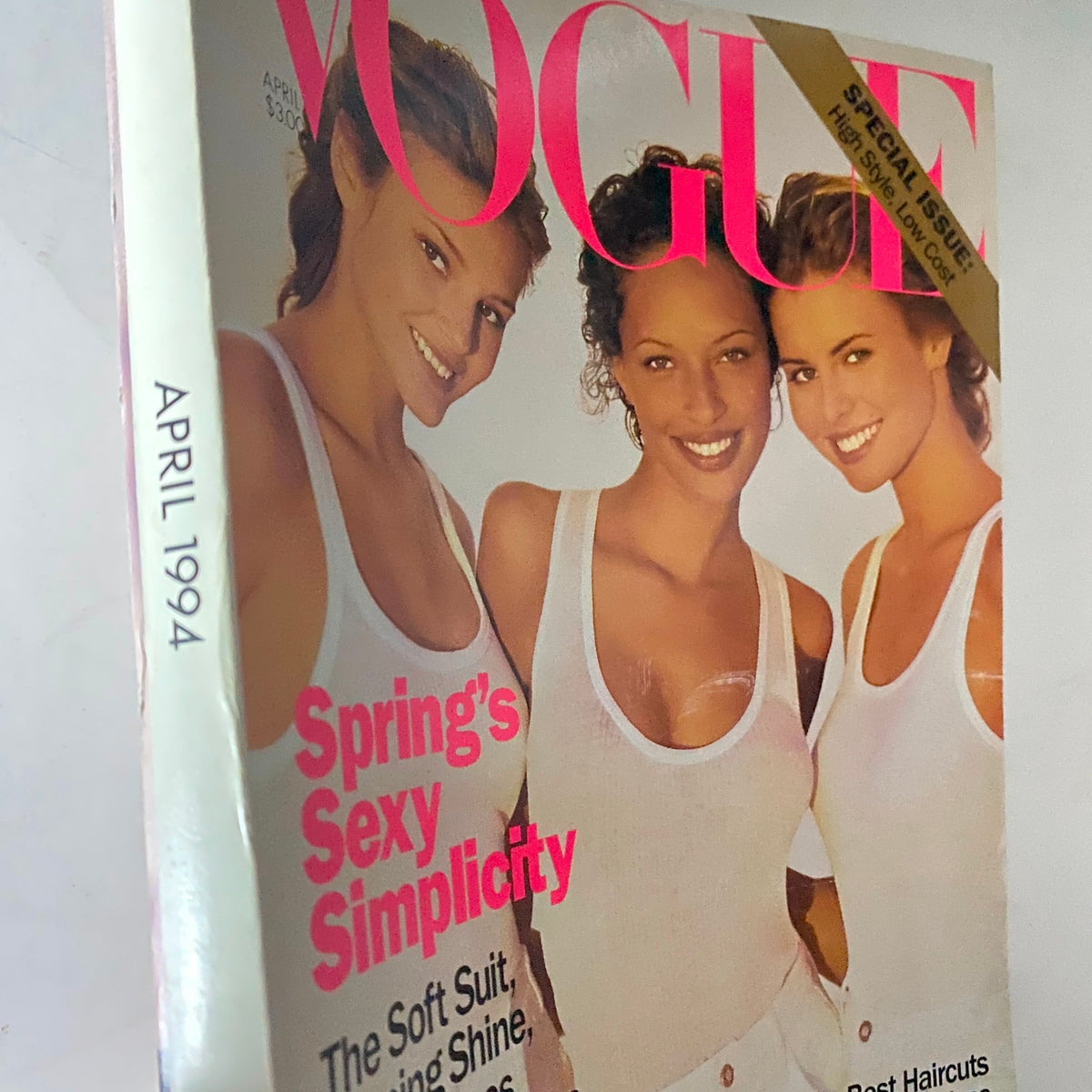
The April 1994 issue of Vogue features a trio of prominent supermodels on its cover, Bridget Hall, Niki Taylor, and Brandi Quinones, reflecting a moment when the magazine regularly relied on multiple top models simultaneously to convey the full breadth of a season's fashion narrative. By 1994, Niki Taylor had already established herself as one of the most in-demand models of her generation, having become a fixture of major fashion campaigns and magazine covers throughout the early 1990s. Pairing her with Hall and Quinones on a single cover reflects the era's particular enthusiasm for grouping several of its most recognizable faces together, an approach that let Vogue showcase a range of looks and personalities within a single issue rather than centering everything on one individual. This kind of multi-model cover format was especially common during the height of the supermodel era, when audiences were as invested in the models themselves as in the clothing they wore.
This issue's central fashion statement arrives in "The White Album," photographed by Steven Meisel, which frames white as designers' unanimous choice for spring 1994, positioned as the warm-weather counterpart to winter's reliance on black. The piece spans looks ranging from a classic shirt to a gleaming velvet minidress, photographed across a cast of models, actresses, and style-setters, reflecting a deliberately broad approach to interpreting a single seasonal color trend. A companion piece, "Sheer & Shine," photographed by Herb Ritts, explores the era's fascination with translucent and shimmering effects, pairing stripped-down silhouettes in satin, velvet, and transparent silk and gauze with correspondingly luminous makeup and high-gloss hair styling. Running both features within the same issue, each helmed by a photographer as significant as Meisel or Ritts, reflects the level of visual ambition Vogue brought to its core spring trend coverage during this period.
The issue also engages directly with one of the most culturally significant fashion conversations of the mid-1990s: the migration of street and subculture aesthetics into high fashion. "Off the Street…", written by Charles Gandee, examines how punk and hip-hop influences had infiltrated houses like Chanel and Versace, posing the provocative question of just how far high fashion's embrace of street culture might go. Its companion piece, "…And Into the Future," extends this idea further, tracing how that street-influenced, futuristic aesthetic was being translated into a new design vocabulary built around clean shapes and high-gloss synthetic fabrics. Elsewhere, "Body Language," written by Katherine Betts, documents tattoos and piercings moving from subcultural markers into mainstream expression, noting their adoption by supermodels, athletes, and college students alike. Together, these pieces capture a specific and well-documented shift in how mainstream fashion was absorbing and reframing subcultural style during this exact period.
Taken together, this issue offers a richly detailed cross-section of spring 1994 fashion thinking, anchored by Niki Taylor's cover presence and extended by major photographer-driven trend features and substantive cultural commentary on street style's rise. It sits within the broader context of 1994 magazines and the long editorial history of Vogue itself, capturing a specific, well-documented moment in the magazine's coverage of the supermodel era at its height. Few single issues combine a triple-model cover with this much substantive trend analysis and cultural commentary within the same set of pages. That density of specific content is precisely what gives this issue lasting reference value for collectors of 1990s fashion media.
About the Publication
Vogue has stood as one of the most influential fashion publications in the world since its founding in the late nineteenth century, evolving into the definitive record of high fashion, photography, and style for an international readership well before this 1994 issue's publication. By the mid-1990s, the magazine's editorial format combined front-of-book trend coverage under sections like "Point of View" with longer fashion portfolios built around major photographers and substantive features examining fashion's relationship to broader cultural movements. This structure allowed Vogue to address both immediate seasonal trends and more reflective cultural analysis within a single issue, distinguishing it from narrower trend-report publications. The early-to-mid 1990s represented the height of the supermodel era, during which a relatively small group of models, including Niki Taylor, achieved a level of individual fame and magazine cover presence rarely matched in the decades that followed. Vogue's pattern of featuring multiple top models together on a single cover, as seen in this issue, reflected the particular cultural enthusiasm surrounding supermodels during this specific period. The magazine's audience spanned dedicated followers of high fashion as well as readers drawn to its broader cultural commentary on subjects like street style's rise and body art's move into the mainstream. Vogue maintained a consistent structural rhythm across issues during this period, typically opening with shorter trend pieces before moving into longer fashion portfolios and feature writing. That consistent format is part of what allows an issue like this one to be so precisely dated and contextualized within the magazine's broader 1990s output.
Key Highlights Inside
- Cover feature on supermodels Bridget Hall, Niki Taylor, and Brandi Quinones, reflecting the era's enthusiasm for multi-model covers during the height of the supermodel period. Taylor in particular had become one of the most in-demand models of the early 1990s by this point. The triple-model format allowed the issue to showcase a range of looks within a single cover image.
- "The White Album," photographed by Steven Meisel, framing white as the season's unanimous designer choice for spring 1994. The piece spans pieces from a classic shirt to a gleaming velvet minidress across a cast of models and style-setters. It reflects the issue's central seasonal color statement.
- "Sheer & Shine," photographed by Herb Ritts, exploring sheer and shimmering effects across satin, velvet, and transparent fabrics. The piece pairs these silhouettes with correspondingly luminous makeup and high-gloss hair styling. It represents one of the issue's two major photographer-driven trend features.
- "Off the Street…", written by Charles Gandee, examining how punk and street culture aesthetics had infiltrated major fashion houses like Chanel and Versace. The piece poses a pointed question about how far high fashion's embrace of street style might extend. It reflects a genuine and actively unfolding cultural conversation at the time of publication.
- "…And Into the Future," extending the issue's street-style coverage into a forward-looking design vocabulary built around clean shapes and high-gloss synthetic fabrics. This companion piece frames street influence as an evolving rather than static trend. Together with its companion article, it offers a comprehensive look at one of the period's most significant style shifts.
- "Body Language," written by Katherine Betts, documenting tattoos and piercings moving from subcultural markers into mainstream adoption by supermodels, athletes, and college students. This piece captures a specific cultural shift in how body art was perceived during the mid-1990s. It reflects the issue's willingness to address broader social trends alongside conventional fashion coverage.
- "Talking Fashion," covering Burberry's rejuvenation under what the piece calls a youthquake, alongside coverage of the Council of Fashion Designers of America's awards ceremony. This front-of-book feature also touches on the personal relationships of the era's most prominent supermodels. It rounds out the issue's blend of industry news and lighter style commentary.
Condition & Rarity
Condition for fashion magazines of this type and era is generally assessed through cover gloss retention, spine and binding integrity, page completeness, and the absence of significant creasing, tearing, or soiling. The absence of a subscriber label is generally viewed favorably among collectors, since newsstand copies without label residue or sticker removal marks tend to present a cleaner, unobstructed cover image, which matters significantly for an issue valued in part for its triple-model cover photography. A protective plastic covering plays a meaningful preservation role for glossy fashion magazines of this kind, guarding against humidity, handling wear, and gradual fading of the cover's color and gloss over time. Issues from the mid-1990s, now roughly three decades old, are old enough that cover gloss degradation and minor edge softening become common even among carefully stored examples, making careful visual inspection of the actual item particularly important for this period of magazine. Binding integrity is an especially important factor for an issue with this much interior editorial content, since a complete and intact set of trend features and cultural commentary pieces adds considerably to the issue's reference value for collectors. Given the issue's combination of a notable triple-model cover and substantive Meisel and Ritts photography credits, well-preserved copies are likely to hold particular interest among collectors focused on supermodel-era fashion journalism specifically. Collectors evaluating any surviving copy of this issue should weigh cover clarity and overall structural completeness as the primary indicators of long-term collectible condition, referring closely to any available photographs of the specific copy in question for a precise assessment.
Looking for More Issues Like This?
An issue combining a triple-supermodel cover with major photographer-driven trend features and substantive cultural commentary on street style's rise represents a particularly well-documented piece of fashion publishing history, making it an interesting target for collectors focused on this specific period. If this exact April 1994 issue isn't what you're looking for, the broader Niki Taylor collection spans material connected to her career across multiple publications and years. For collectors more interested in the publication itself, the wider Vogue collection offers decades of covers and editorial eras, including the magazine's broader documentation of the supermodel era at its height. For those focused on this specific year, the full range of 1994 magazines brings together material from across that year, spanning multiple publications beyond fashion alone. Browsing by person tends to suit collectors building a career-spanning archive around a specific model, while browsing by publication or year suits those more interested in a particular editorial era or cultural moment. Each of these three collections offers a distinct and practical path toward finding comparable material if this exact issue isn't available. Together, they cover the main angles from which a piece like this is typically sought out.