



Description
Collector's Note – Why This Issue Matters
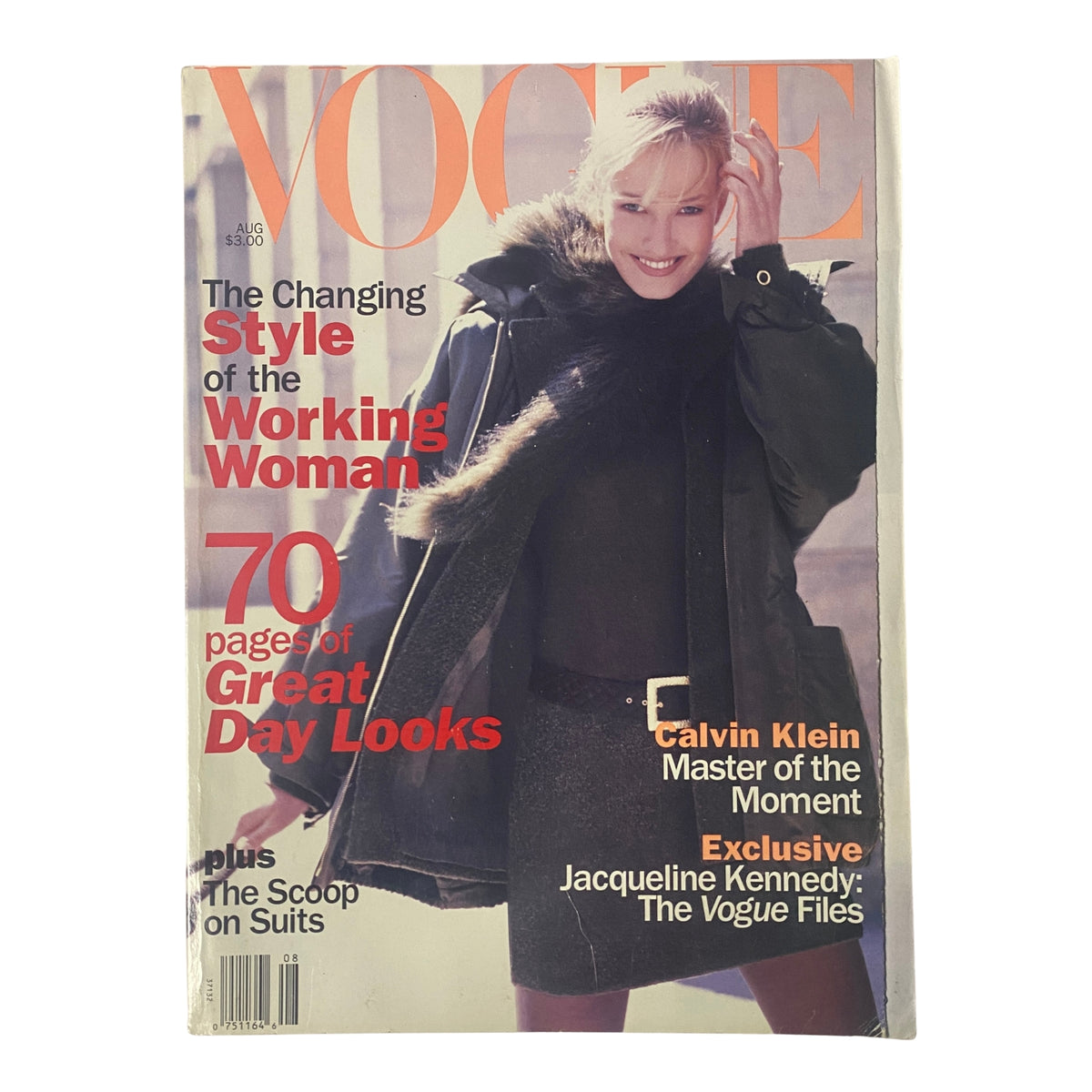
The August 1994 issue of Vogue features Dutch supermodel Karen Mulder on its cover, styled in Karl Lagerfeld's design for Chanel and photographed by Steven Meisel, bringing together three of the most significant names in mid-1990s fashion within a single cover image. By 1994, Mulder had firmly established herself among the era's most prominent working models, and her pairing with Lagerfeld's Chanel and Meisel's photography reflects the kind of high-level creative collaboration Vogue regularly assembled for its most prestigious covers. The cover look itself is documented in unusual detail, with Mulder wearing an olive Chanel dress paired with a matching tweed jacket and silk anorak, styled with Chanel's Desert Rose lipstick and Sable eye blush. The inclusion of hair styling by Orlando Pita, makeup by François Nars, and fashion editing by Carlyne Cerf de Dudzeele further reflects the depth of credited creative talent behind a single Vogue cover during this period, naming several individuals who would each go on to become highly influential figures within the broader beauty and fashion industries.
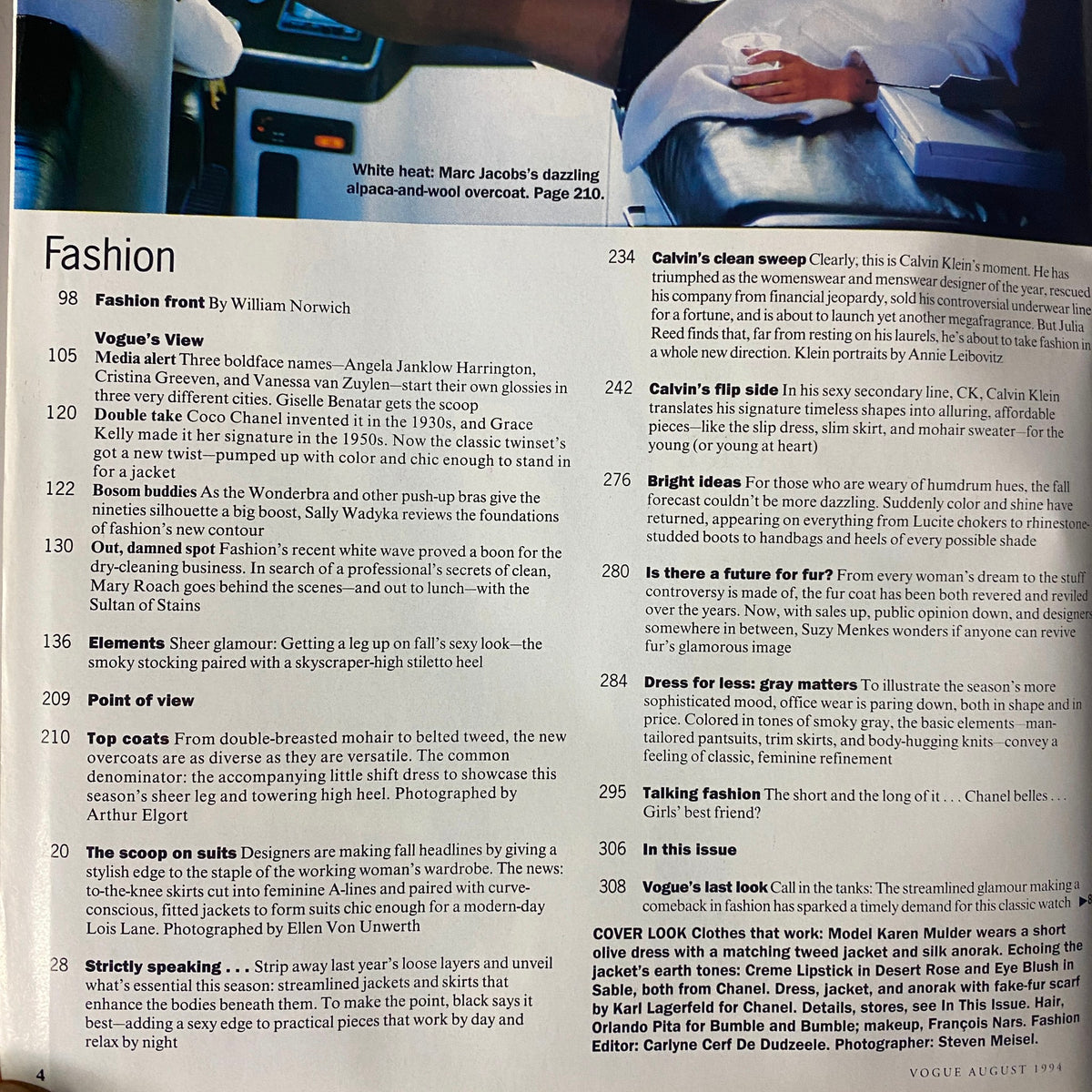
This issue's interior content is anchored by an extensive profile of Calvin Klein titled "Calvin's Clean Sweep," written by Julia Reed with portraits by Annie Leibovitz, examining Klein's dominant influence across both fashion and fragrance during the decade. Pairing a writer of Reed's caliber with a photographer as significant as Leibovitz for a single profile underscores how central Klein's cultural impact was considered at this specific point in the 1990s. A companion piece, "Calvin's Flip Side," extends this coverage to CK, Klein's younger and more accessibly priced line, highlighting chic slip dresses and mohair knits that captured a distinctly different segment of the era's fashion market. Running both features within the same issue gives this edition unusually comprehensive documentation of Klein's business and creative reach at a single moment in his career, spanning both his flagship label and its more youthful counterpart.
The issue also includes substantive coverage of two specific cultural and fashion debates that defined much of the early-to-mid 1990s. "Bosom Buddies" examines the Wonderbra and broader push-up trend that reshaped the decade's silhouette, capturing a specific undergarment-driven shift in how fashion approached the female form during this period. "Is There a Future for Fur?", written by the respected fashion journalist Suzy Menkes, tackles the growing controversy surrounding fur use in fashion alongside signs of its continued revival, reflecting a genuine industry tension that was actively unfolding at the time of publication rather than a settled historical question. Including a piece this directly engaged with contemporary ethical debate alongside more conventional trend reporting reflects Vogue's willingness to address the fashion industry's more contested issues head-on.
Taken together, this issue offers a remarkably complete cross-section of mid-1990s Vogue, anchored by Karen Mulder's richly documented Chanel cover and deepened considerably by its dual Calvin Klein profiles and substantive fur debate coverage. It sits within the broader context of 1994 magazines and the long editorial history of Vogue itself, capturing a specific, exceptionally well-documented moment in the magazine's history. Few single issues combine a cover this thoroughly credited with this much substantive designer profile writing and contemporary industry debate. That density of specific, attributable content is precisely what gives this issue lasting reference value for collectors of 1990s fashion media.
About the Publication
Vogue has stood as one of the most influential fashion publications in the world since its founding in the late nineteenth century, evolving into the definitive record of high fashion, photography, and style for an international readership well before this 1994 issue's publication. By the mid-1990s, the magazine's editorial format combined front-of-book trend coverage under sections like "Vogue's View" with longer fashion portfolios, substantive designer profiles, and feature writing engaging directly with contemporary industry debates. This structure allowed the magazine to address both immediate seasonal trends and more reflective cultural and ethical questions within a single issue, distinguishing it from narrower trend-report publications. Under longtime editor-in-chief Anna Wintour, Vogue had become known for the depth of access it commanded among the era's most significant designers and photographers, reflected clearly in this issue's combination of Lagerfeld-styled cover content and a Leibovitz-photographed Calvin Klein profile. The magazine's audience spanned dedicated followers of high fashion as well as readers drawn to its broader industry analysis and willingness to engage with contested topics like the fur debate. Vogue maintained a consistent structural rhythm across issues during this period, typically opening with shorter trend and culture pieces before moving into longer fashion portfolios and substantive profile writing. That consistent format is part of what allows an issue like this one to be so precisely dated and contextualized within the magazine's broader 1990s output.
Key Highlights Inside
- Cover feature on supermodel Karen Mulder, styled in Karl Lagerfeld's design for Chanel and photographed by Steven Meisel. The cover look includes an olive Chanel dress, matching tweed jacket, and silk anorak, with styling by Carlyne Cerf de Dudzeele. Hair and makeup credits include Orlando Pita and François Nars, reflecting the depth of creative talent assembled for this image.
- "Calvin's Clean Sweep," a profile of Calvin Klein's dominant influence across fashion and fragrance, written by Julia Reed with portraits by Annie Leibovitz. This feature reflects the significant editorial weight Vogue placed on Klein's cultural impact during this period. The pairing of Reed and Leibovitz underscores the prestige attached to this particular profile.
- "Calvin's Flip Side," covering CK, Calvin Klein's younger and more accessible line, highlighting slip dresses and mohair knits. This companion piece extends the issue's Klein coverage into a distinctly different segment of the fashion market. Together with its companion profile, it offers unusually comprehensive documentation of Klein's reach at this moment in his career.
- "Bosom Buddies," examining the Wonderbra and broader push-up trend that reshaped the decade's approach to silhouette. This piece captures a specific undergarment-driven shift in 1990s fashion that extended well beyond lingerie alone. It reflects the issue's attention to underlying structural trends shaping the era's clothing.
- "Is There a Future for Fur?", written by respected fashion journalist Suzy Menkes, examining the era's controversy and partial revival surrounding fur use in fashion. This piece engages directly with an actively unfolding industry debate rather than a settled historical question. Menkes's involvement reflects the level of journalistic authority brought to this particular feature.
- "Double Take," reimagining the timeless twinset for a 1990s sensibility. This piece reflects the issue's broader interest in updating classic, traditionally conservative garments for a contemporary audience. It situates a specific wardrobe staple within the decade's evolving fashion vocabulary.
- "The Scoop on Suits," exploring how designers reinvented office chic through A-line skirts paired with fitted jackets. This piece captures a specific workwear silhouette trend documented for the period. It reflects the issue's attention to professional dressing alongside its more editorial fashion content.
Condition & Rarity
Condition for fashion magazines of this type and era is generally assessed through cover gloss retention, spine and binding integrity, page completeness, and the absence of significant creasing, tearing, or soiling. An issue described as very good condition with only minor wear on the edges generally indicates a cover that retains strong color saturation and gloss, with binding and interior pages intact and free from major structural damage. The absence of a subscriber label is generally viewed favorably among collectors, since newsstand copies without label residue or sticker removal marks tend to present a cleaner, unobstructed cover image, which matters significantly for an issue valued in part for its richly credited Chanel cover photography. A protective plastic covering plays a meaningful preservation role for glossy fashion magazines of this kind, guarding against humidity, handling wear, and gradual fading of the cover's color and gloss over time. Issues from the mid-1990s, now roughly three decades old, are old enough that cover gloss degradation and minor edge softening become more common even among carefully stored examples. Binding integrity is an especially important factor for an issue with this much interior editorial content, since a complete and intact set of designer profiles and fashion features adds considerably to the issue's reference value for collectors. Given the issue's combination of an unusually well-documented supermodel cover and substantive Calvin Klein profile content, well-preserved copies are likely to hold particular interest among collectors focused on 1990s fashion journalism or Chanel-specific imagery. Collectors evaluating any surviving copy of this issue should weigh cover clarity and overall structural completeness as the primary indicators of long-term collectible condition.
Looking for More Issues Like This?
An issue combining a richly credited Karen Mulder Chanel cover with substantive Calvin Klein profile content represents a particularly well-documented piece of fashion publishing history, making it an interesting target for collectors focused on this specific period. If this exact August 1994 issue isn't what you're looking for, the broader Karen Mulder collection spans material connected to her career across multiple publications and years. For collectors more interested in the publication itself, the wider Vogue collection offers decades of covers and editorial eras, including the magazine's broader history of substantive designer profiles like this one. For those focused on this specific year, the full range of 1994 magazines brings together material from across that year, spanning multiple publications beyond fashion alone. Browsing by person tends to suit collectors building a career-spanning archive around a specific model, while browsing by publication or year suits those more interested in a particular editorial era or cultural moment. Each of these three collections offers a distinct and practical path toward finding comparable material if this exact issue isn't available. Together, they cover the main angles from which a piece like this is typically sought out.