




Description
Collector's Note – Why This Issue Matters
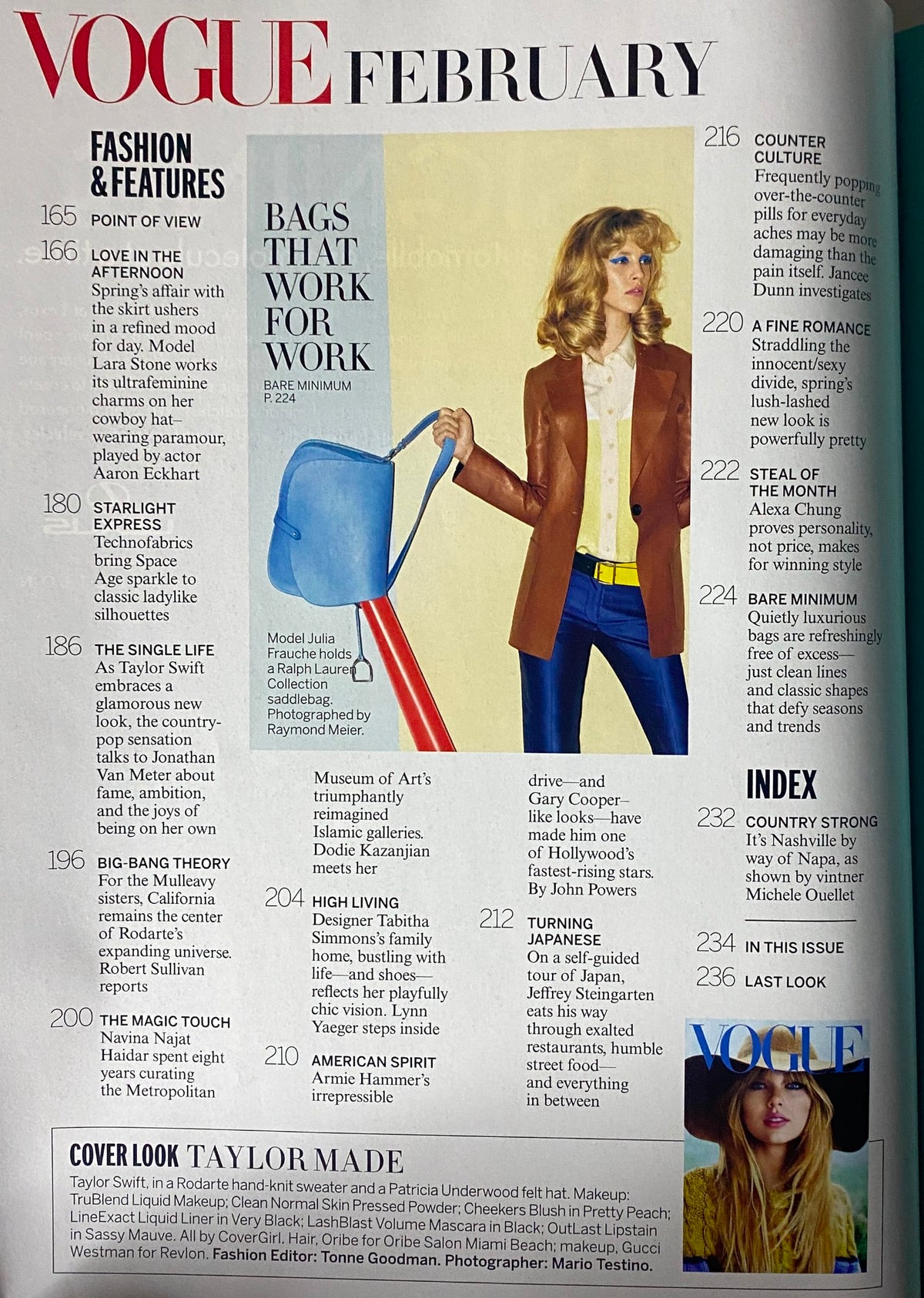
February 2012 is a historically specific and culturally significant moment in Taylor Swift's public identity, and this Vogue cover — photographed by Mario Testino, with fashion by Tonne Goodman — is the primary document of her formal fashion establishment recognition at a precise biographical turning point. Swift had released Speak Now in October 2010 and was in the period between that album and Red, which would arrive in October 2012. The "Single Life" framing of the cover story — Swift talking about independence, love, and artistic growth in an interview by Jonathan Van Meter — reflects the specific public narrative about her romantic life that was one of the defining threads of her celebrity coverage in this period, and the Vogue February 2012 cover represents the fashion press's most authoritative venue formally engaging that narrative and redirecting it toward aesthetic and artistic self-definition rather than tabloid speculation. Mario Testino's photography and Tonne Goodman's fashion editing placed this cover within the specific visual tradition of Vogue's most accomplished celebrity fashion portraiture, and the combination of Testino's specific photographic authority and Swift's specific biographical moment gives this issue a primary source profile that extends across both fashion photography history and pop music cultural history. For collectors building an archive of Taylor Swift magazine covers, this February 2012 Vogue is the definitive primary document of her first major American Vogue cover — a formally significant milestone in her transition from country-pop phenomenon to fully established mainstream cultural figure.
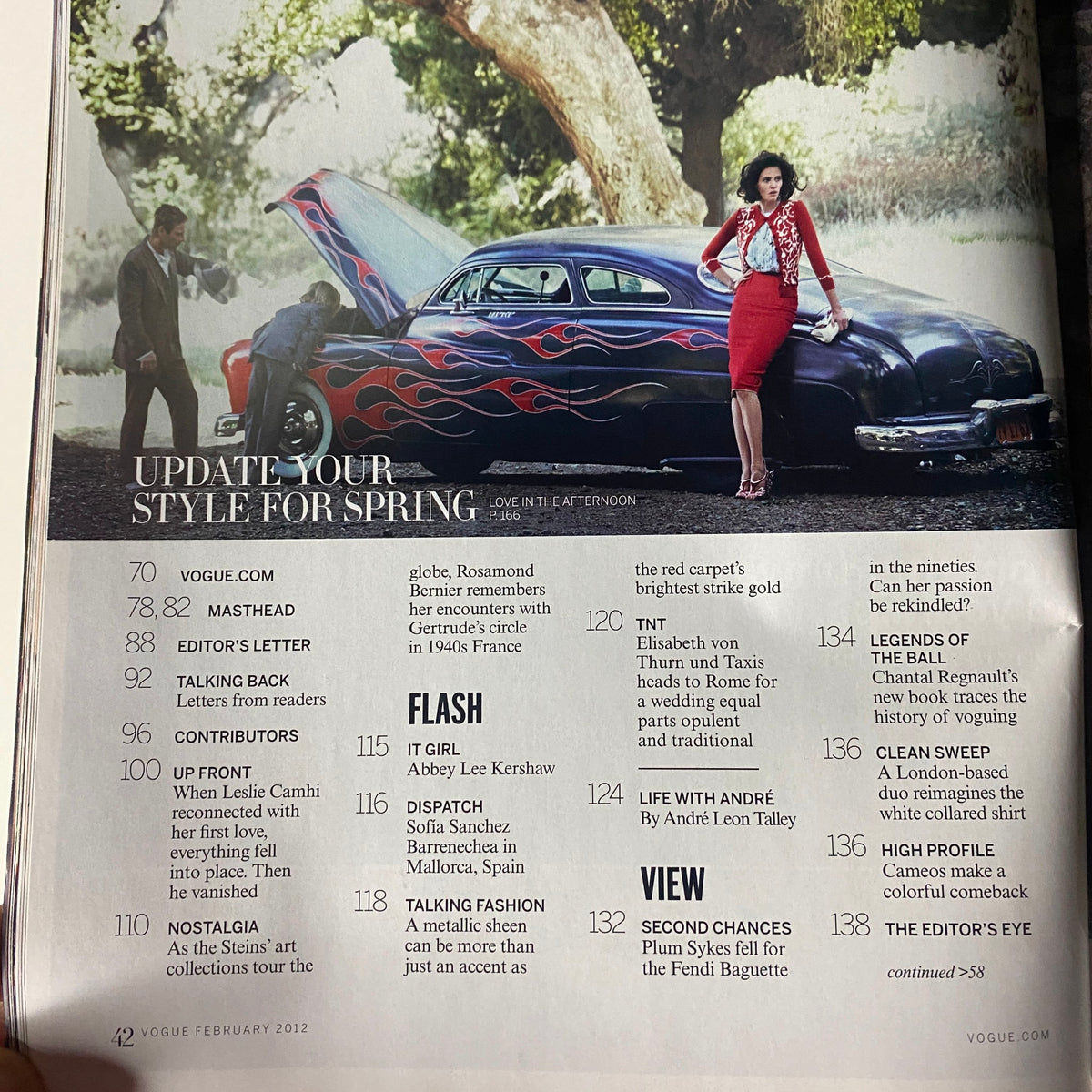
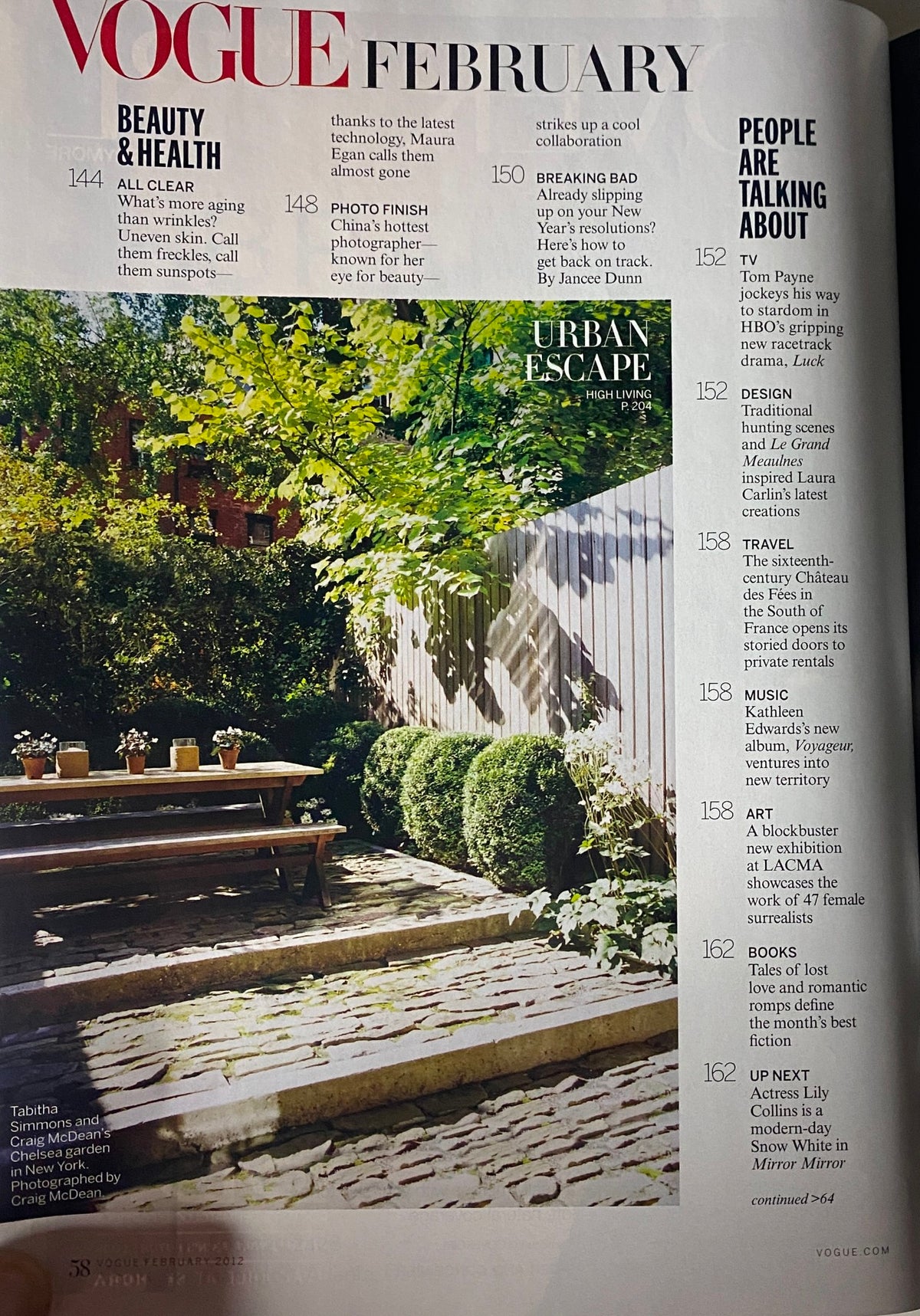
The supporting editorial content documented in the full table of contents makes this issue considerably more historically layered than the Taylor Swift cover alone would suggest. The "Legends of the Ball" voguing culture visual history on page 134 is a historically significant secondary document: voguing as a subject for mainstream fashion press coverage in February 2012 had a specific cultural context — Madonna's "Vogue" was twenty-two years in the past, Pose was still six years in the future, and the specific moment of February 2012 represents the voguing subculture's visibility in the mainstream fashion press at a specific intermediate point in its cultural trajectory. A Vogue feature on voguing culture's history in February 2012 is a primary document of that specific mainstream engagement moment. The Rodarte "Big-Bang Theory" feature on the Mulleavy sisters documents two of the most creatively significant American designers of the period at a specific career moment of expanding ambition, and the Metropolitan Museum Islamic galleries feature by Navina Najat Haidar provides a curatorial arts primary source that reflects the publication's consistent engagement with museum culture alongside fashion. The Kate Winslet autism awareness celebrity photo book feature adds a social responsibility dimension consistent with Wintour-era Vogue's periodic documentary engagements with charitable projects. The label-free newsstand provenance preserves the Mario Testino Swift cover in its complete, unobstructed form.
The Plum Sykes "Second Chances" Fendi Baguette feature on page 132 is a historically interesting minor document of accessory fashion culture: the Baguette had been one of the defining luxury accessories of the late nineties and early 2000s, its revival in 2012 reflecting the specific fashion industry pattern of decade-delayed nostalgia that makes individual Vogue coverage of such moments primary source records of commercial luxury fashion's cyclical cultural economy. André Leon Talley's "Life with André" column and the "Talking Fashion" trends section collectively document the specific fashion editorial voice of early-2010s Vogue at a moment when Talley's presence in the publication was itself a cultural artifact whose historical significance would only become fully clear in retrospect. The Lily Collins Mirror Mirror Up Next feature and the Kathleen Edwards music and LACMA surrealist women art coverage round out an editorial package that reflects Wintour-era Vogue at its most characteristically comprehensive across fashion, art, film, and music simultaneously.
About the Publication
Vogue was founded in 1892 and has been published by Condé Nast since 1909, operating continuously as the most authoritative fashion magazine in the American market across more than a century of publication. Under Anna Wintour's editorial direction, which began in 1988 and extended through this February 2012 issue, the magazine combined its traditional fashion authority with expanded cultural journalism, celebrity profiles, and serious feature writing that distinguished it from competitors. The February 2012 Taylor Swift cover represents Wintour-era Vogue at a specific point in its engagement with the new generation of celebrity whose relationship to fashion had been shaped by the decade of red carpet culture and social media that Swift's career embodied more completely than almost any other figure of her generation.
Key Highlights Inside
- "The Single Life" Taylor Swift cover and Jonathan Van Meter interview on page 186, photographed by Mario Testino with fashion by Tonne Goodman — the primary document of Swift's first major American Vogue cover, combining Testino's specific photographic authority with Wintour-era Vogue's most accomplished celebrity fashion editorial tradition at the precise biographical moment of Swift's artistic and personal self-definition between Speak Now and Red.
- "Legends of the Ball" voguing culture visual history on page 134 — a primary document of mainstream fashion press engagement with voguing's cultural history at a specific February 2012 moment, representing an intermediate point in the subculture's trajectory from Madonna's 1990 reference point toward its later mainstream visibility, and constituting a primary source record of how Vogue was framing that cultural history for its readership at this specific moment.
- "Big-Bang Theory" Rodarte Mulleavy sisters feature on page 196 — a documented engagement with two of the most creatively significant American designers of the period at a specific career moment of expanding ambition and growing international recognition, reflecting Vogue's consistent engagement with American fashion's most intellectually ambitious practitioners.
- "The Magic Touch" Metropolitan Museum Islamic galleries curatorial feature on page 200 by Navina Najat Haidar — a primary source document of one of the most significant museum curatorial projects of the period, reflecting Wintour-era Vogue's consistent engagement with institutional arts and museum culture alongside its fashion content.
- Lara Stone and Aaron Eckhart "Love in the Afternoon" editorial on page 166, "Starlight Express" technofabrics feature on page 180, Plum Sykes Fendi Baguette revival on page 132, and André Leon Talley's "Life with André" on page 164 — the full fashion editorial and cultural commentary range of a February 2012 Vogue documented with the attribution specificity that makes this table of contents an unusually complete primary source of the publication's early-2010s editorial identity.
- Kate Winslet autism awareness photo book feature, Lily Collins Mirror Mirror Up Next, Kathleen Edwards Voyageur music coverage, and LACMA surrealist women art feature — the social responsibility, film, music, and art journalism range that collectively documents Wintour-era Vogue's characteristic ambition to engage the full spectrum of American and international cultural life beyond fashion in a single February issue.
Condition & Rarity
Vogue issues from February 2012 are approaching their fourteenth year of existence — recent enough that surviving copies remain readily available, but old enough that condition variation is meaningful for the specific collector seeking a label-free newsstand example of Taylor Swift's first major American Vogue cover. Very Good condition with minor edge wear is an honest and strong grade for a thirteen-year-old monthly fashion magazine, indicating a copy that retains full structural integrity, displays cleanly, and preserves the Mario Testino Swift cover without the structural damage that would compromise its display value. The absence of a mailing label is a significant condition positive for Vogue specifically — the magazine's enormous subscription base means that the majority of surviving copies carry label adhesion or removal marks on the cover — and the label-free status preserves the Testino photography in its complete, unobstructed form. The plastic protective sleeve provides ongoing archival protection for a coated-stock publication whose cover surface benefits from protection against scuffing. Collectors evaluating surviving examples of this issue should prioritize cover surface quality and the Testino image integrity as the primary condition criteria most directly relevant to display value.
Looking for More Issues Like This?
A Very Good label-free newsstand copy of Vogue February 2012 with the Mario Testino Taylor Swift cover, Jonathan Van Meter interview, the voguing cultural history feature, and the fully documented table of contents is the primary document of Swift's most formally significant early fashion press recognition — the Vogue cover that marked her formal establishment as a mainstream cultural figure rather than solely a music industry phenomenon. If this issue is no longer available, the Taylor Swift magazine collection at OriginalMagazines.com is the most focused resource for other significant Swift covers and features across publications and years, and the full Vogue collection offers surviving issues from across the magazine's history for collectors building a broader archive of its celebrity cover tradition and Wintour-era editorial identity.