


Description
Collector's Note – Why This Issue Matters
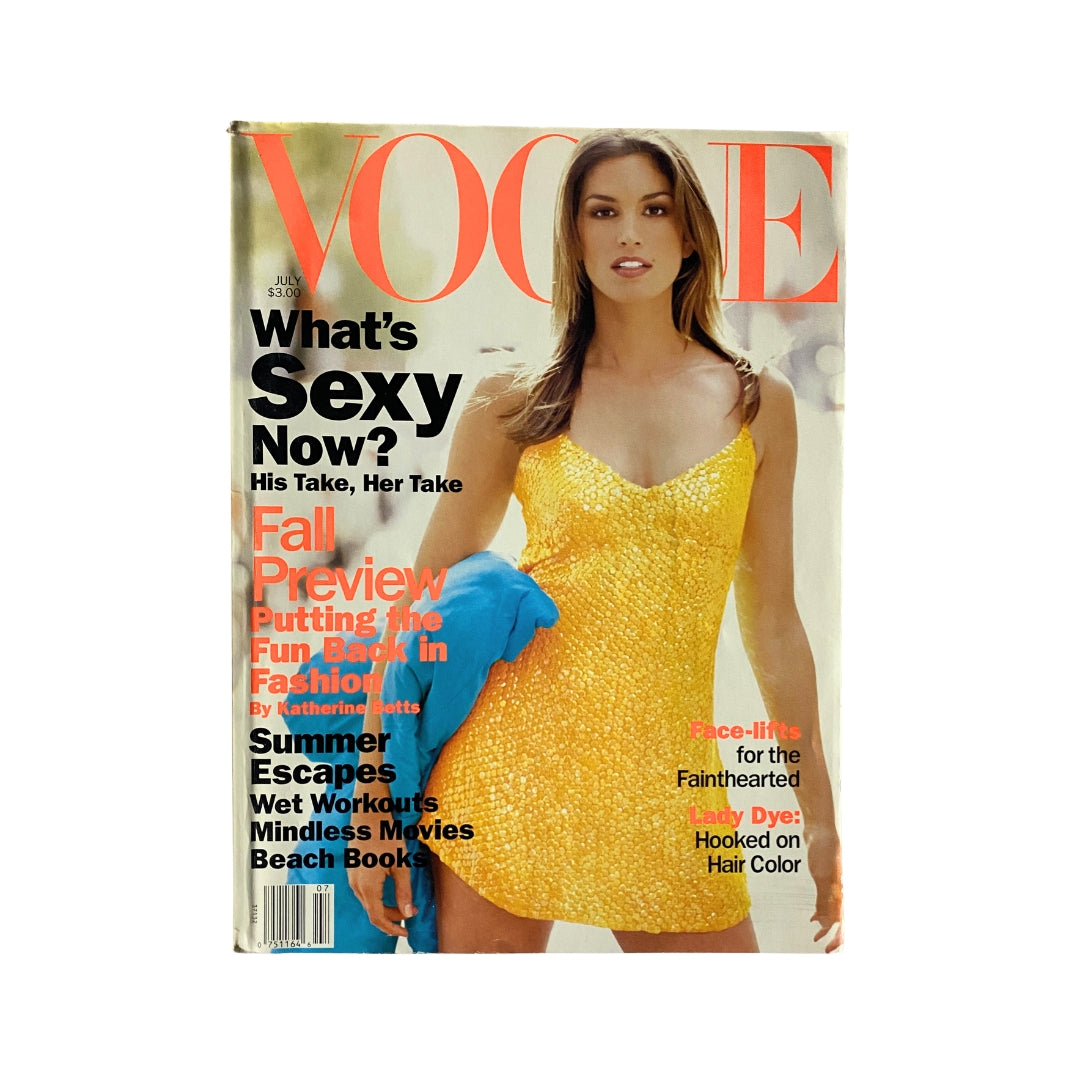
The July 1994 issue of Vogue featuring Cindy Crawford on the cover documents one of the decade's defining supermodels at the precise midpoint of her commercial and cultural dominance. By July 1994, Crawford had been one of the most recognizable faces in the world for nearly a decade — her combination of commercial versatility, media presence, and the specific all-American beauty that made her equally at home in high fashion editorial and mainstream advertising had made her a crossover cultural figure unlike any of her contemporaries. The summer of 1994 was a specific moment in the supermodel era's arc: the original group of five — Crawford, Naomi Campbell, Linda Evangelista, Christy Turlington, and Kate Moss — were still dominant presences in the fashion press, but the culture was beginning to shift toward the waif aesthetic and grunge-influenced fashion that Moss most directly embodied. A July 1994 Crawford Vogue cover was the magazine's affirmation that the established supermodel ideal still held the commanding position in American fashion. For collectors building archives of Cindy Crawford magazine covers, mid-1994 Vogue appearances document her at a specific and historically well-defined phase of sustained peak commercial prominence.
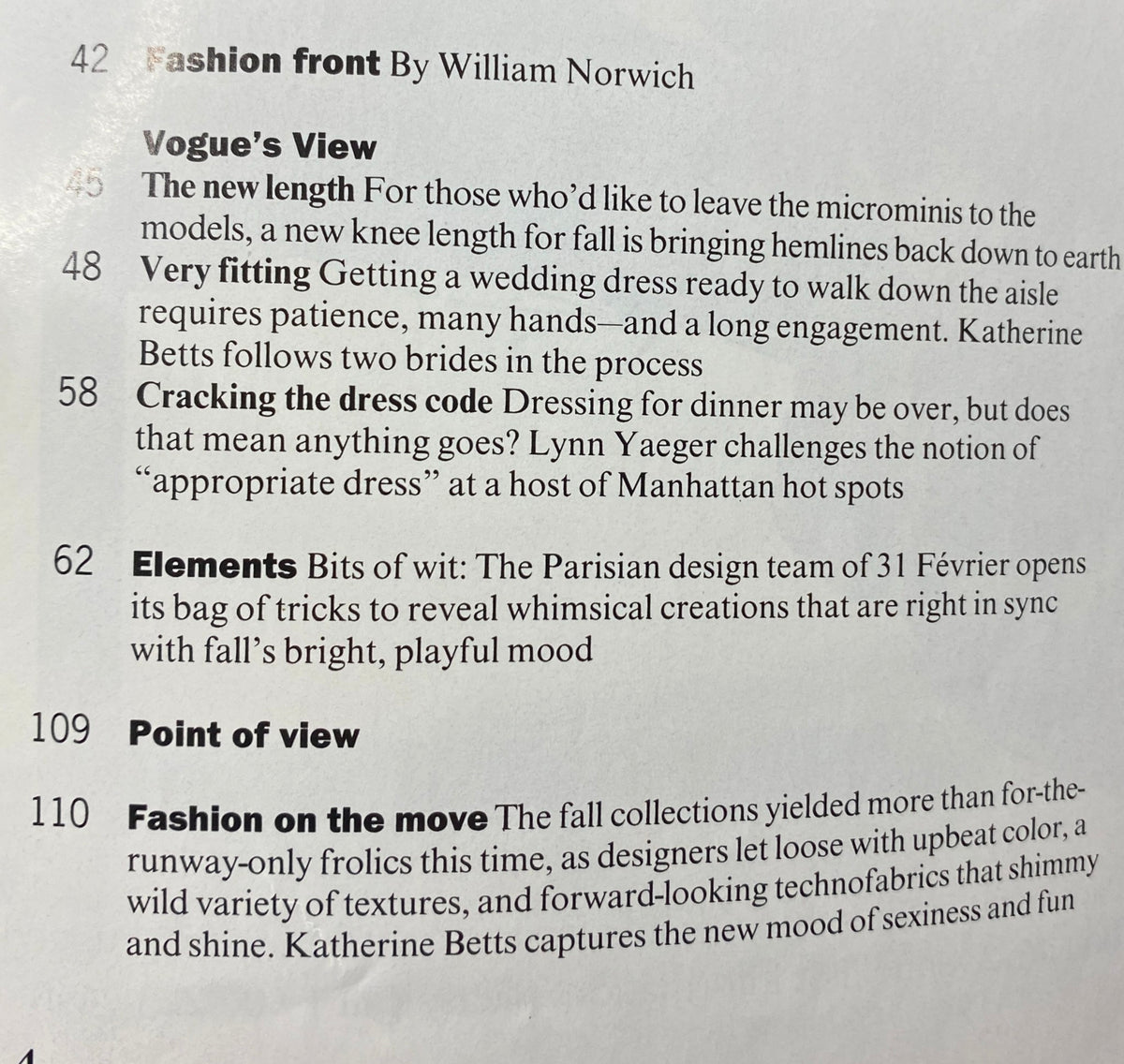
The confirmed fashion editorial content of this issue provides a precise record of the specific aesthetic moment of summer-into-fall 1994. Katherine Betts's confirmed fall collections preview — capturing "upbeat color, a wild variety of textures, and forward-looking technofabrics that shimmy and shine" — documents the specific aesthetic direction of fall 1994 fashion at the moment of its first mainstream editorial presentation. The "new knee length" feature, addressing the return of hemlines from micromini territory, and the confirmed wedding dress process feature by Katherine Betts together document a fashion press actively negotiating the competing aesthetic imperatives of the mid-nineties moment — when the extremes of the early-nineties mini were giving way to a more varied hemline vocabulary. Lynn Yaeger's "Cracking the Dress Code" piece — challenging the notion of appropriate dress at Manhattan hot spots — provides social documentary journalism that situates this issue within the specific cultural atmosphere of mid-nineties New York, when the post-eighties formality collapse was still being actively processed. For collectors of vintage Vogue magazines, confirmed Katherine Betts bylines and named fashion features provide the kind of editorial specificity that distinguishes well-documented issues from those where interior content must be inferred. The broader 1994 magazine collection provides context for this issue within the year's full fashion and cultural landscape.
The William Norwich "Fashion Front" column opening the issue anchors it within the specific editorial voice of mid-nineties Vogue, and the confirmed "31 Février" Parisian design team feature documents an early-nineties Parisian whimsy aesthetic that represented one of fashion's counterpoints to American minimalism's dominance — a primary source for researchers of the specific creative landscape that existed alongside the decade's dominant aesthetic currents.
About the Publication
Vogue, published by Condé Nast and founded in 1892, was by July 1994 operating under Anna Wintour's editorship — which had run continuously since 1988 and had made the magazine the globally dominant fashion authority it remains. Its audience was fashion-literate, affluent, and culturally engaged, with expectations that each issue would deliver both the season's most important fashion editorial and substantive cultural content. The July issue served as the magazine's primary summer-to-fall fashion bridge — the first major preview of the coming autumn collections — making it one of the most editorially consequential numbers in the annual calendar for collectors focused on fashion history documentation.
Key Highlights Inside
- Cindy Crawford cover — A confirmed mid-1994 cover appearance by the decade's most commercially prominent supermodel, documented at the specific midpoint of her sustained commercial peak as the supermodel era was beginning its cultural transition.
- "Fashion on the Move" — fall 1994 collections preview by Katherine Betts (page 110) — A confirmed fall collections editorial capturing the specific aesthetic direction of autumn 1994 — upbeat color, varied textures, and technofabrics — providing a primary dated record of the season's fashion direction at its first mainstream editorial presentation.
- "The New Length" — hemline report (page 45) — A confirmed feature documenting the mid-nineties shift away from micromini hemlines toward a new knee-length standard, providing a precisely dated primary source for mid-decade fashion's hemline evolution.
- "Cracking the Dress Code" — Lynn Yaeger (page 58) — A confirmed cultural journalism piece examining appropriate dress at Manhattan restaurants, providing social documentary content that situates this issue within the specific cultural atmosphere of mid-nineties New York.
- "Very Fitting" — wedding dress process feature by Katherine Betts (page 48) — A confirmed behind-the-scenes feature on the wedding dress preparation process, providing a specific and named fashion journalism piece from one of the magazine's most prominent contributors of the period.
- "Elements" — 31 Février Parisian design team feature (page 62) — A confirmed feature on the Parisian whimsy design collective, documenting a specific creative counter-current to American minimalism's mid-nineties dominance.
Condition & Rarity
The listing defers to photographs for specific condition assessment beyond confirming no mailing label and plastic protective covering. The no-label status confirms the full Crawford cover image is visible without address obstruction — the preferred state for display-grade collecting of a cover whose photographic quality is its primary visual attribute. The plastic protective covering indicates deliberate preservation and generally correlates with stable interior page condition. For collectors evaluating any surviving copy of this issue, the primary assessment factors are the cover's surface condition and color vibrancy — mid-nineties Vogue covers are printed on coated stock that retains color well under careful storage conditions — and the completeness and legibility of the fall collections editorial that forms the issue's primary fashion content.
Looking for More Issues Like This?
Mid-nineties Cindy Crawford Vogue covers are consistently sought by collectors of the supermodel era, and a July 1994 issue with confirmed Katherine Betts fall collections coverage and the Lynn Yaeger dress code piece is historically specific and editorially well-documented. The dedicated Cindy Crawford magazine collection at OriginalMagazines.com is the most direct place to search for other cover appearances across her career. The broader Vogue archive and the full 1994 collection are both worth exploring for other issues that document the nineties fashion world at one of its most aesthetically consequential transitional moments.