



Description
Collector's Note – Why This Issue Matters
The July 2003 issue of Vogue features actress Demi Moore on its cover, arriving at a moment when Moore occupied a particularly interesting position within American celebrity culture. By the early 2000s, Moore had already built a multi-decade career spanning major film roles throughout the late 1980s and 1990s, and her continued presence on a major fashion magazine cover in 2003 reflected her enduring relevance well beyond her initial rise to stardom. This period also coincided with renewed public attention to Moore's personal life, as her relationship with actor Ashton Kutcher had become a widely covered subject in entertainment media around this time. A Vogue cover appearance during this window situates Moore at the intersection of her established film career and a fresh wave of tabloid and entertainment press attention, a combination that fashion magazines of the era often leaned into when selecting cover talent.
Vogue's choice to feature an actress rather than a working fashion model on its cover reflects a broader shift the magazine had been navigating since the late 1990s, as Hollywood stars increasingly displaced traditional supermodels as the dominant cover presence across major fashion publications. By 2003, this shift was well underway, with actresses bringing built-in name recognition and crossover media attention that magazines found increasingly valuable for newsstand sales. Moore's appearance fits squarely within that broader industry trend, reflecting how thoroughly the relationship between Hollywood celebrity and high fashion publishing had merged by the early 2000s. Her specific styling for this cover, described as a striking and fashion-forward look, is consistent with how Vogue typically presented its celebrity cover subjects during this period, favoring bold, editorially distinct imagery over more conventional publicity photography.
The broader cultural context of mid-2003 adds further texture to this issue's significance. This was a period of considerable transition in American media and entertainment, with reality television beginning its ascent, the early internet reshaping how celebrity news circulated, and fashion magazines increasingly competing with a faster-moving media landscape for cultural relevance. A July issue specifically would have arrived amid Vogue's typical late-summer editorial cycle, a period the magazine traditionally used to bridge its spring fashion coverage with previews of the fall collections to come. Moore's cover appearance during this specific month places the issue within that recurring seasonal rhythm, even though the listing itself does not specify additional interior content beyond her cover feature.
For collectors specifically focused on Demi Moore, this issue captures her at a notable midpoint in her career and public life, situated between her major film roles of the 1980s and 1990s and her later career resurgence. For those building a broader collection around Vogue's long history of celebrity covers, this issue reflects the magazine's increasing embrace of Hollywood talent during the early 2000s. Within the wider context of 2003 magazines, this issue offers a specific, datable snapshot of how fashion media and celebrity culture were converging at this particular point in the decade.
About the Publication
Vogue has stood as one of the most influential fashion publications in the world since its founding in the late nineteenth century, evolving into the definitive record of high fashion, photography, and style for an international readership well before this 2003 issue's publication. By the early 2000s, the magazine's editorial format combined front-of-book trend and culture coverage with longer fashion portfolios, designer profiles, and increasingly prominent celebrity features, reflecting the broader industry shift toward Hollywood-driven cover talent. Under longtime editor-in-chief Anna Wintour, Vogue had become as well known for its cultural authority and high-profile cover selections as for its fashion photography itself, regularly featuring major film and television actresses alongside its traditional roster of fashion models. The magazine's audience by this period spanned dedicated followers of high fashion as well as a broader readership drawn in by its celebrity cover subjects and entertainment-adjacent features. Vogue's July issues traditionally occupied a transitional point in its annual editorial calendar, bridging spring fashion coverage with early previews of the upcoming fall collections. The magazine maintained a consistent structural format across its issues during this period, typically opening with shorter culture and trend pieces before moving into longer features and closing with standard back-matter sections. That consistency across decades is part of what allows individual issues, including this one, to be reliably dated and contextualized within the magazine's broader editorial history. This July 2003 issue, built around a major Hollywood cover subject, reflects the magazine's editorial direction at this specific point in its long publishing history.
Key Highlights Inside
- Cover feature on actress Demi Moore, photographed in a fashion-forward look consistent with Vogue's editorial approach to celebrity cover subjects during this period. Moore's appearance reflects her continued cultural relevance well into the early 2000s. The cover represents the primary documented content for this specific issue.
- Likely inclusion of standard front-of-book trend and culture coverage, consistent with Vogue's established editorial format throughout the early 2000s. This kind of content typically opened each issue ahead of longer fashion portfolios and features. No specific article titles can be confirmed for this particular issue beyond its cover content.
- Probable seasonal fashion coverage tied to Vogue's typical July editorial cycle, which traditionally bridged spring collections with early previews of the fall season. This timing placed the issue within a recurring annual rhythm common to the magazine's publishing calendar. Specific interior fashion features for this issue are not detailed in available listing information.
- An issue produced during a period of increasing convergence between Hollywood celebrity culture and high fashion publishing, reflected directly in the choice of an actress for the cover. This broader industry trend was well underway by 2003 across major fashion titles. Moore's cover placement fits squarely within that documented shift.
Condition & Rarity
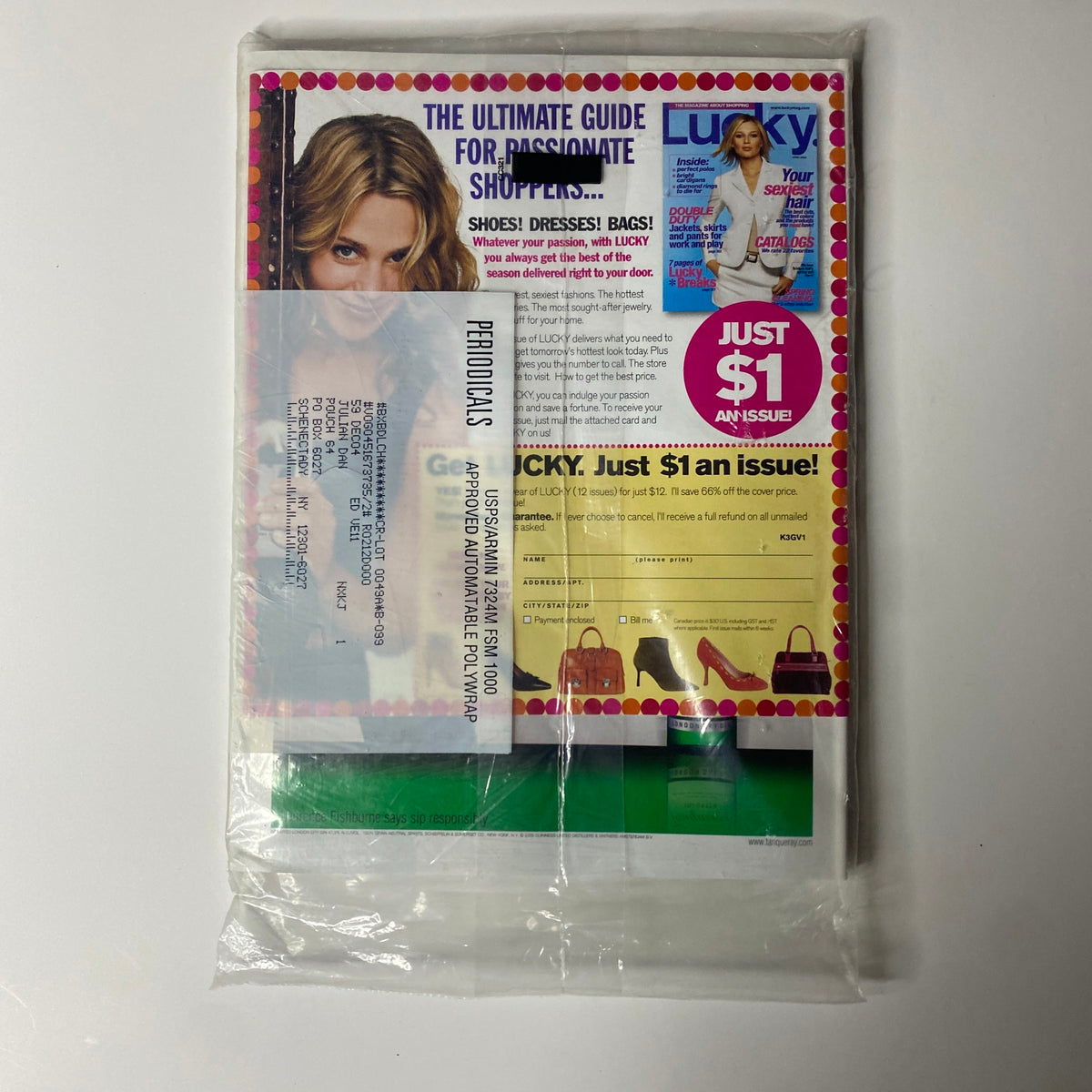
Condition for fashion magazines of this type and era is generally assessed through cover gloss retention, spine and binding integrity, page completeness, and the absence of significant creasing, tearing, or soiling. A factory-sealed, unopened example represents a distinct category within magazine collecting, as it indicates the issue has remained in its original distribution packaging since production, generally protecting both the cover and interior pages from handling wear, fingerprints, and page separation over time. The absence of a subscriber label is generally viewed favorably among collectors, since unlabeled newsstand copies tend to present a cleaner, unobstructed cover image without sticker residue or removal marks. A protective plastic covering, separate from any original factory sealing, adds a further layer of preservation for glossy cover stock prone to humidity exposure and gradual fading over time. Issues from the early 2000s, now over two decades old, can still show minor edge wear from long-term storage even when the interior pages remain fully protected by original sealing. Sealed examples are generally valued for the assurance they provide regarding interior page condition, since the contents have not been exposed to the handling and page-turning that gradually affects opened copies. Cover condition remains important even for sealed examples, since exterior wear from storage and handling can still affect the packaging and outer cover surface despite the interior remaining untouched. Collectors evaluating any surviving copy of this issue should weigh the integrity of the original sealing alongside exterior cover condition as the primary indicators of long-term collectible value.
Looking for More Issues Like This?
A factory-sealed Vogue issue from this period, featuring a major Hollywood cover subject like Demi Moore, represents a fairly specific category of magazine collecting, since most surviving vintage issues from this era were opened and read at some point rather than preserved in original packaging. If this exact July 2003 issue isn't what you're looking for, the broader Demi Moore collection spans material connected to her career across film, fashion, and entertainment media. For collectors more interested in the publication itself, the wider Vogue collection offers decades of covers and editorial eras, including the magazine's broader shift toward Hollywood-driven cover talent during the early 2000s. For those focused on this specific year, the full range of 2003 magazines brings together material from across that year, spanning multiple publications and subjects beyond fashion alone. Browsing by person tends to suit collectors building a career-spanning archive around a specific celebrity, while browsing by publication or year suits those more interested in a particular editorial era or cultural moment. Each of these three collections offers a distinct and practical path toward finding comparable material if this exact issue isn't available. Together, they cover the main angles from which a piece like this is typically sought out.