


Description
Collector's Note – Why This Issue Matters
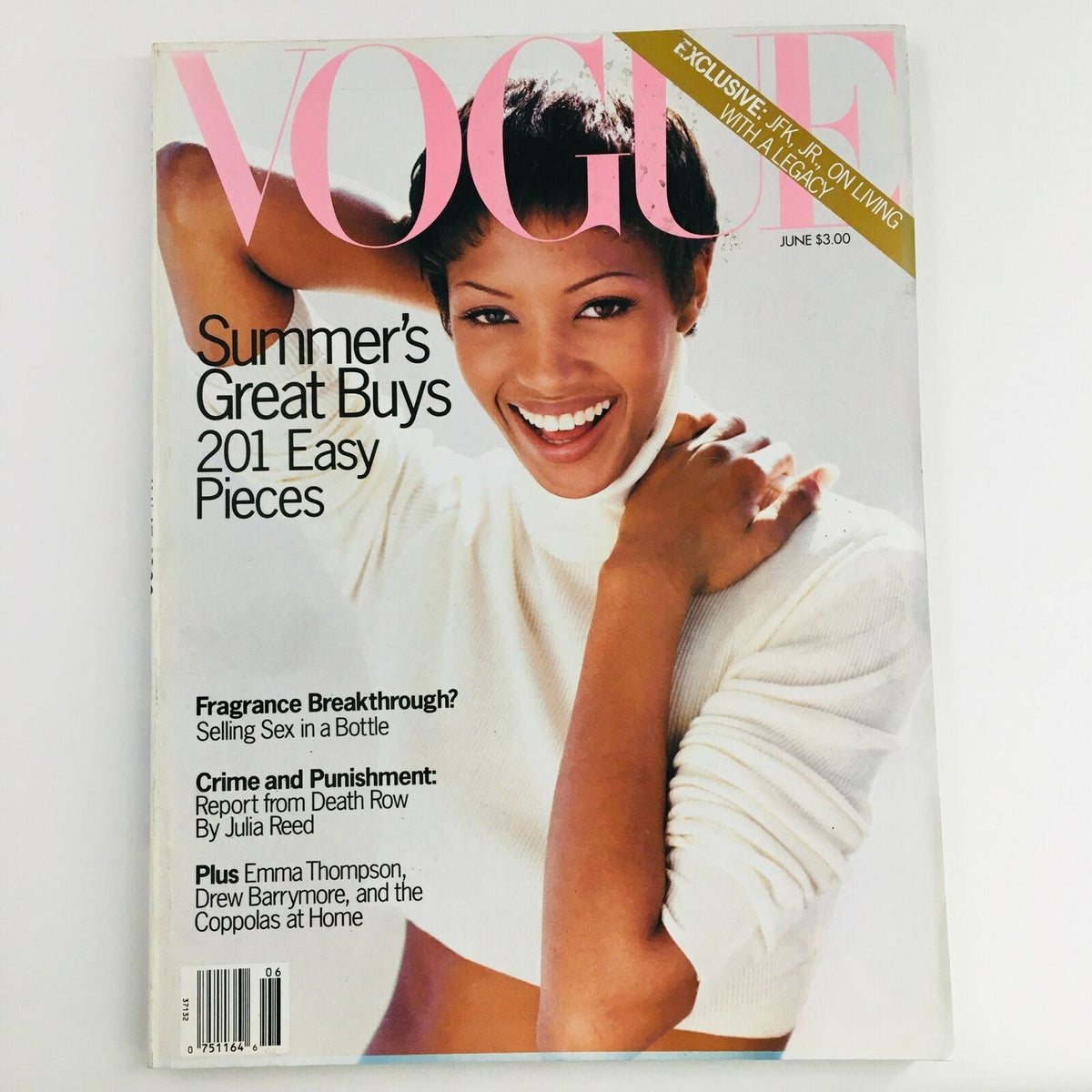
The June 1993 issue of Vogue featuring Naomi Campbell on the cover — newsstand copy, no label — documents one of the most significant figures in the history of fashion modeling at the precise peak of the supermodel era's cultural dominance. By June 1993, Campbell had been modeling professionally for eight years, since her debut at fifteen in 1985, and was firmly established as one of the five or six women whose collective visibility had created the supermodel as a cultural category. Her combination of physical presence, runway authority, and personal charisma had made her one of the most discussed and most photographed women in the world, and her position as the most prominent Black model in a field that had historically marginalized Black women gave her cultural significance that extended well beyond the fashion industry itself. A June 1993 Vogue cover featuring Campbell was therefore not merely a fashion editorial choice — it was a statement about representation, visibility, and who was permitted to embody the aspirational ideal that Vogue covers had always been understood to project. For collectors building a focused archive through the Naomi Campbell magazines collection, the June 1993 Vogue is a primary document of her supermodel-era visibility at its most sustained and most culturally charged.
The June 1993 date places this issue at a specific and historically interesting moment in both Campbell's career and the supermodel era's trajectory. The phenomenon that had made Campbell, Claudia Schiffer, Linda Evangelista, Cindy Crawford, and Christy Turlington into genuine celebrities rather than simply professional models was at its commercial and cultural maximum in 1992-1993, and the June 1993 issue arrived as the first signs of the era's eventual commercial exhaustion were beginning to appear — grunge fashion was disrupting the high-glamour aesthetic; the so-called "waif" look associated with Kate Moss was beginning its ascent; and the extraordinary commercial machine that had produced the supermodel phenomenon was showing the first strains of overextension. A June 1993 Campbell Vogue cover therefore documents the supermodel era at its very last confident moment, before the cultural shift that would redefine fashion's visual language in the following two years. For collectors and researchers focused on the Vogue magazine run of the supermodel era and the broader print record of fashion and celebrity culture in 1993, this issue is a primary document of a specific and historically bounded cultural moment.
The listing's reference to Martha S. Anderson's editorial contributions provides a specific institutional context that serious researchers will want to note. Identifying the editorial figures responsible for specific issues is useful for scholars of Vogue's editorial history, and any issue-specific attribution should be verified against the masthead of a physical copy for comprehensive research documentation.
About the Publication
Vogue magazine, founded in 1892 and under Anna Wintour's editorship since 1988, was by June 1993 in its sixth year of Wintour's direction and fully committed to the supermodel aesthetic that defined the era. Its cover selections were treated as significant cultural endorsements of the models chosen, and a Naomi Campbell June 1993 cover reflected both the commercial logic of featuring one of the world's most recognized faces and the editorial conviction that Campbell's visibility on major fashion covers was itself a statement about the magazine's values regarding representation in the industry it led.
Key Highlights Inside
- Naomi Campbell June 1993 cover — the most prominent Black supermodel of her era on the cover of American Vogue at the peak of the supermodel phenomenon, in a newsstand no-label copy that presents the full visual impact of the cover without subscriber information interruption.
- Publication in June 1993 — at the cultural maximum of the supermodel era and immediately before the grunge and waif aesthetic shifts that would begin to redefine fashion's visual language in 1994-1995, capturing the phenomenon at its last fully confident moment.
- Naomi Campbell's significance as a figure of representation — her position as the most prominent Black model in a historically exclusionary field gives this cover a cultural weight that extends beyond the fashion industry into the broader history of racial representation in mainstream American media.
- Newsstand copy without subscriber label — the preferred state for display-oriented collectors, presenting the full visual impact of the Campbell cover portrait without address label interruption.
- Note: Specific interior fashion features, articles, photography credits, and additional editorial content have not been independently verified from the listing. Interior details should be confirmed against a physical copy for comprehensive research purposes.
Condition & Rarity
Surviving copies of this issue in good condition with minor wear, some marks, and no subscriber label present the expected profile of a thirty-two-year-old monthly fashion magazine that has been stored through active collecting before entering a collection. Good condition indicates structural integrity — covers attached, pages present and legible, spine intact — with the light handling marks that characterize a copy that was read and stored in household conditions. The marks noted in the listing should be assessed against the provided photographs for their placement relative to the Campbell cover portrait. A newsstand copy without subscriber label is the preferred state for display. A plastic protective sleeve confirms deliberate preservation effort. Naomi Campbell Vogue covers from the supermodel era are actively sought by Campbell personal history collectors, supermodel era fashion historians, representation and diversity in fashion researchers, and Vogue Wintour-era completists simultaneously.
Looking for More Issues Like This?
Supermodel-era Naomi Campbell Vogue covers from the early 1990s are among the most historically specific and culturally significant items in the publication's collecting market for this decade, and a no-label June 1993 newsstand copy in good condition is a solid find. If this issue has already found a collector, the dedicated Naomi Campbell magazines collection at OriginalMagazines.com gathers her most significant print appearances across her career. The full Vogue collection spans the publication's history across multiple decades, and the complete 1993 magazines collection offers broader context for fashion and celebrity culture from the supermodel era's last fully confident year.