


Description
Collector's Note – Why This Issue Matters
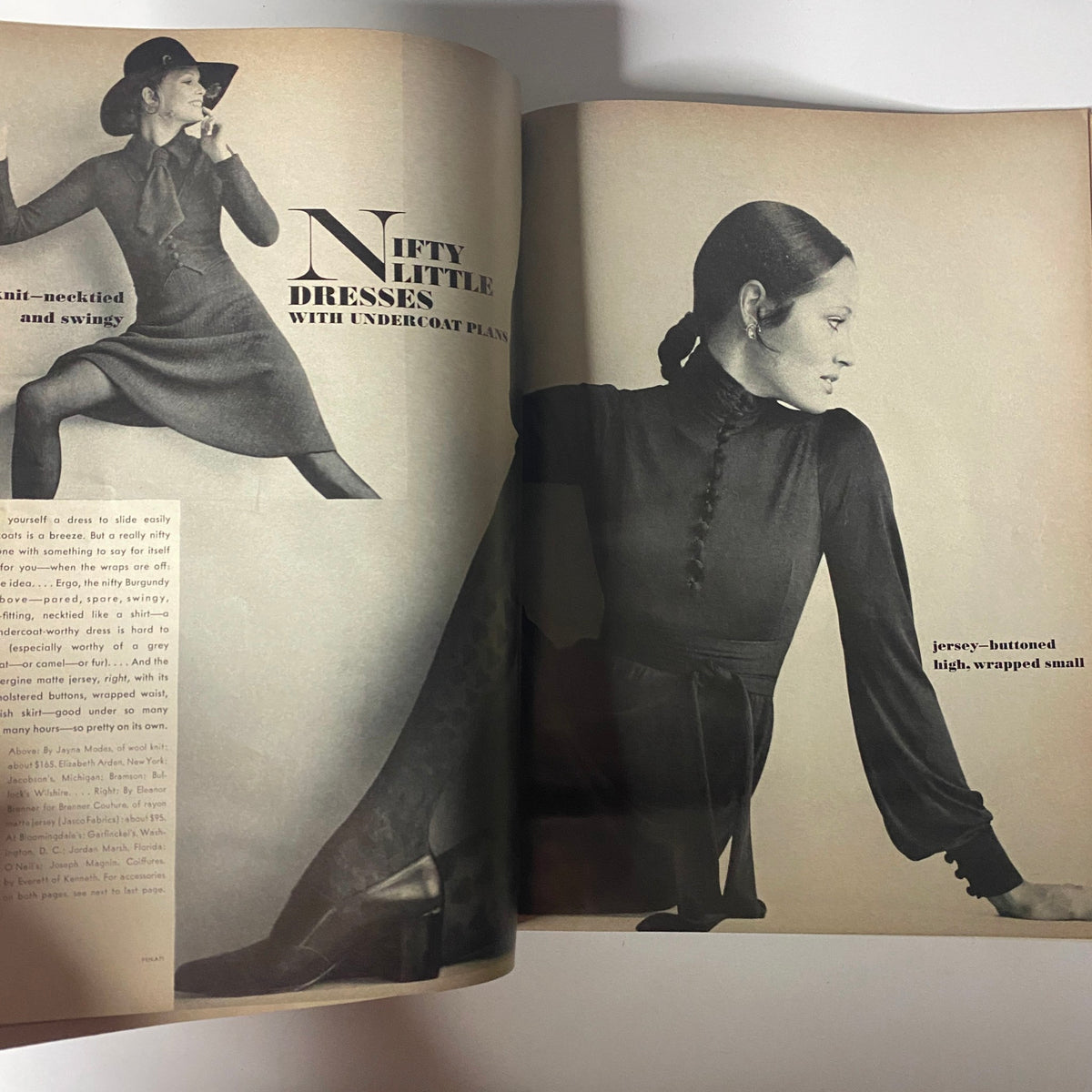
The September 15, 1971 issue of Vogue arrives at a precise and fascinating inflection point in the history of fashion. The early 1970s were a period of genuine creative turbulence: the structured elegance of 1960s couture was giving way to something more fluid, more international, and less certain of its own authority. The Paris collections coverage in this issue — documenting wider shoulders, smock silhouettes, body dresses, and romantic layering — reflects an industry actively searching for a new visual language after the seismic disruptions of the previous decade. That search is documented here in real time, across spreads from Paris, Rome, and America, making this issue a primary source for researchers tracing the stylistic transition from late 1960s fashion into the mid-1970s aesthetic that would eventually define the decade. Collectors focused on the full sweep of Vogue's editorial history will find the Vogue archive at OriginalMagazines.com an essential resource for issues across this transformative period.
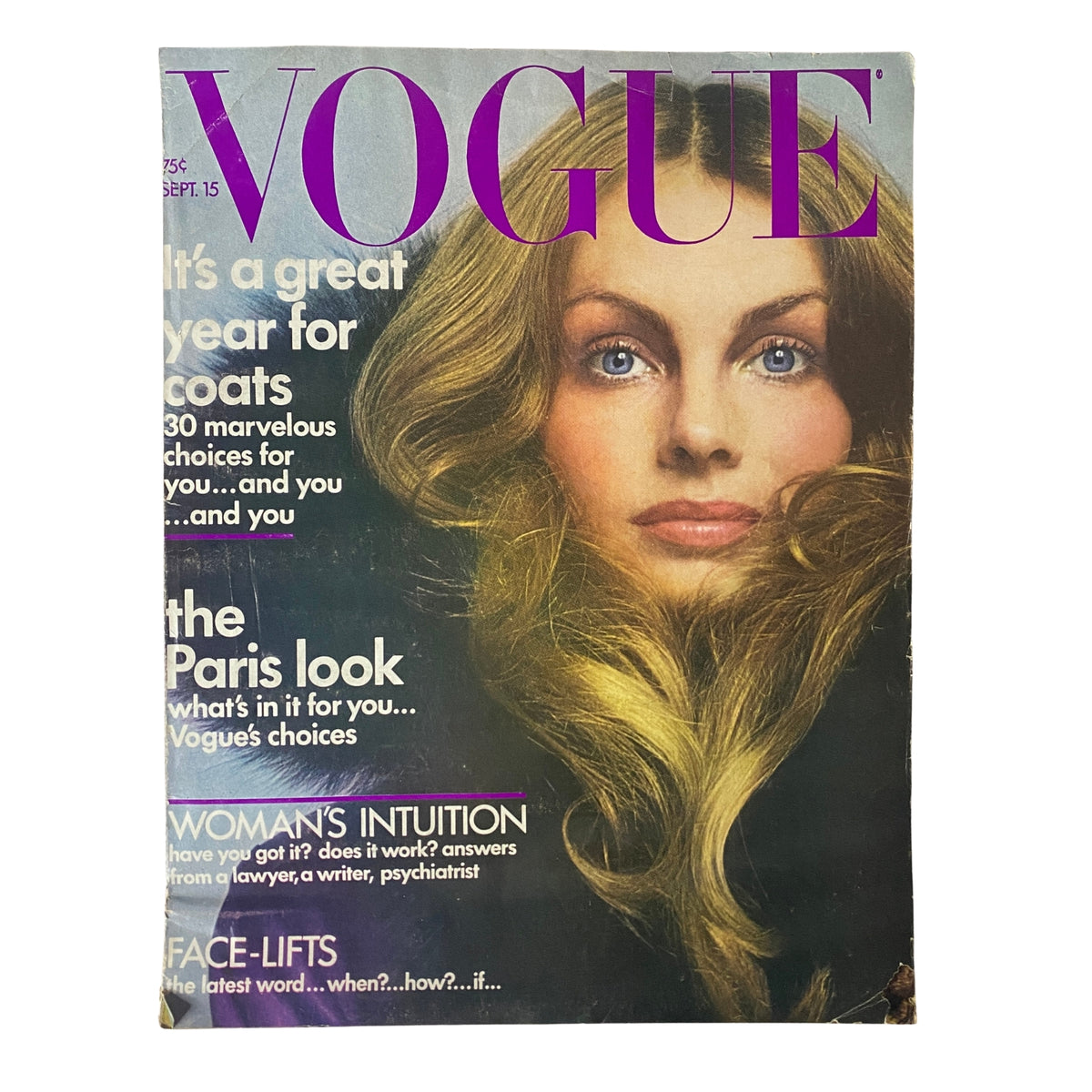
Jean Shrimpton on the cover is a significant biographical and cultural marker. By September 1971, Shrimpton had been one of the most photographed women in the world for nearly a decade — her association with photographer David Bailey and her role in defining the look of Swinging London in the early 1960s had made her a genuine icon of the era. Her appearance on this cover, wearing Dior's leather-and-fox evening coat with makeup by Serge Lutens and hair by Christophe Carita, is itself a document of continuity and transition: a face identified with the 1960s carrying a specifically early-1970s fashion statement into a new season. Serge Lutens, credited here for makeup at Dior, would go on to become one of the most celebrated perfumers and beauty creative directors of the late twentieth century — his early work as a makeup artist and visual conceptualist at Dior in this period is relatively less documented, making his credit in this issue a genuine point of interest for researchers of his career. Collectors with focused interest in Shrimpton's magazine work across her career will find related material in the Jean Shrimpton magazine collection at OriginalMagazines.com, and those researching the broader cultural landscape of this year will find context across publications in the 1971 magazines collection.
The editorial depth of this issue extends well beyond its fashion coverage. The "People Are Talking About" section documents Arthur Schlesinger Jr. — the historian and former Kennedy advisor — contributing film criticism, reviewing The Go-Between and Ken Russell's The Devils, both significant films of 1971. An analysis of woman's intuition drawing on psychology, psychiatry, law, and literature reflects the magazine's engagement with second-wave feminism as an intellectual current, however cautiously framed. The Albrecht Dürer retrospective notice and the coverage of Edith Wharton's biography by Elizabeth Hardwick place this issue in conversation with serious art historical and literary scholarship. This is Vogue doing what the best issues of its era consistently did: using fashion as the entry point into a genuinely wide-ranging cultural conversation.
About the Publication
Vogue was founded in 1892 as a New York society weekly and acquired by Condé Nast in 1909, under whose ownership it developed into the world's preeminent fashion magazine. By the early 1970s, under editor Diana Vreeland — who led the American edition from 1963 to 1971 — and then her successor Grace Mirabella, the magazine combined high fashion coverage with serious cultural commentary, literary contributions, and photography by the most significant image-makers working in any medium. Its audience was affluent, educated women with serious interest in fashion, beauty, and culture, and its twice-monthly publication schedule in this era produced issues of unusual editorial density. The September issues in particular, timed to the fall collections season, were consistently among the most significant of any given year — editorial investments that set the tone for the coming fashion calendar.
Key Highlights Inside
- Cover: Jean Shrimpton in Dior's leather-and-fox long evening coat, with makeup by Serge Lutens for Dior and hair by Christophe Carita — a documented early career credit for Lutens, who would later become one of the most influential figures in luxury beauty and perfumery.
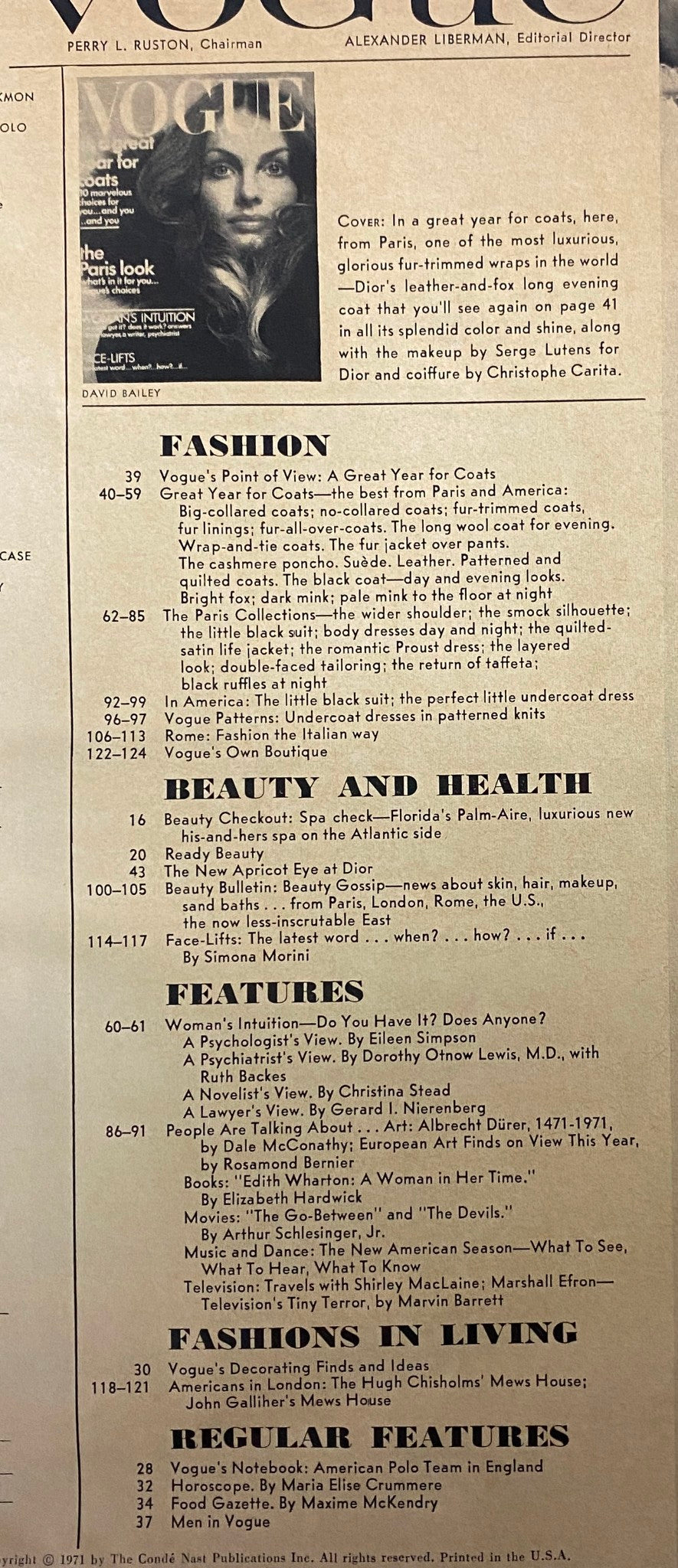
- Paris Collections coverage across twenty-three pages (pp. 62–85), documenting the specific silhouettes and design directions — wider shoulders, smock forms, body dresses, black ruffles — that defined the early 1970s transition in haute couture.
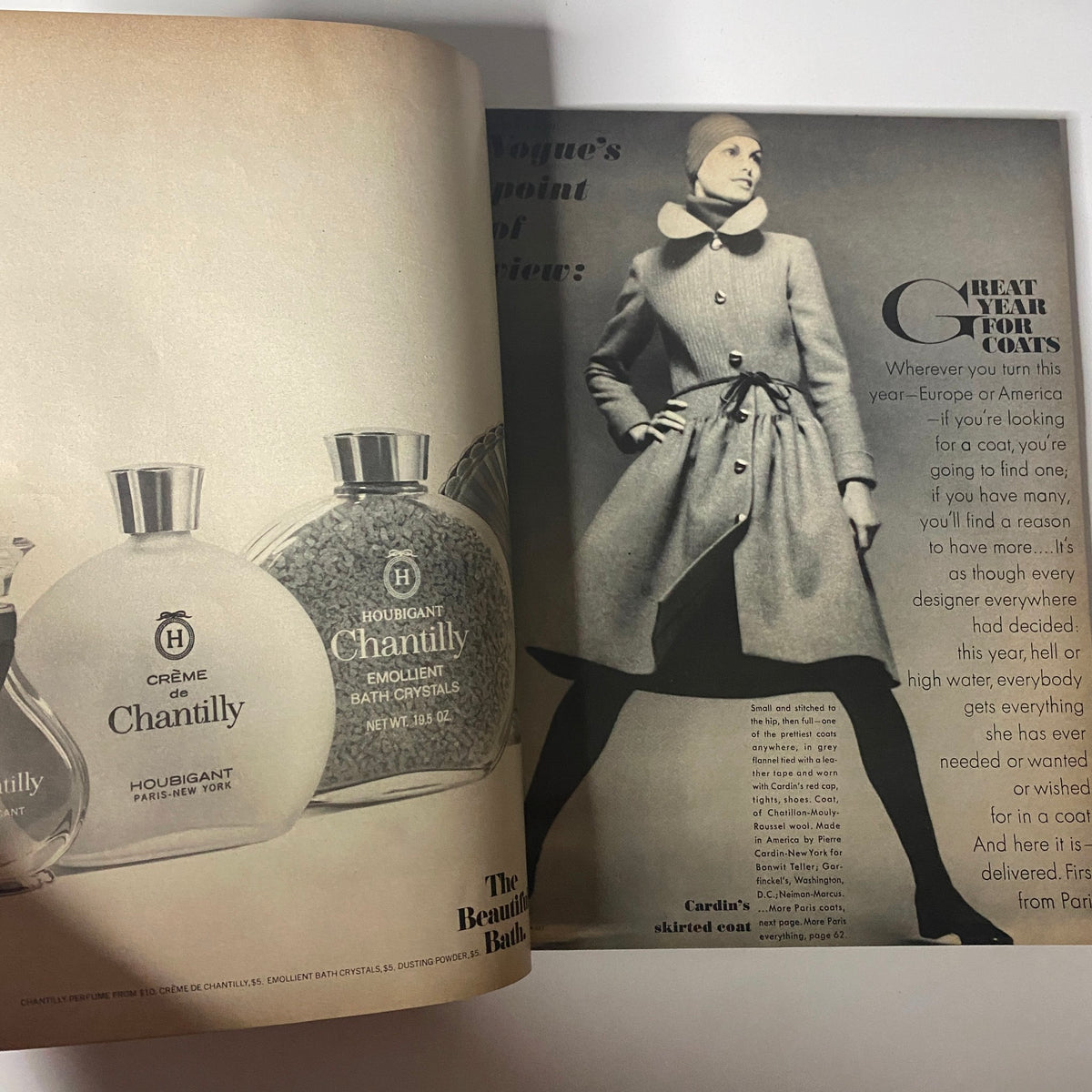
- "A Great Year for Coats" feature (pp. 40–59) covering the best of Paris and American outerwear across fur trims, wrap styles, ponchos, and luxury fabrics — the thematic centerpiece of the issue's fashion editorial, anchored by the cover image.
- Film criticism by Arthur Schlesinger Jr. reviewing The Go-Between and Ken Russell's The Devils — two of the most discussed art films of 1971, reviewed by a Pulitzer Prize-winning historian and former Kennedy White House advisor.
- Feature on face-lifts by Simona Morini (pp. 114–117), providing medical perspectives on cosmetic surgery — an unusually direct engagement with the subject for a major fashion publication of this era, reflecting the magazine's broader interest in women's health and body autonomy.
- Rome fashion coverage (pp. 106–113) alongside Paris and American collections, confirming the issue's genuinely international editorial scope across three major fashion capitals in a single fall issue.
Condition & Rarity
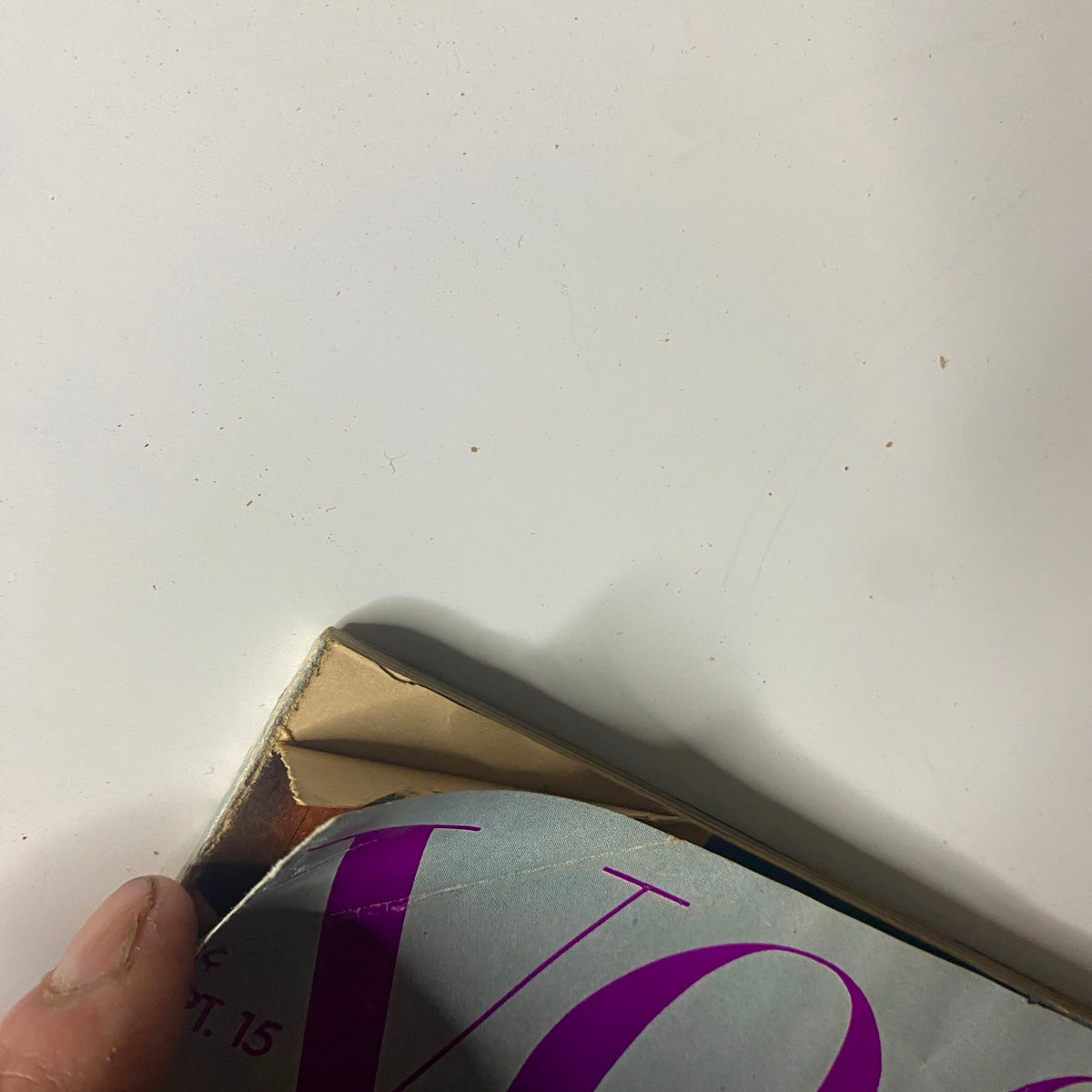
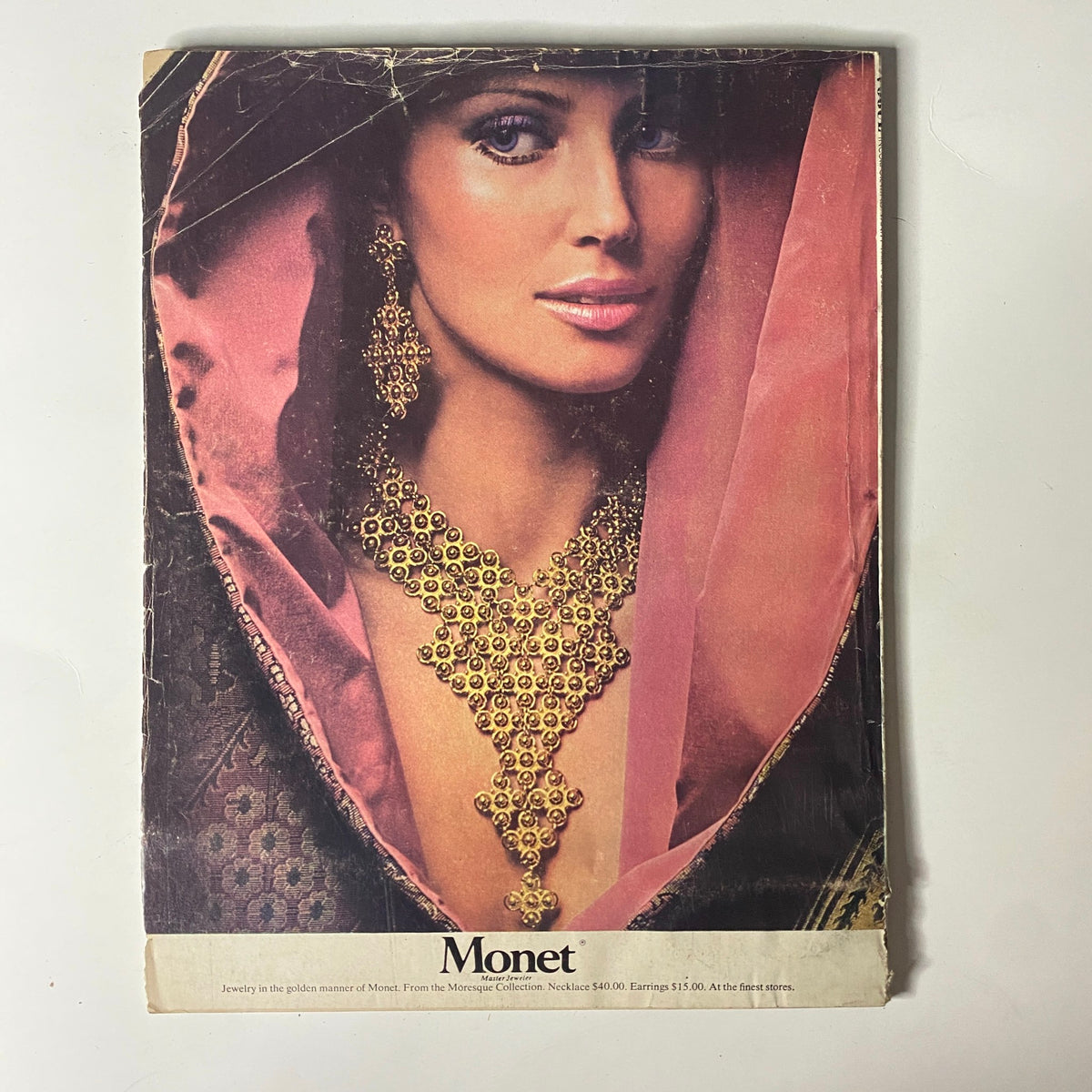
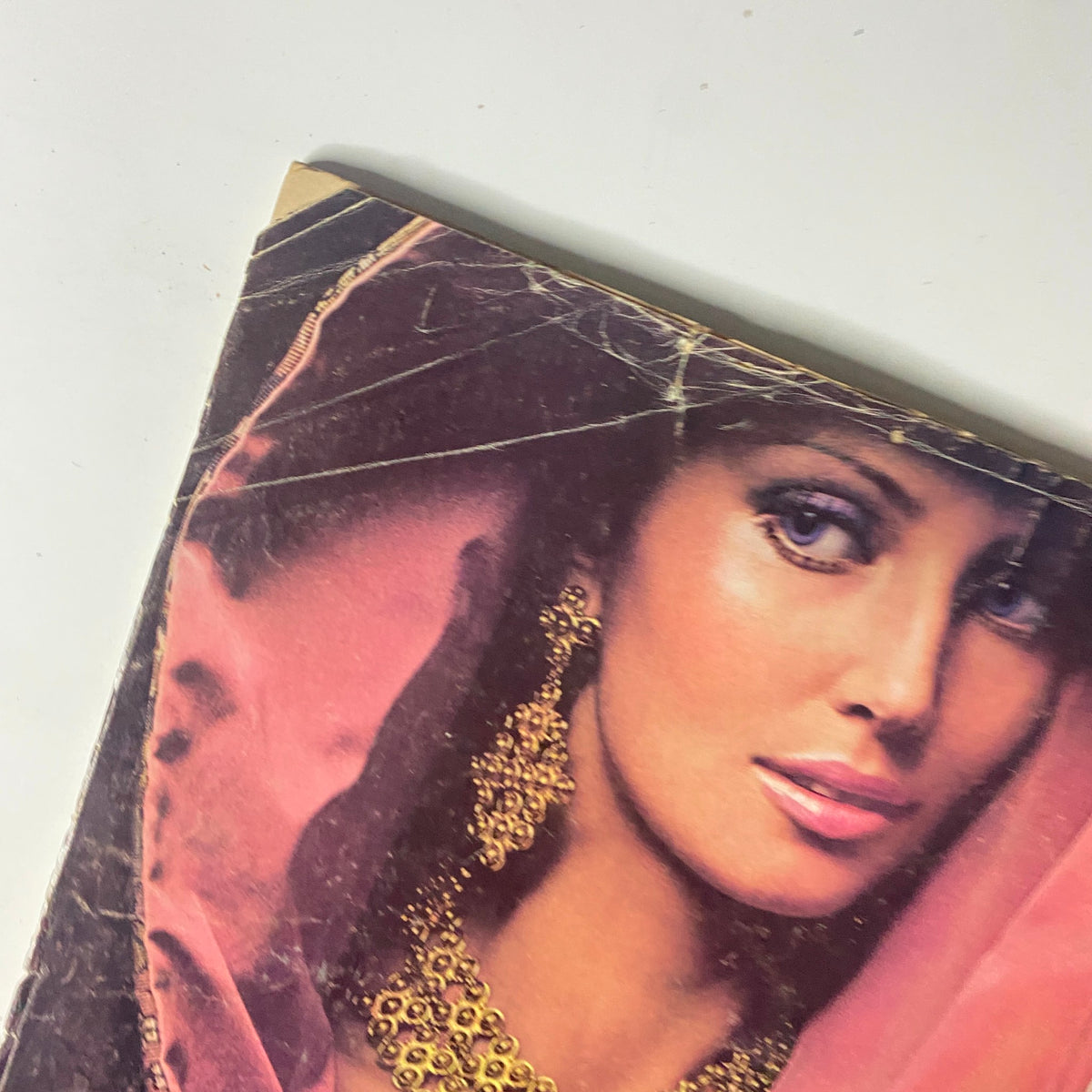
The noted condition describes a good-condition copy with no mailing label and a plastic protective sleeve — a favorable combination of attributes for a publication now more than fifty years old. The absence of a subscription label is the single most important cover condition attribute for a Vogue issue of this vintage: mailed subscriber copies routinely received address labels applied directly to the front cover, and their removal almost always results in adhesive residue or paper loss that permanently damages the cover photography. A no-label copy retains the cover image intact, which for an issue whose cover is a documented Jean Shrimpton portrait in a specific Dior look is the critical preservation factor. Good condition on a twice-monthly fashion magazine of this age indicates a complete, readable copy with age-consistent wear — survivorship above the average for large-format publications printed on the coated stock typical of early 1970s Vogue, which is susceptible to corner wear and spine stress over decades of storage. The plastic sleeve indicates deliberate protective storage at some point in the issue's history.
Looking for More Issues Like This?
Jean Shrimpton cover issues of Vogue in no-label condition represent some of the most sought-after intersections of model history and fashion magazine collecting, and a fall issue with this depth of editorial content is particularly hard to replace. If this September 1971 issue has already been claimed, the Jean Shrimpton magazine collection at OriginalMagazines.com is the best starting point for other issues featuring her work across publications and years. The full Vogue archive is worth exploring for other issues from the early 1970s collections seasons, and collectors building a broader picture of this remarkable year in fashion and culture will find the 1971 magazines collection rich with related material.