




Description
Collector's Note – Why This Issue Matters
The June 1969 issue of Ebony Magazine, Volume 24, Number 8, featuring Betty Shabazz's tribute to the legacy of Malcolm X, is one of the most historically significant issues in the publication's entire run. Malcolm X had been assassinated on February 21, 1965 — four years before this issue's publication — and by June 1969 his intellectual and political legacy was undergoing one of the most important reassessments in the history of the civil rights and Black Power movements. The late 1960s had seen a profound shift in how Malcolm X was understood: the publication of The Autobiography of Malcolm X in 1965 had reached an enormous readership, and the rise of the Black Power movement had positioned his philosophy of Black self-determination, self-defense, and cultural pride as the defining framework for a new generation of activists. A Betty Shabazz-authored tribute in Ebony four years after his death is not simply commemorative — it is a primary source document of how his widow, his family, and the Black intellectual community were actively shaping the interpretation and transmission of his legacy during a critical period of its development. For collectors building an archive of Malcolm X magazine coverage and civil rights history, this June 1969 Ebony issue is among the most authoritative and personally connected sources available in the periodical record.
Betty Shabazz's authorship gives this feature a documentary weight that no other writer could provide. As Malcolm X's widow — who had been present at the Audubon Ballroom on the day of his assassination and had subsequently raised their six daughters while managing and protecting his legacy — her perspective carried personal authority that was irreplaceable. By June 1969 she was also increasingly a public figure in her own right, working as an educator and advocate while participating in the ongoing public conversation about her husband's meaning for American history. An Ebony feature written by Shabazz herself, appearing in the publication that was by far the most widely read periodical in Black America, was a deliberate act of legacy stewardship — a moment at which she was directly shaping how Ebony's millions of readers would understand and remember Malcolm X. Among Ebony Magazine issues documenting Black American political and cultural history, this June 1969 edition is a primary document of that stewardship. Publications from 1969 document Black America at one of the most politically charged moments of the twentieth century, and this Ebony issue is among the most historically weighted examples of the decade's periodical record.
About the Publication
Ebony Magazine, founded by John H. Johnson in 1945, was by June 1969 the most widely read African American magazine in the United States, with a circulation exceeding one million copies per month and a readership that cut across class, region, and political affiliation within the Black community. Its combination of aspirational lifestyle content, celebrity coverage, and serious political and cultural journalism gave it a unique position in American publishing — simultaneously a celebration of Black achievement and a forum for the most pressing debates in Black American public life. A Malcolm X legacy feature by Betty Shabazz in Ebony's June 1969 issue was therefore not a niche publication reaching a limited audience but a mass-circulation document reaching one of the broadest readerships in Black America, at a moment when the interpretation of Malcolm X's legacy was a genuinely contested and consequential question.
Key Highlights Inside
- "Legacy of Malcolm X" by Betty Shabazz — a firsthand tribute and assessment authored by Malcolm X's widow, published four years after his assassination and during the period when his philosophy was undergoing its most significant posthumous reassessment through the lens of the Black Power movement.
- Publication date of June 1969 places this issue in the immediate aftermath of some of the most turbulent years of the civil rights era — following the assassinations of Martin Luther King Jr. and Robert F. Kennedy in 1968, the Newark and Detroit uprisings of 1967, and the rise of the Black Panther Party — making Shabazz's reflection on Malcolm X's legacy a document of a community processing profound recent trauma.
- Betty Shabazz as author — her personal authority as Malcolm X's widow and the mother of his children gives this feature a primary source status that no secondary journalist's account could match, making it a document of legacy formation as much as tribute.
- Note: Specific additional articles, features, and departments beyond what is confirmed in the listing are unverified for this issue. The above reflects what is documented and consistent with Ebony's well-established editorial format during this period.
Condition & Rarity
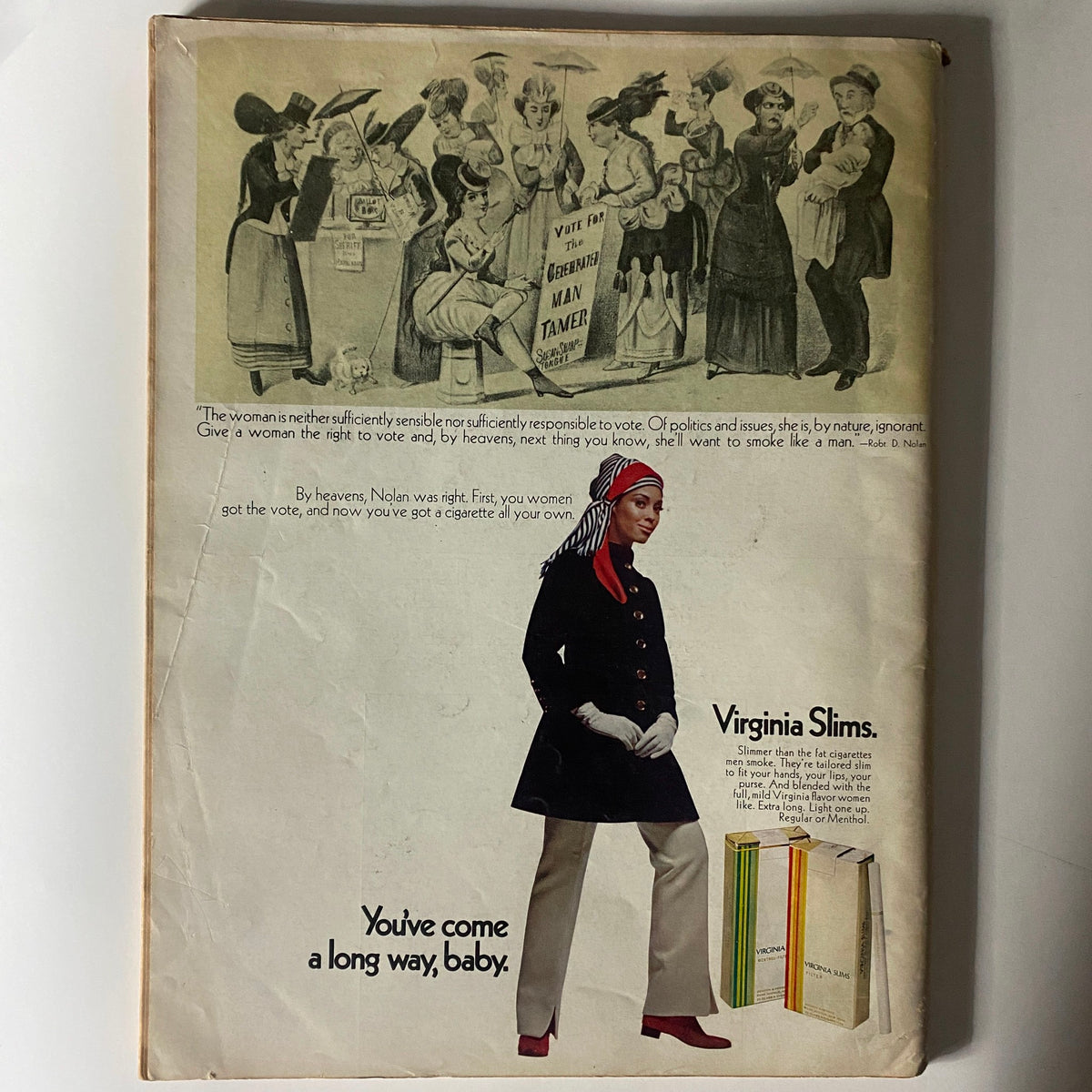
The condition of this issue is assessed through the provided photographs rather than a specific graded description in the listing — collectors should evaluate the images directly for cover integrity, spine condition, and interior page quality. The plastic protective covering indicates deliberate preservation storage. For a monthly magazine now over fifty-five years old, the primary condition factors to assess in any surviving copy are cover surface brightness and color saturation, the integrity of the Betty Shabazz feature pages, and the degree of toning or brittleness in the paper stock, which varies significantly depending on storage conditions across more than five decades. June 1969 Ebony issues documenting Malcolm X's legacy were read actively by a deeply engaged readership and were not commonly preserved with collector intent at the time — surviving copies in above-average condition are meaningful finds.
Looking for More Issues Like This?
A June 1969 Ebony issue with a Betty Shabazz-authored Malcolm X legacy feature is one of the most historically significant configurations in the publication's entire archive — the combination of subject matter, authorship, publication date, and periodical reach makes this a primary source of extraordinary weight for collectors of civil rights history and Black American political culture. If this issue has already been claimed, the archive of Malcolm X magazine coverage and civil rights history is the most focused place to continue searching. The full Ebony Magazine collection spans the publication's entire run, and the 1969 magazine archive offers broader context for this extraordinary year in Black American and national history across multiple publications.