



Description
Collector's Note – Why This Issue Matters
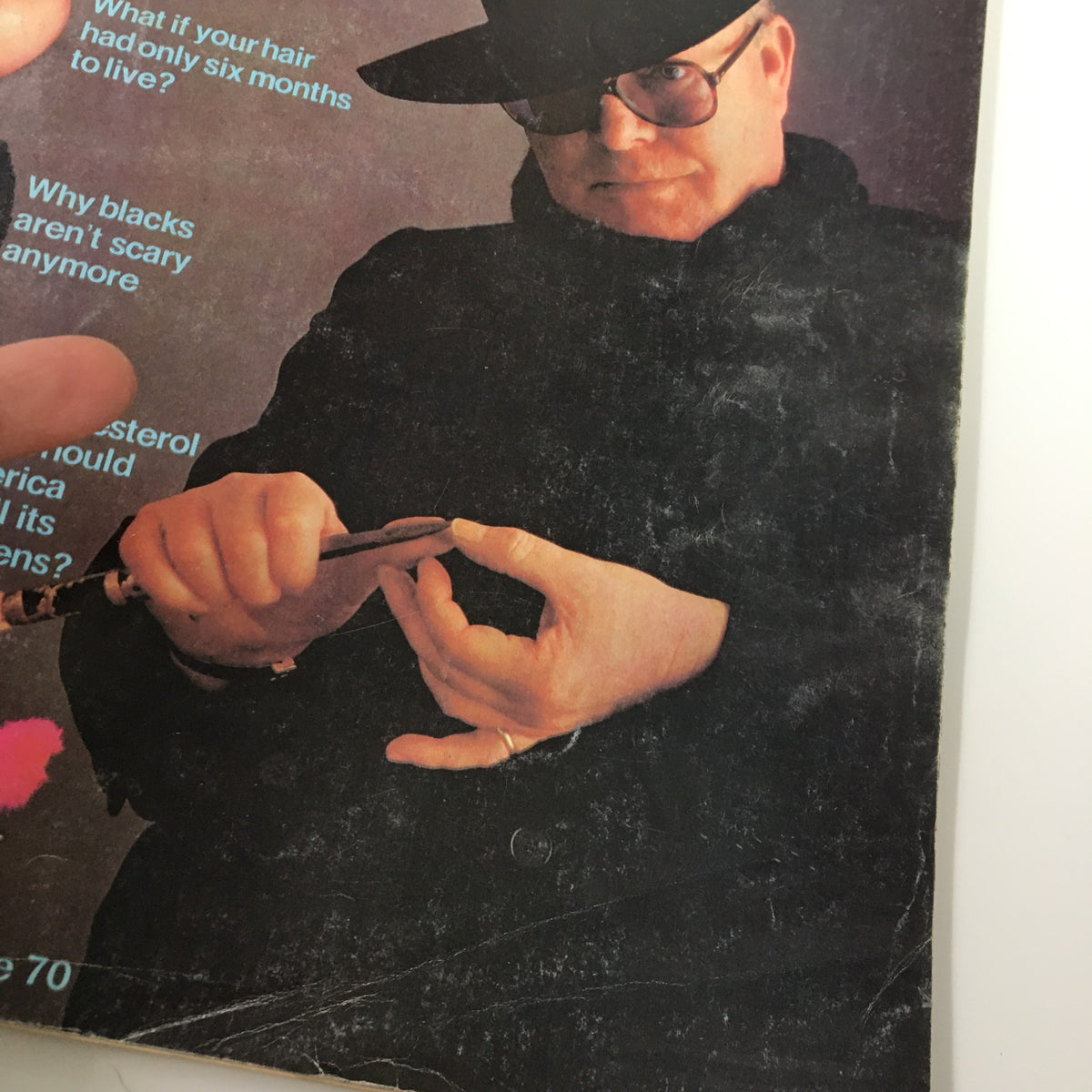
The May 1976 issue of Esquire Magazine with its "Truman Capote Strikes Again" cover is a primary document of one of the most dramatic and consequential episodes in American literary history — the publication and aftermath of Capote's notorious "La Côte Basque, 1965," the roman à clef chapter from his unfinished novel Answered Prayers that appeared in Esquire in November 1975 and detonated his social world with the force of a literary bomb. The "Strikes Again" framing of the May 1976 cover acknowledges that the November 1975 publication had been a major cultural event whose reverberations were still actively unfolding six months later — Capote had been devastated by the social consequences of the piece, which had exposed the secrets and humiliations of the Manhattan society figures who had been his closest friends, and the subsequent months had been defined by his excommunication from that world. A May 1976 Esquire cover positioning Capote as "striking again" suggests either another installment of the Answered Prayers chapters or a major Capote piece of some other kind, and in either case it documents Esquire's continued investment in Capote as one of the era's most culturally provocative and commercially significant literary figures. Collectors building a focused archive of Truman Capote's documented presence in American literary journalism will find the Truman Capote magazine collection the most focused resource for tracking his appearances across publications across the arc of his extraordinary and troubled career.
The specific historical context of May 1976 — six months after the "La Côte Basque" publication — gives this issue a particular documentary weight in the Capote biographical record. The period from late 1975 through 1976 was one of the most psychologically and professionally significant in Capote's life: the social ostracism he experienced after the Answered Prayers chapters had cut him off from the world he had spent decades cultivating, and his response — a combination of defiant public statements, increased substance abuse, and the continued tantalizing promise of completing Answered Prayers — was being followed with a combination of fascination and concern by the literary world and the broader reading public. Esquire's decision to feature him on the cover in May 1976 with a "strikes again" construction reflects the publication's understanding that Capote remained one of the most commercially and culturally significant figures it could put on its cover, regardless of — or perhaps precisely because of — the controversy that surrounded him. That editorial judgment is itself a primary document of how Esquire understood its readership and its cultural role in 1976. Collectors focused on this era will find that Esquire magazine issues from the mid-1970s document the publication at one of its most culturally engaged and literarily ambitious periods, when its combination of serious fiction, cultural criticism, and celebrity journalism was producing some of the most significant magazine writing in American publishing.
The "Strikes Again" framing also captures something specific about Capote's public persona in 1976 that makes this issue interesting beyond its immediate literary content. Capote had always understood himself as a performer as much as a writer — his television appearances, his social life, his public feuds, and his self-presentation were all part of a carefully constructed public identity that was inseparable from his literary reputation. The Esquire cover's martial metaphor — "strikes again" — reflects the combative, dramatic quality of that persona, and it documents how the magazine was positioning him for its readership at the specific moment when his relationship with the social world he had documented so savagely was being publicly renegotiated. For collectors and researchers working to understand Capote's mid-1970s period, a May 1976 Esquire is a primary source of unusual specificity.
About the Publication
Esquire Magazine was founded in 1933 and had established itself by the mid-1970s as one of the most important and influential men's general interest magazines in the United States, combining serious literary fiction, cultural criticism, celebrity journalism, political commentary, fashion, and humor in a format that addressed an educated, culturally engaged male readership with both entertainment and intellectual substance. Its literary program in the 1970s — which included contributions from many of the most significant American writers of the era — made it one of the primary venues for serious short fiction and literary nonfiction in American magazine publishing, and its celebrity journalism occupied a distinct register of depth and quality that set it apart from more superficial publications. The mid-1970s Esquire was navigating the specific cultural landscape of post-Vietnam, post-Watergate America with a combination of irony, seriousness, and cultural engagement that made individual issues from this period some of the most substantive in its long publishing history.
Key Highlights Inside
- "Truman Capote Strikes Again" cover feature — appearing six months after the "La Côte Basque, 1965" publication that had detonated Capote's social world, documenting his continued presence in Esquire's literary program at the most controversial and psychologically charged moment of his late career.
- May 1976 publication date — a specific and historically significant moment in the Capote biographical record, when the aftermath of the Answered Prayers controversy was still actively unfolding and Capote's relationship with the Manhattan social world he had exposed was being publicly renegotiated.
- Esquire editorial positioning of Capote as a major cultural figure — reflecting the publication's continued investment in him as a commercially and culturally significant presence for its readership, despite or because of the controversy surrounding the Answered Prayers chapters, and documenting how Esquire understood its own cultural role in 1976.
- Newsstand origin confirmed by the absence of a mailing label — a meaningful collector attribute for a mid-1970s Esquire, preserving the full surface integrity of the cover without the adhesive damage that subscription labels cause and distinguishing this example from the majority of subscription-delivered copies that characterized the era's magazine distribution.
- Note: Specific interior article titles, the nature of Capote's "striking again" content, and additional editorial details beyond what is indicated by the cover framing and listing description are unconfirmed for this issue. The above reflects what is verifiable from the cover, date, and the thoroughly documented history of Truman Capote's relationship with Esquire and the literary-biographical context of May 1976.
Condition & Rarity
Good condition with minor wear throughout and some marks consistent with vintage status is an honest and appropriate assessment for an Esquire from May 1976 now nearly fifty years old. Good condition accurately describes a magazine that retains its structural integrity, legible cover image, and complete interior editorial content despite the expected physical aging of paper across nearly five decades of storage and handling. The minor wear and marks are the standard physical record of a publication that circulated actively through its original distribution lifecycle and has been stored across the subsequent decades — they are the authentic marks of the object's history rather than evidence of inadequate preservation. The newsstand origin confirmed by the absence of a mailing label is the most specifically positive condition attribute for collector evaluation, preserving the full surface integrity of the cover and its "Truman Capote Strikes Again" presentation without label adhesive damage. A protective plastic covering applied to a surviving copy indicates deliberate preservation intent appropriate for a copy being maintained as a collectible document of one of the most consequential periods in American literary magazine history.
Looking for More Issues Like This?
Newsstand copies of Esquire from the mid-1970s featuring Truman Capote at the most controversial and dramatically charged moment of his career are among the more specifically significant literary magazine finds for collectors working to document the full arc of his public presence in print — the period from the Answered Prayers controversy through the subsequent years of his social ostracism is one of the most intensely documented and historically fascinating in American literary biography. For collectors tracking Capote's documented presence across publications throughout his career, the Truman Capote magazine collection is the most focused starting point for finding other significant issues featuring him. The broader Esquire magazine archive offers the most comprehensive resource for other significant issues from across the publication's history, and collectors building a complete picture of mid-1970s American literary culture will find the complete 1976 magazine collection a valuable resource for contextualizing this issue within the larger cultural landscape of the year.