



Description
Collector's Note – Why This Issue Matters
The August 1977 issue of Glamour featuring Christie Brinkley on its cover arrives at a defining moment in the career of one of the most recognizable and commercially successful models of the late twentieth century. By the summer of 1977, Brinkley was firmly established as one of the most sought-after faces in American fashion and advertising — her combination of radiant, sun-kissed California beauty and an approachable warmth that distinguished her from the more remote, architectural models of the early 1970s had made her a natural fit for the aspirational but accessible register that publications like Glamour cultivated for their mass-market readership. She was in the early years of what would become one of the most sustained and commercially dominant modeling careers in American fashion history, and an August 1977 Glamour cover represents her at a moment of rapid ascent — before the Sports Illustrated Swimsuit Issue covers that would elevate her to household-name status, but already clearly on that trajectory. For collectors who focus on vintage magazines featuring Christie Brinkley, this early-career Glamour cover is a primary document of her emergence as one of the decade's defining fashion presences.
The "100 Fall Looks" editorial package that anchors this issue's fashion content places it within a specific and historically interesting moment in American women's fashion. August 1977 — a fall preview issue — was positioned in the late 1970s aesthetic transition between the fluid, earth-toned bohemian styles of the early and mid-decade and the more structured, assertive silhouettes that would come to define the early 1980s. The "100 looks" format was among the most ambitious and most eagerly anticipated editorial packages that a fashion magazine could produce, representing the full deployment of the publication's styling, photography, and editorial resources in service of a comprehensive seasonal preview. As a primary document of the specific aesthetic choices and fashion directions that Glamour's editors considered most significant for autumn 1977, the "100 Fall Looks" feature is a genuine historical record of late-1970s American fashion at a moment of stylistic evolution. Collectors building archives around vintage Glamour magazine issues from the late 1970s will find this issue a document of the publication's editorial ambition at one of its most characteristic and most extensively produced annual moments.
The broader cultural context of August 1977 gives this issue an additional layer of historical interest. The summer of 1977 was one of the more vivid and culturally charged of the decade — New York City had experienced the July 13–14 blackout and its aftermath just weeks before this issue's August publication, Saturday Night Fever was in production and disco was at its cultural peak, and the fashion world was navigating the specific tensions between the street-level energy of the emerging punk and disco scenes and the mainstream aspirational aesthetic that publications like Glamour served and sustained. A Christie Brinkley cover in this context is Glamour maintaining its characteristic editorial position — optimistic, aspirational, professionally produced — while the city around it was producing some of the most dramatically charged cultural moments of the entire decade. For collectors focused on the fashion and culture magazines of 1977, this August issue is a document of that specific cultural moment from the perspective of American mainstream women's fashion.
About the Publication
Glamour, founded by Condé Nast in 1939, had by the late 1970s established itself as one of the most widely read women's fashion and lifestyle magazines in the United States — a publication positioned between the elite fashion authority of Vogue and the service-oriented domesticity of publications like Ladies' Home Journal, aimed at the young American woman who wanted serious fashion coverage alongside practical lifestyle content. Its readership in 1977 was concentrated among college-aged and young professional women who looked to Glamour for a combination of fashion inspiration, beauty guidance, and the kind of aspirational lifestyle content that spoke to their specific generational moment. The magazine's major seasonal fashion packages — like the "100 Fall Looks" feature in this August issue — were among the most eagerly anticipated and most carefully produced editorial events of its annual publishing calendar.
Key Highlights Inside
- A cover appearance by Christie Brinkley — one of the most commercially successful and recognizable American models of the late twentieth century, documented at an early and ascending phase of a career that would reach its peak cultural visibility through multiple Sports Illustrated Swimsuit Issue covers and become one of the most sustained and commercially dominant in American modeling history.
- The "100 Fall Looks" editorial package — one of the most ambitious and extensively produced fashion features in the women's magazine calendar, representing Glamour's full seasonal preview of the autumn 1977 fashion landscape at a moment when American women's fashion was navigating the aesthetic transition between the late-1970s bohemian styles and the more structured sensibility beginning to emerge.
- Fashion editorial content reflecting the specific aesthetic character of late-1970s American fashion — the silhouettes, colors, fabrics, and styling approaches that defined the seasonal direction of mainstream American women's fashion in the autumn of 1977, documented by a publication with the reach and the editorial authority to shape as well as reflect consumer fashion choices.
- Beauty and lifestyle content consistent with Glamour's late-1970s editorial formula — the beauty guidance, career advice, and lifestyle content aimed at the young American woman navigating the specific professional and personal landscape of the late 1970s, within which fashion was one component of a broader aspirational identity.
Note: Specific article titles, bylines, and additional feature details beyond the cover model and primary fashion package are unconfirmed for this issue from available sources. The highlights above reflect verifiable historical context drawn from the cover subject, the noted editorial theme, publication date, and the well-documented editorial character of Glamour during this period.
Condition & Rarity
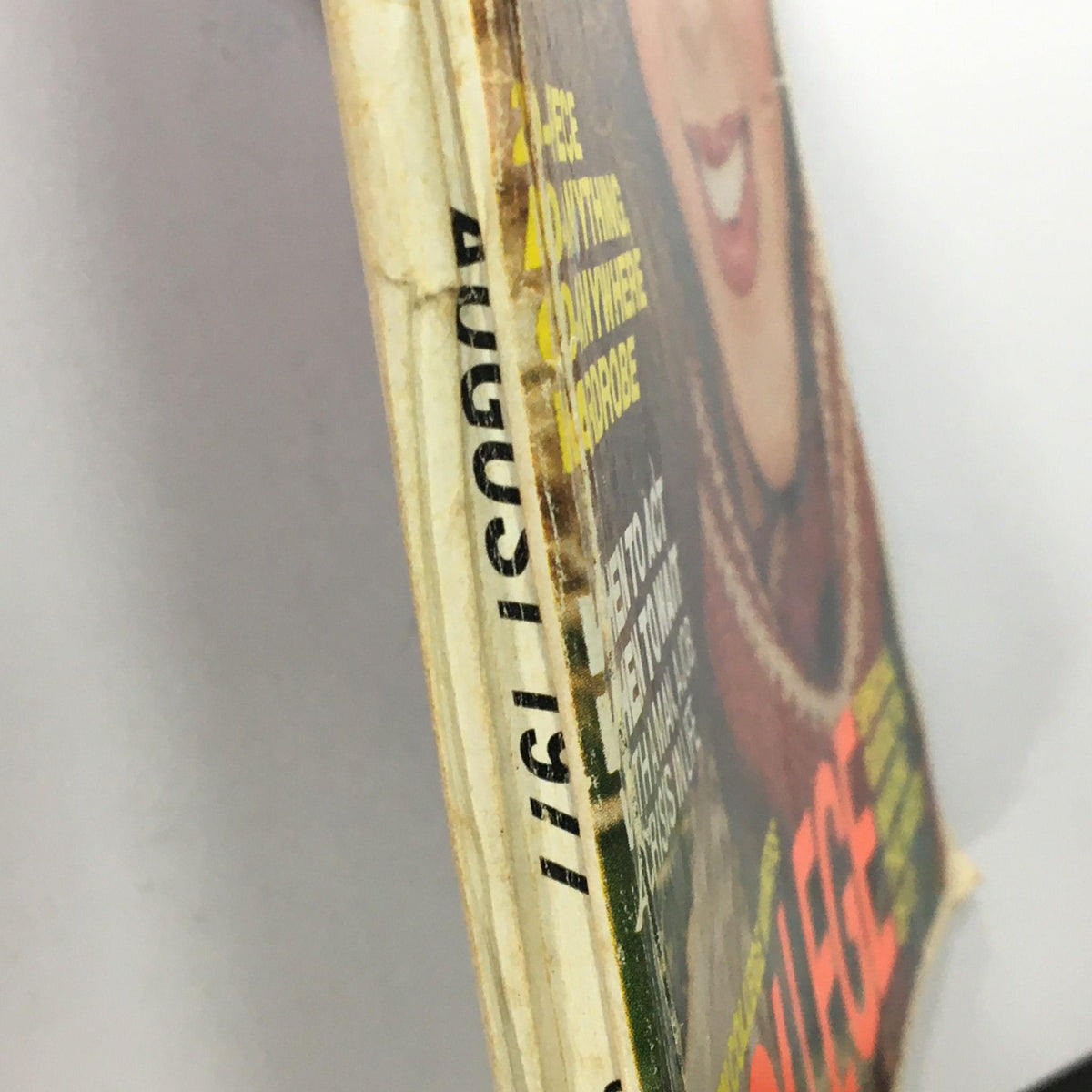
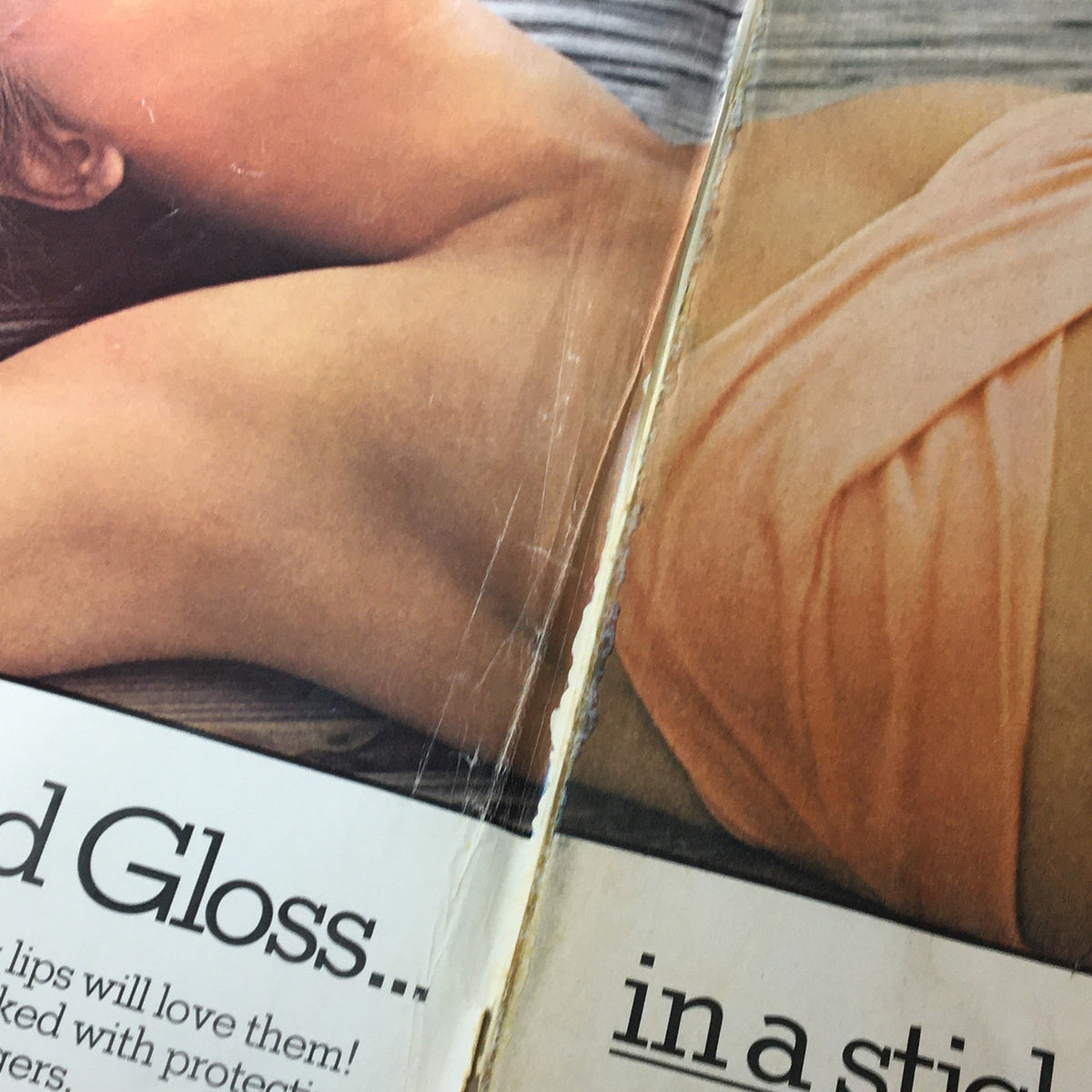
This copy is honestly graded as acceptable condition — a disclosure that collectors should evaluate carefully and transparently against the provided photographs before drawing conclusions about display or archival suitability. The noted condition attributes include noticeable wear throughout, rips, marks, cover imperfections, a loose cover, and instances of water damage — a combination of issues that places this example at the lower end of the collectible condition spectrum and that collectors should assess with specific attention to the water damage, which can cause paper brittleness, staining, and odor that is difficult to remediate and that affects both the structural integrity and the display presentation of affected pages. The newsstand provenance and absence of a mailing label are positive attributes that preserve the cover as originally printed, but the loose cover is a structural condition that requires attention. The plastic protective sleeve provides ongoing preservation value. For collectors whose primary interest is Christie Brinkley's early-career documented appearance and the "100 Fall Looks" editorial record rather than display-grade condition, an acceptable-grade copy with readable interior content remains a legitimate historical acquisition — with the condition disclosures understood and factored into the assessment.
Looking for More Issues Like This?
An early-career Christie Brinkley Glamour cover from August 1977 is a specific find for collectors building a serious archive of her documented fashion work before her most famous modeling campaigns, and if this issue has already found a home, the dedicated Christie Brinkley magazine collection at OriginalMagazines.com is the natural first resource for tracking down other significant cover appearances across her remarkable career. The broader vintage Glamour magazine collection is worth exploring for other significant covers from the publication's late-1970s run, and collectors focused on the specific fashion culture, aesthetic character, and cultural atmosphere of 1977 will find it rewarding to browse the full 1977 magazine archive, which brings together fashion and general interest publications from one of the decade's most culturally vivid and historically resonant years.