

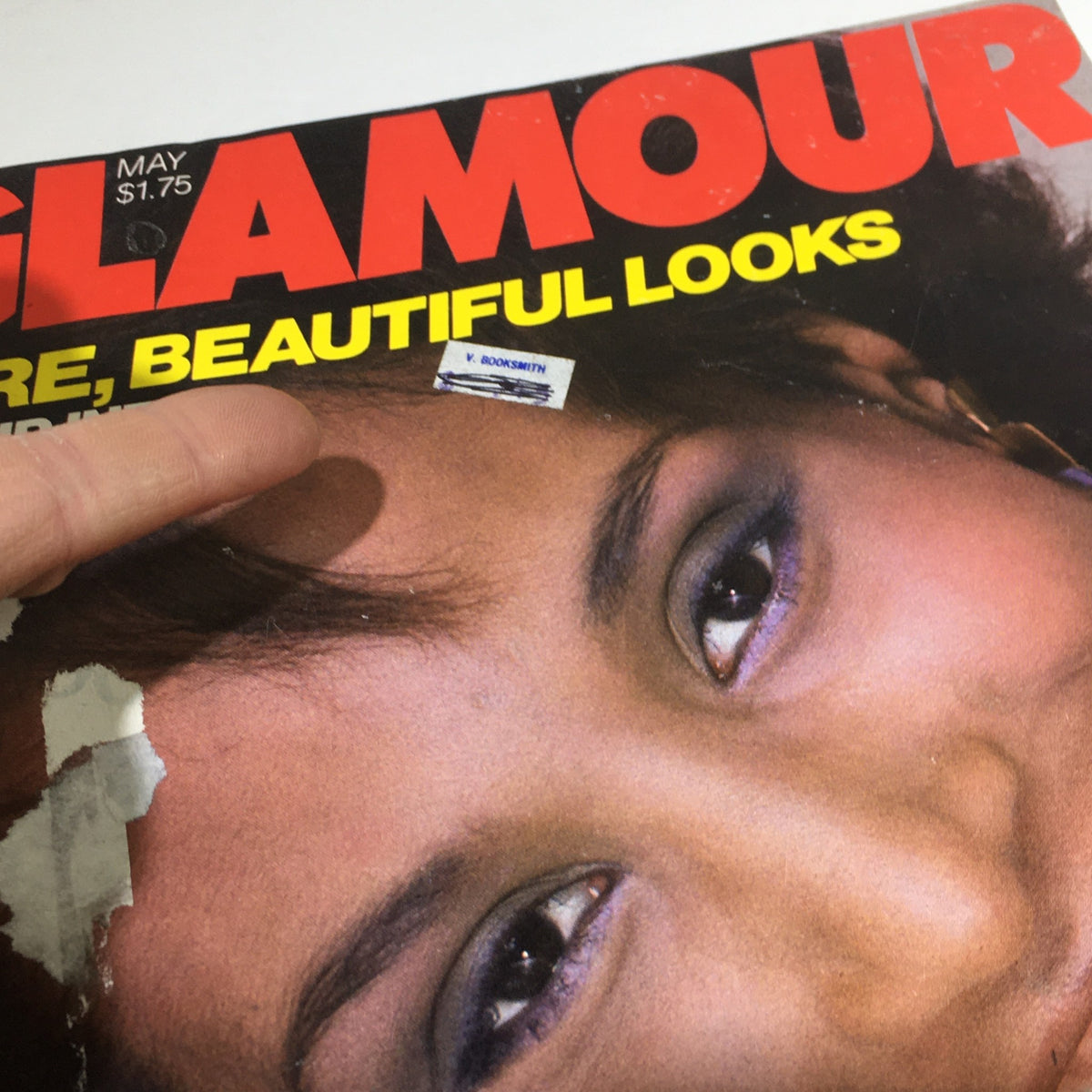


Description
Collector's Note – Why This Issue Matters
This issue documents Beverly Johnson at a moment when her place in fashion history had already been firmly secured, and it arrives within months of one of the more remarkable bookend achievements of her career. Johnson became Vogue's first African American cover model for the American edition with the magazine's August 1974 issue, a milestone that followed Donyale Luna's 1966 appearance on British Vogue but represented the first time an American Vogue cover had featured a Black model. Just four months before this Glamour cover was published, Johnson had appeared on the cover of American Vogue for a third time, in the January 1981 issue, photographed by Richard Avedon, nearly seven years after her original groundbreaking cover. A May 1981 Glamour magazine cover featuring Johnson therefore sits within an active and ongoing chapter of her career, not a retrospective look back at a single historic moment, situating this issue within the same sustained period of prominence that had defined her work for nearly a decade.
The scale of Johnson's impact on the fashion industry in the years following her original Vogue cover is well documented and substantial. Within a year of that 1974 cover, every major American fashion designer had begun using African American models, and by 1977 Johnson had appeared on roughly twenty-five magazine covers, including fourteen for Glamour alone, while also becoming the first Black woman to appear solo on the cover of Elle. She also became a significant presence on the runway during this period, breaking down barriers for major designers including Yves Saint Laurent, Valentino, Calvin Klein, and Ralph Lauren, while continuing to model for Vogue, Glamour, French Elle, and Cosmopolitan as a genuine star earning between $100,000 and $200,000 annually. Johnson's especially deep relationship with Glamour specifically, with fourteen covers for the title by 1977 alone, makes a Glamour appearance a particularly fitting venue for documenting her continued prominence into the new decade, rather than an incidental placement.
The broader cultural significance of Johnson's career extends well beyond any single cover and continues to be recognized formally by the fashion and civil rights communities. She has been named one of the twentieth century's hundred most influential people in fashion by the New York Times, received the Thurgood Marshall Award in 2008 for her advocacy and activism on racial equality, and was honored with an NAACP Image Award recognizing her cultural contributions. Johnson went on to appear on more than five hundred magazine covers over the course of her career, a body of work that places this particular Glamour issue within an extraordinarily large and well-documented archive of her published appearances. For collectors of Beverly Johnson magazine appearances and 1981 magazines more broadly, this issue represents a documented entry point into one of the most consequential and continuously active careers in twentieth-century American fashion.
About the Publication
Glamour was a long-running American women's magazine published by Condé Nast, known for combining fashion and beauty content with practical lifestyle guidance aimed at a broad readership of style-conscious women. Unlike its more aspirational sibling publication Vogue, Glamour positioned itself as accessible and relatable, emphasizing trends and beauty advice that ordinary readers could realistically incorporate into their own lives rather than purely aspirational high fashion. Its editorial format combined cover-featured fashion spreads with beauty tips, lifestyle articles, and trend coverage, and the magazine relied heavily on a recurring roster of professional models to anchor its visual identity from issue to issue. Glamour's relationship with Beverly Johnson was particularly significant within this tradition, as she became one of the magazine's most frequently featured cover models during the 1970s, reflecting the publication's role in providing sustained, repeated visibility to models who were breaking new ground elsewhere in the industry.
Key Highlights Inside
- A fashion cover featuring Beverly Johnson, captured just months after her third American Vogue cover in January 1981, nearly seven years after she became the first Black model to appear on Vogue's American edition cover. This issue documents her at a continued high point of a defining fashion career.
- Fashion and lifestyle content reflecting early-1980s trends, consistent with Glamour's established editorial format of pairing cover imagery with seasonal style guidance, as referenced generally in the listing's description of this issue.
- Coverage that, given Johnson's status by this point in her career, likely engages with the cultural significance of her continued prominence in fashion publishing, though specific article titles within this issue are not detailed in the listing.
- Specific named contributors and exact interior feature details beyond the cover story are unconfirmed for this issue; readers should consult the listing's photographs for the precise table of contents.
Condition & Rarity
This issue is described as being in good overall condition, a grade reflecting a complete and presentable copy showing wear consistent with a publication more than four decades old rather than significant structural damage. Minor wear on the edges, along with the potential for small rips and marks, is a common and expected characteristic for fashion magazines of this age, generally affecting cosmetic presentation without compromising the completeness or readability of the issue itself. The address label affixed to the front identifies this as a subscriber copy, the standard surviving format for many Condé Nast titles from this period, since subscription distribution accounted for a substantial share of the magazine's overall circulation; labeled copies are typically viewed within this collecting category as a normal characteristic of surviving issues rather than a deficiency. Early-1980s glossy magazines generally hold their printed image quality well over four decades when stored with reasonable care, which helps preserve the visual impact of cover photography even as the surrounding paper shows expected signs of age. The plastic protective covering included with this copy is a standard and appropriate preservation measure, helping to guard against further wear to the cover and pages during continued handling and storage.
Looking for More Issues Like This?
Beverly Johnson covers are especially significant to collectors given her documented status as a defining figure in the history of American fashion publishing and her unusually deep, repeated relationship with Glamour specifically. Our Beverly Johnson collection is the best place to browse other available issues and appearances spanning her long career, our Glamour magazine collection offers a broader look at the publication's history, and our 1981 magazines collection rounds out the picture with other titles from this specific year.