

Description
Collector's Note – Why This Issue Matters
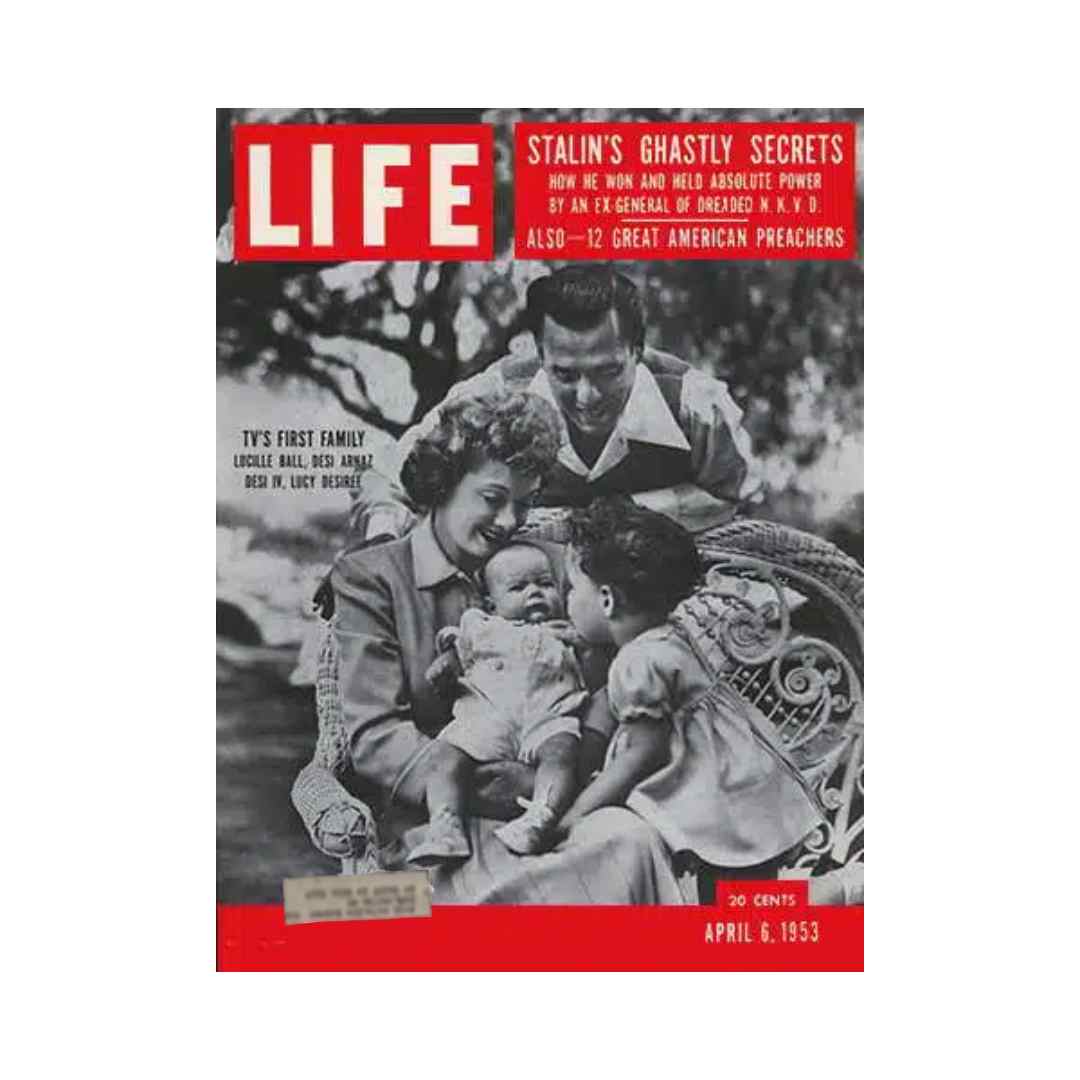
The April 6, 1953 issue of Life magazine featuring Lucille Ball, Desi Arnaz, and family is a primary document of American television's most beloved program at the precise moment of its greatest cultural resonance. The confirmed "Lucy's Boys" television feature — page 89 — documents I Love Lucy at its absolute commercial and cultural peak: by April 1953, the show had been the number-one rated program on American television for two consecutive full seasons, and the January 19, 1953 birth of Little Ricky on-screen — the same night that Lucille Ball gave birth to her son Desi Arnaz IV in real life — had generated the single most-watched television broadcast in American history to that point, with an estimated 44 million viewers. A Life magazine feature on the family in April 1953 was therefore published in the specific glow of that historic television event, just eleven weeks after the birth episode had made the Ball-Arnaz family the most discussed and most publicly celebrated family in America. For collectors building archives of Lucille Ball magazine features and covers, and of Desi Arnaz magazine appearances, a confirmed April 1953 Life family feature is a primary document from the exact post-birth moment when their combined public prominence was most fully consolidated.
The confirmed "Ghastly Secrets of Stalin's Power, Part I, by Alexander Orlov" — page 110 — gives this issue an additional historical dimension of considerable weight. Stalin had died on March 5, 1953 — just thirty-two days before this issue's April 6 cover date — and an Life feature on his secrets published in the first weeks after his death is primary contemporaneous journalism from the immediate post-Stalin moment, when the West was actively trying to assess the nature of the regime he had built and what his death would mean for Soviet power and the Cold War. Alexander Orlov was a former NKVD officer who had defected to the West in 1938 and was one of the most authoritative firsthand sources on Stalin's intelligence apparatus available to American journalism — his April 1953 Life feature is a primary document of how American mainstream journalism was engaging the post-Stalin moment using the most credible available insider voice. The confirmed Madame Chiang Kai-shek at Wellesley feature and the Medal of Honor winners feature add further layers of documented mid-Korean War American public life. Collectors of vintage Life magazine issues and of 1953 magazines will find this issue among the most historically layered in the year's publishing calendar.
The confirmed "Twelve Great American Preachers" photographic essay by Mark Kauffman and the "Shrine of St. Ursula" religious photographic essay — appearing in the same issue as the "Churches of America" editorial — give this April 6, 1953 number a specific religious documentary dimension that reflects the specific character of early-1950s American civic religion. April 1953 was the Easter season, and a Life issue with three confirmed religion-focused editorial and photographic features in a single number reflects both the seasonal placement and the specific intensity of postwar American religious life that sociologists have documented as distinctive to this period.
About the Publication
Life magazine, founded by Henry Luce and published weekly by Time Inc. from 1936 through 1972, was the dominant American photographic general-interest weekly of the mid-twentieth century, with a circulation reaching into the tens of millions during its peak years. Its picture-essay format — large-format photography combined with extended captions and narrative text — made it the primary vehicle through which the American public visualized the major events, figures, and cultural developments of the era. By April 1953 it had been publishing for seventeen years and had established its position as the primary visual documentary record of American life, and its decision to run an I Love Lucy family feature alongside the post-Stalin intelligence revelations reflects the magazine's consistent practice of treating entertainment and geopolitics as equally legitimate subjects for serious visual journalism.
Key Highlights Inside
- "Lucy's Boys" — television feature on I Love Lucy, Lucille Ball, Desi Arnaz and family (page 89) — A confirmed family feature published eleven weeks after the January 19, 1953 birth episode that drew the largest television audience in American history to that point — primary documentation of the Ball-Arnaz family at their most publicly celebrated moment.
- "The Ghastly Secrets of Stalin's Power, Part I" — Alexander Orlov (page 110) — A confirmed intelligence exposé by a former NKVD defector, published thirty-two days after Stalin's March 5, 1953 death — primary contemporaneous journalism engaging the post-Stalin moment using the most authoritative available insider voice.
- "Twelve Great American Preachers" — photographed by Mark Kauffman (page 126) — A confirmed photographic essay documenting American religious leadership during the postwar period of heightened civic religious identity, published in the Easter season of 1953.
- "MME. Chiang Returns to Wellesley" (page 59) — A confirmed feature on Madame Chiang Kai-shek's return to her American alma mater, documenting a prominent figure in the ongoing Korean War-era American engagement with Chinese Nationalist politics.
- "65 Medal of Honor Winners" (page 57) — A confirmed feature documenting Korean War honor recipients, providing primary visual documentation of the conflict's recognized heroes at a specific moment in the war's final phase.
- "Herbert Brownell Jr., Attorney General" — Cabinet series, eighth installment (page 45) — A confirmed profile in Life's Eisenhower Cabinet series, documenting the new administration's personnel at a specific early-term moment.
Condition & Rarity
This listing uses a stock photo and does not provide a specific individual condition description for the issue being sold. Collectors evaluating any surviving copy of this April 6, 1953 issue should assess the standard condition factors for a seventy-plus-year-old weekly photographic magazine: cover surface condition and the visibility of the Ball-Arnaz family cover image, the structural integrity of the staple binding, and the completeness and photographic quality of the Mark Kauffman preacher essay and the "Lucy's Boys" television feature, which are the primary visual content whose large-format print quality is central to their collector and research value. Life's coated paper stock provides relatively good long-term stability, and issues from 1953 in good condition retain their photographic vibrancy well.
Looking for More Issues Like This?
Lucille Ball and Desi Arnaz Life features from the I Love Lucy peak years — particularly from the post-birth-episode spring of 1953 — are among the most historically specific primary documents in the television celebrity collecting category, and a confirmed April 1953 family feature in the same issue as the post-Stalin intelligence revelations makes this number exceptionally layered. The dedicated Lucille Ball and Desi Arnaz magazine collections at OriginalMagazines.com are the most direct places to search for other documented appearances across their careers. The broader Life magazine archive and the complete 1953 collection are both worth exploring for other issues that document the specific historical density of early-Eisenhower America.