


Description
Collector's Note – Why This Issue Matters
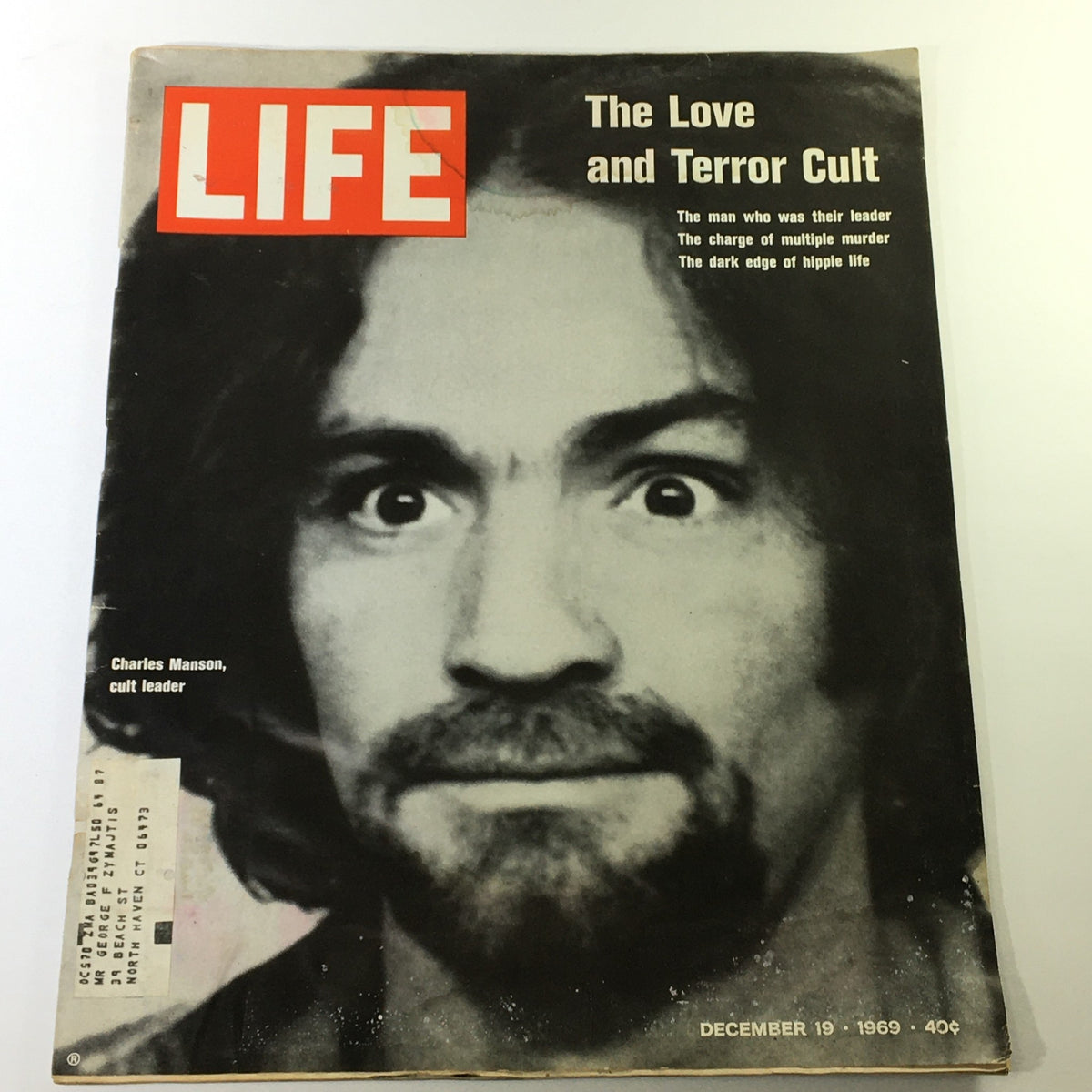
This December 19, 1969 issue of Life magazine arrived in American mailboxes and on newsstands during one of the most unsettling periods in the country's recent memory, as the public was still absorbing the details of the Tate-LaBianca murders that had taken place in Los Angeles that August. Charles Manson, the figure at the center of those crimes, had been arrested earlier that fall, and by December the case had become a fixture of national news coverage, with Life and other major publications working to explain not just the crimes themselves but the broader phenomenon of the communal group that had formed around Manson, often referred to in period coverage as "the Family." A feature of this kind, appearing in one of the country's most widely circulated photojournalism magazines just months after the murders, reflects how quickly the case had become a defining story of the era, one that seemed to crystallize a sense of unease about the darker undercurrents running beneath the decade's countercultural movements.
The closing weeks of 1969 carried particular symbolic weight, since the year marked both the high point and, in the eyes of many contemporary commentators, the unraveling of the optimistic countercultural spirit that had defined much of the decade. The Manson case, breaking just months after the Woodstock festival had celebrated peace and communal idealism, was widely interpreted at the time, and has continued to be discussed since, as a kind of dark counterpoint to those same ideals, complicating the public narrative around communal living and alternative lifestyles that had flourished throughout the late 1960s. A major photojournalism magazine like Life devoting substantial editorial space to this story by December 1969 illustrates just how central the case had become to the broader cultural conversation of that moment, sitting alongside coverage of the moon landing, the ongoing war in Vietnam, and the first Woodstock festival as one of the defining stories of the year.
For collectors and researchers exploring magazines covering Charles Manson and his case, an issue published this close to the events themselves offers something later retrospectives cannot: a contemporaneous account, written and photographed while the story was still actively unfolding and well before the trial, conviction, and decades of subsequent cultural analysis had shaped public understanding of the case. For those focused more broadly on magazines published in 1969, this issue stands as a document of how the year's most unsettling story was being processed by the national press in real time, offering a useful counterpoint to the more celebratory coverage of the same year's other landmark events.
About the Publication
Life was one of the most influential American magazines of the 20th century, renowned for its photojournalism-driven approach to covering major news events, culture, and society for a broad national readership. Its format relied heavily on extensive photo essays paired with substantive reporting, a combination that allowed the magazine to convey the emotional and visual weight of significant events in a way that text-only publications often could not match. By the late 1960s, Life had built decades of credibility as a chronicler of pivotal moments in American life, and its coverage of major news stories, including ones as complex and disturbing as the Manson case, was generally regarded as carrying significant journalistic weight given the magazine's reputation and reach. The publication's audience spanned a wide cross-section of American households, making it one of the primary ways that millions of readers encountered the major stories of the day through both image and narrative.
Key Highlights Inside
- A feature on Charles Manson published within months of his arrest in connection with the Tate-LaBianca murders, reflecting how quickly the case had risen to national prominence by the close of 1969. This kind of contemporaneous coverage offers researchers and collectors a documented snapshot of how the press was characterizing Manson and his followers before the trial had concluded. The framing of this coverage, produced in real time rather than with the benefit of later hindsight, is part of what gives this issue its historical value. Specific article text and additional photographic content beyond what is described in the listing are unconfirmed for this issue.
- Cover photography described as capturing the unsettling public image associated with Manson during this period, consistent with Life's broader reputation for striking, often haunting photojournalism on major news stories. The visual approach taken on this cover reflects how the magazine often used a single powerful image to convey the gravity of a story before readers even reached the interior pages. This is a notable example of how a major photojournalism outlet visually represented one of the most discussed criminal cases of the era. Further specifics about the photographer or precise image content are unconfirmed beyond what is stated in the listing.
- Publication timing situates this issue at the close of 1969, a year frequently discussed as a turning point in how the countercultural movements of the decade were perceived by the broader public. Coverage of the Manson case during this exact window offers a useful documented contrast to the more optimistic narratives surrounding events like the Woodstock festival earlier that same year. This juxtaposition has made late-1969 media coverage of the case a frequent point of reference in later historical and cultural analysis of the decade. The issue therefore holds relevance both as a crime-case document and as a broader artifact of the year's shifting cultural mood.
Condition & Rarity
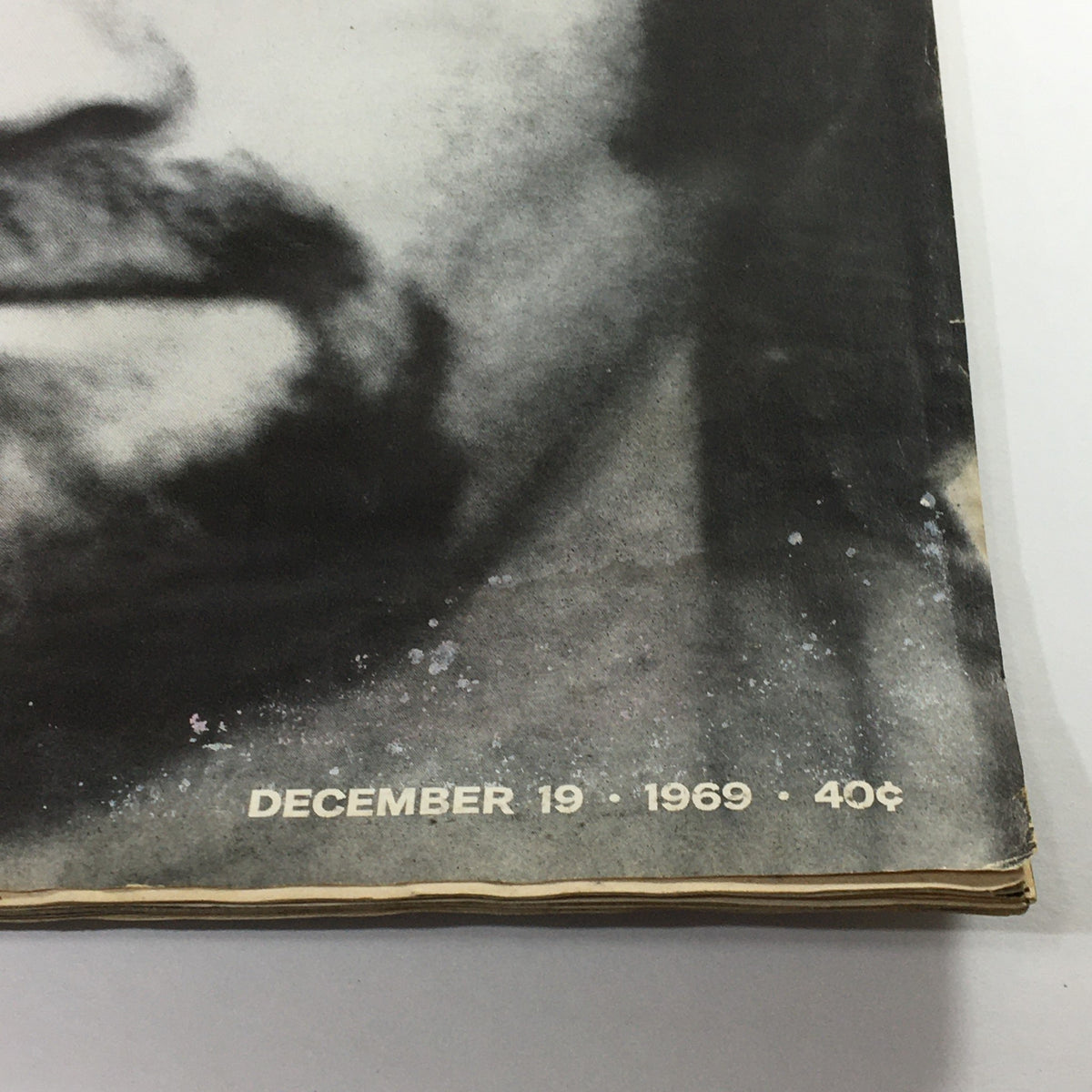
This issue is described as good, used condition, with an address label on the front, minor edge wear, some marks and small rips, and noted water damage. An address label typically indicates the magazine was originally distributed via subscription rather than purchased on newsstands, a common feature among surviving copies of widely circulated weekly magazines like Life from this era, and one that collectors generally view as a minor, expected characteristic rather than a significant flaw. The combination of small rips, surface marks, and water damage noted here would generally place an issue toward the lower end of a good, used grading range, since water exposure in particular can affect paper texture, page adhesion, and long-term stability more significantly than simple edge wear or creasing. That said, periodicals covering major historical news events are frequently collected even in moderate condition, since the documentary and historical value of the content itself often carries as much weight for collectors as pristine cosmetic condition, particularly for a story as widely referenced as this one. The included plastic protective covering is a standard preservation measure that helps slow further deterioration going forward, though it cannot reverse damage that has already occurred to the paper itself. Collectors evaluating any surviving copy of this issue should pay close attention to the extent and location of any water damage, since this type of damage can sometimes worsen over time even with protective covering, and should weigh that condition factor carefully against the issue's significance as a contemporaneous record of the case.
Looking for More Issues Like This?
Issues of Life covering the Manson case from this exact period, published while the story was still actively developing in late 1969, are genuinely difficult to find in any condition, both because of how widely this particular issue was read and discarded at the time and because of the decades that have since passed. Anyone researching or collecting material connected specifically to this case will find further options in the Charles Manson magazines collection, which gathers coverage of the case across multiple publications and years. Those more interested in this title broadly may want to explore the Life magazine collection, while the 1969 magazines collection offers a wider view of how this consequential year was documented across the full range of news, culture, and current events coverage at the time.