




Description
Collector's Note – Why This Issue Matters
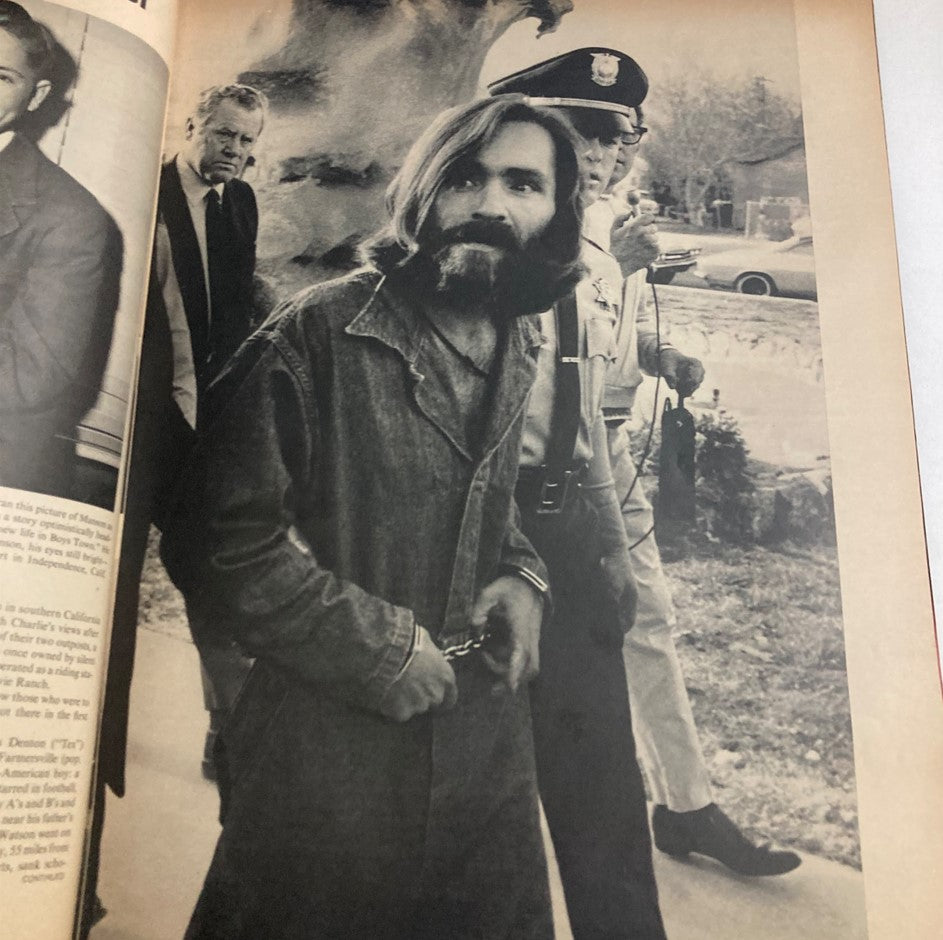
December 19, 1969 is one of the most historically significant publication dates in Life Magazine's entire forty-six-year run. The Tate-LaBianca murders had occurred in August of that year, the arrests had followed in late November and early December, and the American public was in the immediate aftermath of processing one of the most disturbing criminal cases in the country's history — one that seemed to many observers to implicate the entire counterculture movement in its violence. Life's decision to feature Charles Manson on its cover under the framing "Love and Terror" was not a tabloid decision but an editorial one of the highest order: the magazine was attempting to explain to its enormous general readership how the utopian idealism of the Summer of Love had produced, or at least coincided with, something this dark. That juxtaposition — the language of sixties countercultural aspiration placed directly against the reality of the Manson murders — was not gratuitous but precise, reflecting a genuine and urgent question that American culture was asking itself in the final weeks of the decade. For collectors building an archive of Charles Manson magazine coverage from the period immediately surrounding his arrest and trial, this Life issue represents the first major mainstream media attempt to frame Manson for a national audience — a primary document of the cultural moment before the full narrative of the case had been established.
The timing of this issue within the broader arc of 1969 is inseparable from its meaning. The year had opened with enormous cultural energy — Woodstock in August had seemed to many to represent the counterculture's most constructive and hopeful expression, drawing hundreds of thousands of young Americans into a shared experience of music, community, and non-violence. The Manson murders, committed in the same month as Woodstock and revealed to the public in the same weeks that Altamont's violence was closing the decade, landed with a shattering force on the mythology that the counterculture had built around itself. Life's December 19 issue arrived at the exact moment of that reckoning — the last full issue before Christmas 1969, published as Americans were trying to understand what the decade had meant and what it had produced. The "Love and Terror" cover framing was an editorial attempt to hold both poles of the sixties simultaneously — the idealism that had generated the counterculture and the violence that had emerged from within it — in a single image and a single phrase. That attempt, made in the last days of the decade, is precisely what gives this issue its lasting documentary significance. Collectors researching Life Magazine's archive across its peak decades will find no issue from the late sixties that carries more documentary weight than this one.
Life's photographic resources gave its Manson coverage a visual authority that no other publication could match. The magazine's large format, its staff photographers' access to law enforcement and legal proceedings, and its editorial commitment to using photography as primary documentary evidence rather than mere illustration produced imagery that defined how the American public visualized Manson and his followers in the critical weeks following the arrests. That imagery — preserved in its original printed form in this issue — has been reproduced in histories, documentaries, and cultural analyses of the case for more than fifty years, and its original publication context in this specific Life issue is what gives surviving copies their irreplaceable primary source value. The broader editorial content surrounding the Manson coverage — the full weekly news, cultural, and advertising pages of a December 19, 1969 Life — collectively constitute a comprehensive documentary snapshot of where American culture stood at the precise close of the most mythologized decade of the twentieth century. Collectors researching American magazines from 1969 will find this issue the single most concentrated artifact of the decade's closing crisis available in any publication from that year.
About the Publication
Life Magazine was founded by Henry Luce in 1936 as a weekly photojournalism publication and operated continuously in that format until 1972, when it transitioned to special issues before relaunching as a monthly in 1978. At its peak it was among the most widely circulated magazines in the United States, built on the editorial conviction that photography could document history, convey emotion, and communicate across barriers of education and background in ways that text alone could not. Its staff photographers over the decades included some of the most celebrated photojournalists of the twentieth century, and its pages served as the primary visual record of virtually every major event in American and world affairs from the late 1930s through the early 1970s. By December 1969 Life was operating at the end of its greatest era — the combination of television's rise and the fragmentation of the mass magazine audience would lead to its closure as a weekly within three years — but it remained the most authoritative photojournalism publication in the country. Its decision to feature Manson in December 1969 reflected that authority: Life was not following the story but attempting to define it for a national readership still struggling to understand what had happened.
Key Highlights Inside
- Charles Manson "Love and Terror" cover story — Life's first major photojournalistic engagement with Manson and the Tate-LaBianca murders, published in the weeks immediately following the arrests, representing one of the earliest and most widely seen attempts by mainstream American media to frame Manson's identity and significance for a general national audience at the moment before the trial narrative had been established.
- Life's photographic documentation of Manson and the counterculture — the magazine's large-format visual coverage of this story deployed the full resources of its photojournalistic apparatus, producing imagery that became the definitive visual record of Manson and his followers during the critical period following the arrests and that has been reproduced in virtually every subsequent historical treatment of the case.
- Editorial content placing the Manson story within the specific cultural context of late 1969 — Life's engagement with the counterculture's "Love and Terror" framing was an attempt to make sense of how the decade's idealism had produced or coincided with this violence, and the surrounding editorial content of the issue placed that attempt in direct relationship with the full range of American cultural and news coverage of the final weeks of the decade.
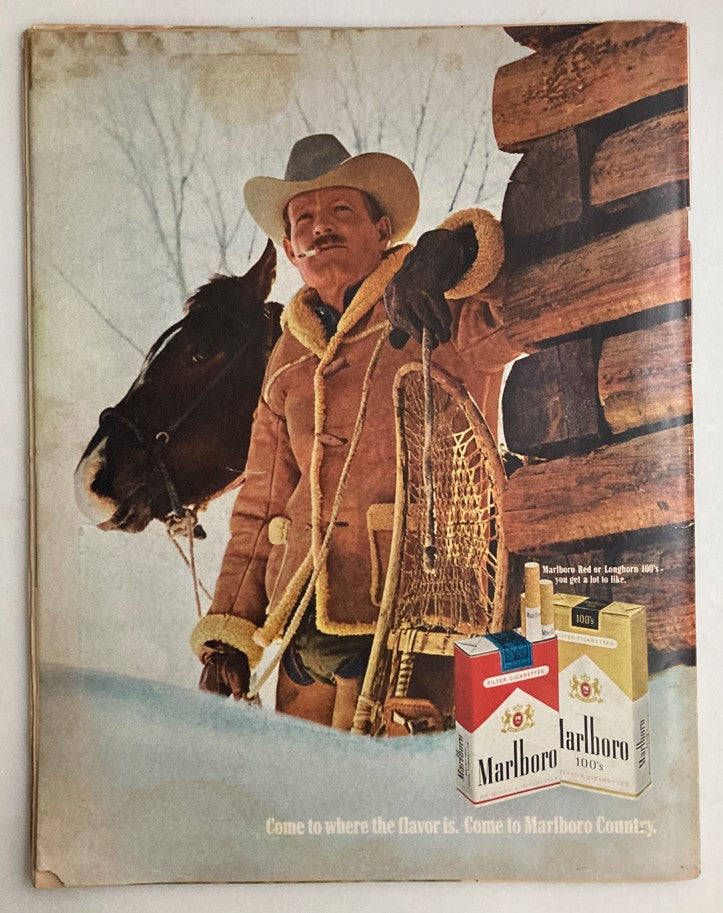
- Advertising and visual content from December 19, 1969 — the commercial and cultural pages surrounding the Manson coverage constitute a primary documentary record of American life at the specific close of the 1960s, capturing the consumer culture, visual aesthetics, and aspirational messaging of a society that was simultaneously celebrating Christmas and processing one of the most disturbing criminal revelations in its recent history.
- Note: Specific secondary article titles and confirmed interior content details beyond the cover story have not been individually verified for this issue. The highlights above reflect Life's established editorial format, the verified cover subject and volume/issue number, and the well-documented historical context of the publication date.
Condition & Rarity
This Life Magazine issue is described in the listing with honest and specific condition documentation: creases on the front cover and within the pages, possible marks throughout, and rips present. For a publication approaching its fifty-seventh year of existence, these characteristics represent a reading copy rather than a display copy — a survivor whose physical history is visible and whose structural evidence of use and age is the defining condition attribute rather than a peripheral one. Life's large-format staple-bound design made it particularly susceptible to cover separation, page stress, and the crease patterns that develop when oversized publications are stored or handled without archival support, and the condition described here is consistent with a copy that passed through active use and casual storage rather than deliberate preservation. The documentary content of this issue — the Manson photography, the "Love and Terror" framing, the full editorial record of December 19, 1969 — is entirely independent of its physical condition grade, and a reading-grade copy retains full research utility and historical significance even when display value is compromised by the wear described. The plastic protective sleeve provides ongoing protection against further deterioration. Collectors for whom display condition is the primary consideration should seek higher-grade examples; collectors whose primary interest is the documentary content, the historical record, or the research utility of the Manson coverage will find the described condition entirely consistent with a complete and readable primary source.
Looking for More Issues Like This?
The December 19, 1969 Life Magazine is among the most historically significant issues in the publication's entire weekly run — the Manson "Love and Terror" cover, arriving at the precise cultural moment it did, makes this one of the most sought-after entries in both the Life back-catalog and the broader category of sixties counterculture magazine documentation, and it surfaces in any condition less frequently than sustained collector demand would suggest. If this issue is no longer available or if you are seeking a higher-grade example, the Charles Manson magazine collection at OriginalMagazines.com is the most focused place to find other issues documenting the case and its cultural aftermath across multiple publications. The full Life Magazine collection offers surviving issues across the publication's peak decades for collectors building a broader archive of its photojournalistic history, and the 1969 magazine collection brings together issues from across one of the most consequential years in twentieth-century American history for collectors working to document the full breadth of that extraordinary twelve months.