
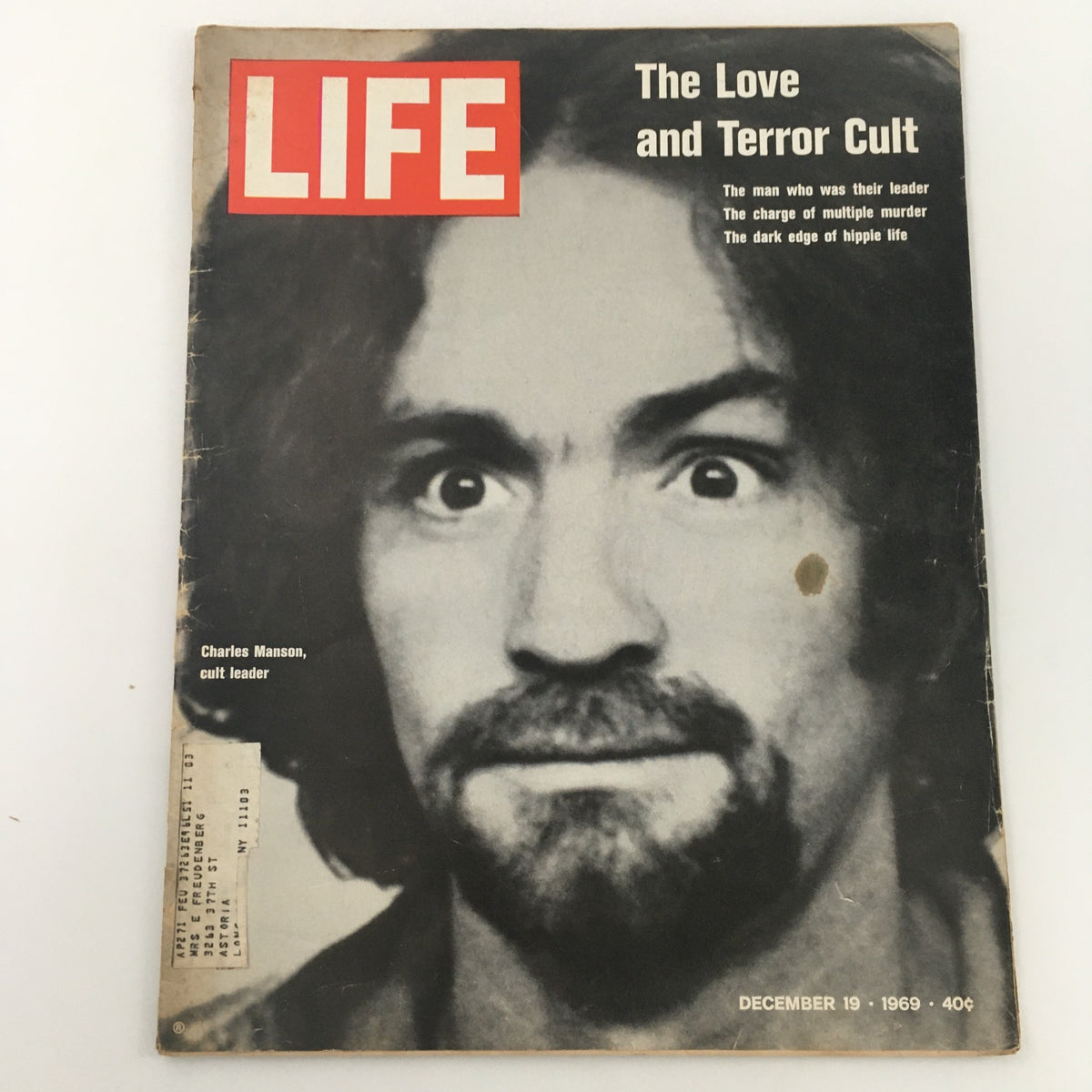

Description
Collector's Note – Why This Issue Matters
The December 19, 1969 issue of Life featuring Charles Manson on its cover is one of the most significant and most discussed magazine covers in the publication's history — and one of the most consequential acts of photographic portraiture in American journalism. The Tate-LaBianca murders had occurred in August 1969, Manson and his followers had been arrested in October, and the trial was still months away. The Life cover appeared as the story was transitioning from a Los Angeles crime story into a national cultural phenomenon, and the photograph that Life chose — the close-up portrait of Manson with his intense stare and arms spread wide — was taken by photographer Bill Ray and became the defining visual representation of Manson in American consciousness. It is difficult to overstate how much this specific image shaped the public's understanding of who and what Charles Manson was: the photograph was reproduced thousands of times across decades, referenced in documentaries, artworks, and cultural analyses, and became shorthand for a specific kind of messianic danger that the late 1960s had produced. Collectors building an archive of Charles Manson magazine covers and features will find this December 1969 Life the primary and essential document in any such collection — the issue that defined the visual mythology.
The broader cultural significance of this cover extends beyond the crime story itself. December 19, 1969 was the closing weeks of a decade — a year that had already contained the Woodstock festival, the Apollo 11 moon landing, the Altamont concert, and the Life "Faces of the American Dead" Vietnam issue from June. The Manson story, arriving at year's end, functioned in the cultural imagination as a dark bookend to the decade's utopian ambitions: if Woodstock had seemed to promise that the counterculture's communal ideals might actually produce something genuinely new, Manson seemed to demonstrate the nightmare version of exactly the same impulses. Life's decision to put his image on the cover in December 1969 was a deliberate editorial statement about the meaning of the decade that was ending, and the photograph they chose — arresting, disturbing, impossible to look away from — made that statement with maximum impact. The Life magazine archive at OriginalMagazines.com spans the publication's full history, and no single 1969 issue is more widely discussed or more specifically sought by collectors than this December cover. The 1969 magazines collection situates this issue within the broader extraordinary publishing landscape of that year.
About the Publication
Life magazine was founded by Henry Luce in 1936 and had by December 1969 been the preeminent American photojournalism publication for over three decades. Its large format and emphasis on photography gave it capabilities that no other mass-market publication could match, and its editorial decisions about which images to publish and how to frame them carried enormous cultural weight in a media landscape that did not yet have 24-hour cable news or the internet to compete with the magazine's visual authority. The December 19, 1969 Manson cover was one of the most deliberate and consequential editorial image choices in Life's history — a decision about which photograph would define a story and a decade that has been analyzed and discussed in journalism histories, cultural studies, and true crime literature for over fifty years.
Key Highlights Inside
- Charles Manson cover — the defining portrait: The Bill Ray photograph of Manson with arms spread and intense stare that became the definitive visual representation of Manson in American cultural consciousness — published as the Tate-LaBianca murder investigation was transitioning into a national cultural phenomenon before the trial had begun.
- Pre-trial Manson coverage: Published in December 1969 with the trial still months away, the issue documents the public's first sustained engagement with Manson as a cultural rather than purely criminal figure — the moment the story became something larger than a Los Angeles crime case.
- Late-1960s cultural context: The December 19 date places this issue at the closing of the decade, giving the Manson cover a specific editorial weight as a statement about the counterculture's darkest chapter arriving at the moment of the 1960s' ending.
- Address label present: The subscriber address label is honestly noted — a standard condition attribute confirming subscription distribution, accepted at collector grade without affecting the issue's profound historical and visual significance.
Note: Specific additional interior article titles and features beyond the confirmed Manson cover story have not been inventoried for this issue and are not detailed here.
Condition & Rarity
The December 19, 1969 Life Manson cover is among the most widely recognized and consistently sought of all the publication's issues, and surviving copies in any condition attract sustained collector interest. Good condition with minor edge wear and minimal marks or rips represents a solid collector-grade survival for a fifty-six-year-old large-format weekly magazine. The address label on the front cover documents subscriber provenance and is accepted at collector grade without materially affecting the issue's value as a visual and historical document. Plastic protective covering indicates deliberate preservation and provides meaningful ongoing protection against the light exposure and humidity damage that affect large-format coated-paper publications over time. Life's large format made it physically vulnerable to spine stress and corner collapse, and good-condition copies with minimal physical wear represent a meaningful threshold above the more heavily damaged examples that constitute much of the surviving supply for this issue specifically.
Looking for More Issues Like This?
The December 19, 1969 Life Manson cover is one of the most historically significant and visually iconic issues the magazine ever published, and good-condition copies are actively sought by true crime collectors, 1960s cultural history enthusiasts, photography history researchers, and serious Life magazine archivists. If this issue is currently unavailable, the Charles Manson magazines collection is the most focused starting point for other covers and features documenting the case and its cultural aftermath. The Life magazine archive and the 1969 magazines collection are both essential for collectors building a comprehensive documentary record of this extraordinary year in American cultural and political history.