




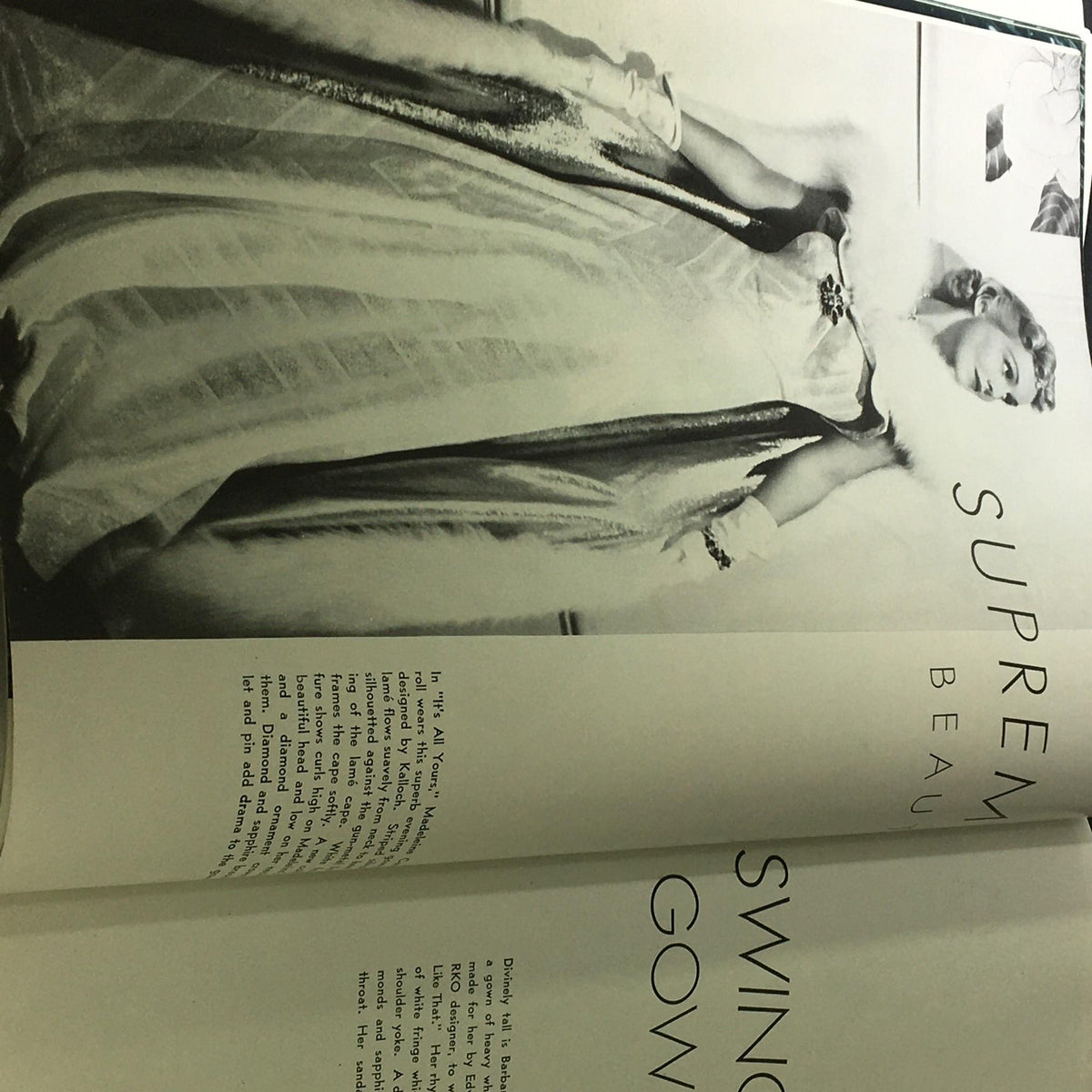
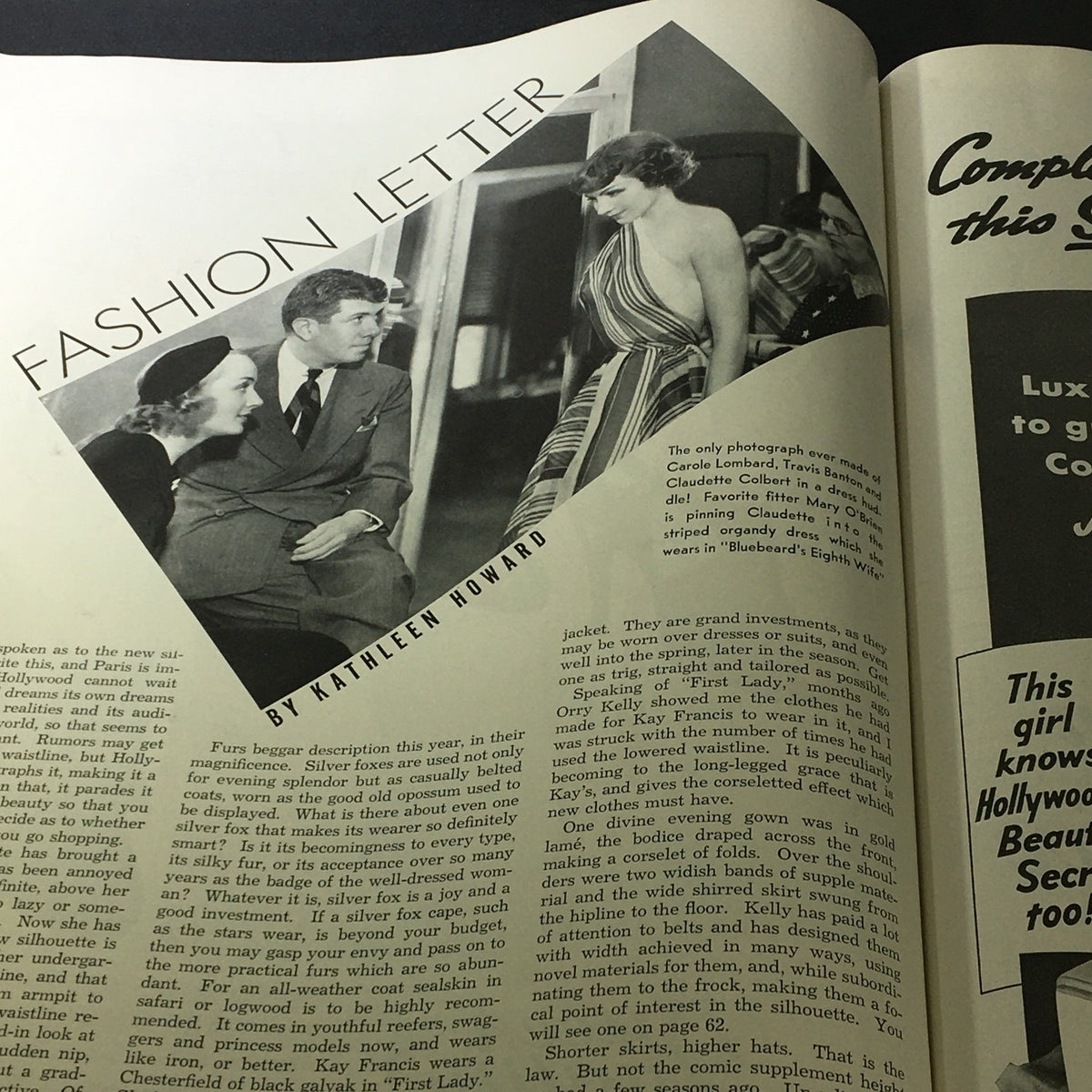

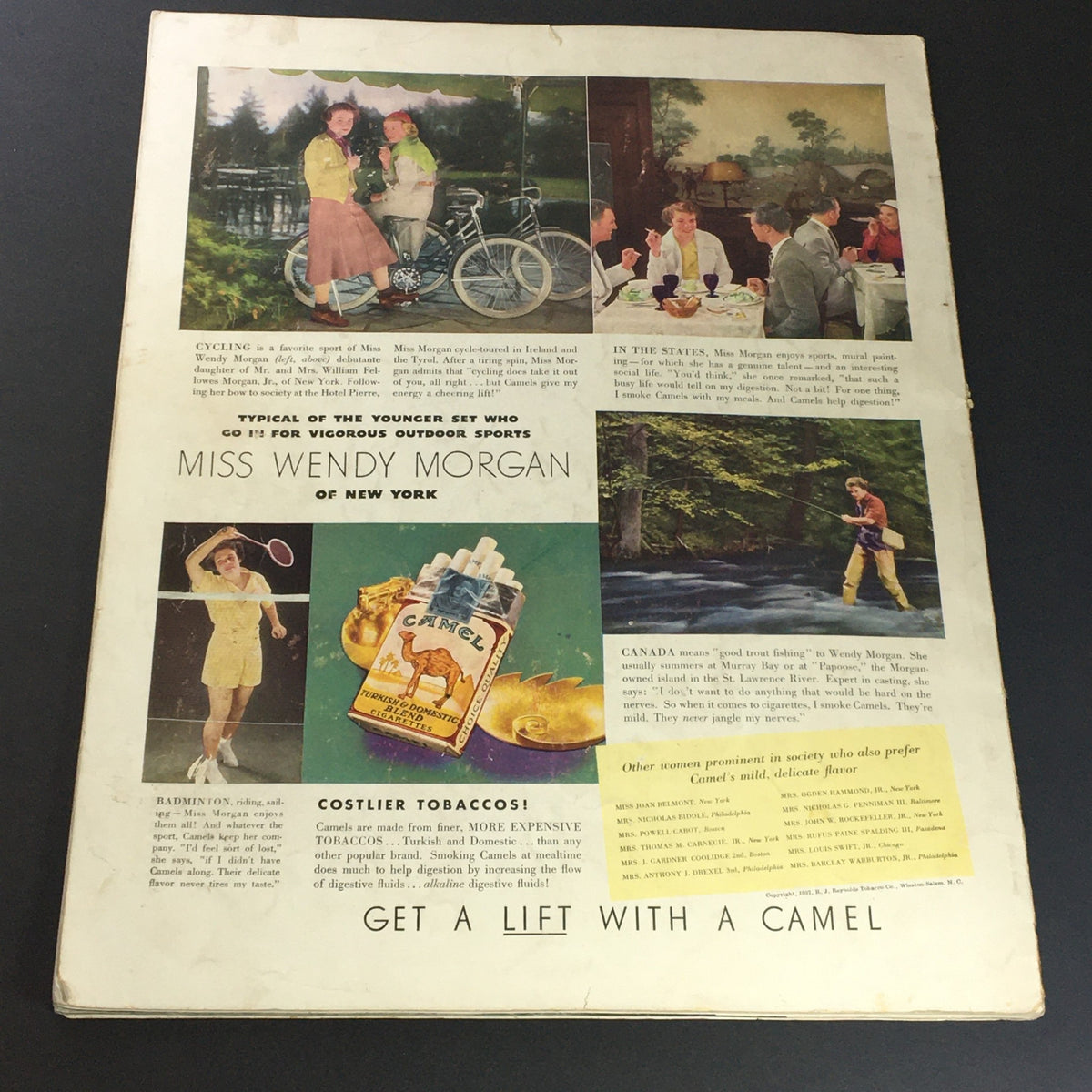


Description
Collector's Note – Why This Issue Matters
The October 1937 issue of Photoplay Magazine — Volume 11, Number 10 — featuring Joan Crawford on the cover is a primary document of one of the most significant figures in Hollywood history at a specific and well-documented moment in her career. By October 1937, Crawford had been a major MGM star for over a decade, but she was navigating a period of genuine professional uncertainty: in May 1938 — just seven months after this issue — she would be named one of the stars on the infamous "Box Office Poison" advertisement placed in the Hollywood Reporter by Independent Theatre Owners of America, a designation that documented the specific commercial anxiety surrounding her at this transitional point in her career. An October 1937 Photoplay cover therefore documents Crawford in the specific months immediately preceding that crisis of commercial reputation — at a moment when her stardom was still presented as unambiguous but the pressures that would produce the "Box Office Poison" designation were already building. For collectors building archives of Joan Crawford magazines, this October 1937 issue sits at a historically specific threshold in her career narrative that makes it more consequential than a routine fan magazine cover appearance.
The Photoplay cover itself carries a specific historical weight in the context of 1937 Hollywood. Crawford had been one of the publication's most frequently featured stars throughout the 1930s, and her relationship with the fan magazine press — carefully managed, strategically cultivated, essential to the studio star system's operation — was at its most fully developed in this period. A 1937 Photoplay cover represents the specific intersection of Crawford's personal star-building effort and the studio system's publicity machinery at the moment of its most sophisticated mid-decade expression, before the commercial anxieties of 1938 would prompt her reinvention in films like The Women (1939) and Strange Cargo (1940). The broader context of the Photoplay magazine archive reveals a publication whose 1930s run constitutes the most sustained primary documentation of the Hollywood studio system's relationship with its audience in the fan magazine format. Collectors focused on 1937 magazines as documents of American popular culture will find this issue capturing Classic Hollywood at its mid-decade peak, two years before the extraordinary 1939 release year that would mark the studio system's creative summit.
The October 1937 date also situates this issue within a specific and well-documented moment in American cultural history. The Depression was in its second major contraction — the recession of 1937-38 had begun, driven by the Federal Reserve's tightening of monetary policy — and Hollywood's anxieties about box office performance in the late 1930s were directly connected to the broader economic pressures affecting American consumer spending. A fan magazine from October 1937 is therefore a document not only of Crawford's personal career moment but of the Hollywood industry's specific commercial atmosphere in the months before the 1938 box office difficulties that would generate the "Box Office Poison" crisis and prompt the industry-wide rethinking of star strategy that the late 1930s and early 1940s would produce.
About the Publication
Photoplay was founded in 1911 and by October 1937 had been the dominant American film fan magazine for over two decades, with a circulation and cultural authority that made a Photoplay cover one of the most significant markers of Hollywood stardom available to the studio publicity machinery. Its format combined cover photography, studio-approved star profiles, film reviews, gossip columns, and reader correspondence in a package designed to sustain and deepen audience identification with the stars and films the studios were promoting. Its audience was primarily female, predominantly middle-class, and intensely engaged with the celebrity culture of the Hollywood studio system at its mid-century peak. A 1937 issue represents the publication in the mature phase of its golden era — fully established as the voice of fan culture, operating in close collaboration with the studio system's publicity infrastructure, and producing the kind of star documentation that serves as primary source material for film historians and Hollywood memorabilia collectors alike.
Key Highlights Inside
- Joan Crawford cover — October 1937 — Primary fan magazine documentation of Crawford seven months before the "Box Office Poison" designation, capturing her at the specific threshold between her unquestioned 1930s MGM stardom and the commercial anxieties that would prompt her late-1930s career reinvention.
- Volume 11, Number 10 — verified issue identification — The confirmed volume and number designation allows precise placement in Photoplay's publication archive and facilitates cross-referencing with library holdings and film history resources for researchers verifying interior content.
- Newsstand edition — no label confirmed — Full unobstructed cover photography preserved without address label obstruction, the most visually significant positive condition attribute for a publication whose Crawford cover portrait is the primary reason for collecting interest.
- October 1937 — pre-"Box Office Poison" Crawford documentation — Published in the specific months immediately preceding the May 1938 "Box Office Poison" advertisement that would create a public commercial crisis for Crawford, giving this issue a historical situatedness within her career narrative that most routine fan magazine appearances do not carry.
Note: Specific interior articles, photography features, and additional confirmed content beyond the Crawford cover have not been provided in the available listing. The highlights above reflect only what is verifiable from the listing and well-documented public record surrounding Crawford's career position in October 1937 and Photoplay's editorial conventions of the period.
Condition & Rarity
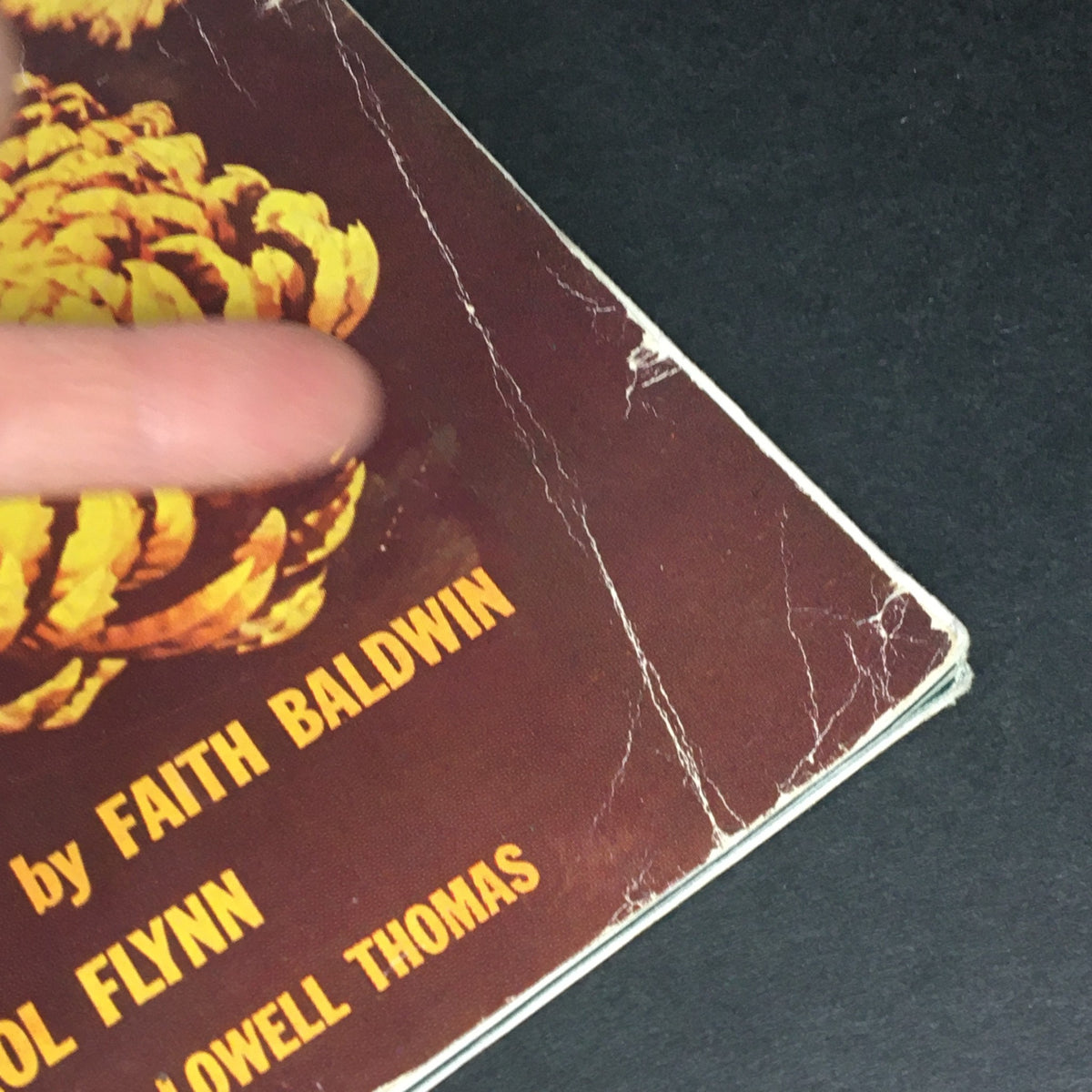
Good condition with minor edge wear, a few small rips and marks, a folded crease on the front cover, no subscription label, and plastic protective covering represents an honest mid-grade assessment for an 88-year-old monthly fan magazine printed on standard coated stock. The folded crease on the front cover is the most significant individual condition factor affecting display, as its location relative to the Crawford portrait and cover typography determines its visual impact — this should be assessed from available photographs for any collector for whom cover display is a priority. Edge wear, small rips, and marks are expected characteristics of a publication approaching its ninth decade of survival rather than exceptional condition factors. The confirmed no-label newsstand status preserves the full Crawford cover photography without address obstruction — a meaningful positive attribute for a publication whose cover image is the primary collecting draw. The plastic protective covering indicates deliberate preservation at some point in the issue's history. Good condition in a fan magazine of this age and format means the Crawford cover imagery and interior content remain accessible and visually coherent, representing genuine preservation for a monthly newsprint publication that has survived nearly nine decades.
Looking for More Issues Like This?
Late-1930s Photoplay Crawford covers from the specific pre-"Box Office Poison" period — documenting her at the precise threshold between unquestioned MGM stardom and the commercial pressures that would prompt her reinvention — are a historically specific collecting category within both the Crawford archive and the broader Classic Hollywood fan magazine market. The dedicated Joan Crawford magazine archive at OriginalMagazines.com is the most direct resource for collectors tracing her documented presence in the fan and general press across her extraordinary career. The complete Photoplay magazine collection spans the publication's golden era from the silent film period through the studio system's mid-century peak, and the full 1937 magazine collection covers the range of publications from the mid-decade year that preceded Classic Hollywood's creative summit.