






Description
Collector's Note – Why This Issue Matters
The May 1949 issue of Picture Show for Men featuring Adele Mara and Virginia Mayo on its cover arrives at one of the most visually rich moments in Hollywood's history — the final years of the studio system at its peak, when the major studios still controlled their stars' images with absolute authority and fan magazines served as the primary conduit between those carefully managed personas and the public that adored them. Both women on this cover were genuine stars of the late 1940s, and their pairing on a single cover reflects the magazine's commitment to presenting Hollywood glamour in its most concentrated and appealing form. The postwar fan magazine market was enormous and fiercely competitive, and publications that could command cover subjects of this caliber occupied a meaningful position in the cultural landscape of popular entertainment.
Virginia Mayo was, by 1949, one of Warner Bros.' most prominent leading ladies — a versatile actress who had demonstrated genuine dramatic range in films like The Best Years of Our Lives (1946) alongside William Wyler's acclaimed ensemble, while also thriving in Technicolor comedies and adventures opposite Danny Kaye and later with James Cagney. Her appeal was broad: she could carry a dramatic scene and light up a musical number, which made her an ideal cover subject for a publication targeting male readers interested in the full spectrum of Hollywood's female talent. Adele Mara, a Columbia Pictures contract player known for her dark beauty and her work in westerns and adventure serials throughout the 1940s, brought a different kind of appeal — more exotic, more action-adjacent — that complemented Mayo's blonder, more classically glamorous presence. Together they represent the range of feminine archetypes that late-studio-era Hollywood offered its audiences, and a magazine that could put both on its cover was making a deliberate editorial statement about its ambitions. For collectors building around surviving magazines from 1949, fan publications featuring two named stars of this caliber on a single cover are more valuable documents of the era's visual culture than single-subject issues precisely because they reflect how the industry thought about and marketed its talent collectively.
May 1949 sits at a fascinating and slightly melancholy moment in Hollywood history. The Paramount Decree of 1948 — the Supreme Court ruling that forced the major studios to divest their theater chains — had been handed down just months earlier, and its long-term consequences for the studio system were beginning to be understood by industry insiders even if they were not yet fully visible to the public. The world that produced the kind of carefully managed, studio-controlled star imagery that magazines like Picture Show for Men traded in was beginning, imperceptibly but irreversibly, to change. A cover featuring two Columbia and Warner Bros. contract players in the spring of 1949 is, in retrospect, a document from the last chapter of a particular kind of Hollywood — the era when the studios could still reliably manufacture and maintain this kind of carefully constructed glamour at industrial scale.
About the Publication
Picture Show for Men was a fan magazine of the late 1940s and early 1950s that positioned itself within the crowded postwar entertainment press as a title specifically aimed at male readers interested in Hollywood's female stars. Fan magazines in this era ranged from the broadly family-oriented titles like Photoplay and Modern Screen to more specifically targeted publications like this one, which leaned into the glamour photography and pin-up adjacent imagery that had become a significant component of popular visual culture during and after World War II, when publications featuring attractive actresses and models had circulated widely among servicemen. Its editorial format combined cover photography of current Hollywood stars with interior features, photographs, and likely promotional content drawn from the studios' own publicity machinery — the symbiotic relationship between fan magazines and studio publicity departments was the defining structural fact of entertainment journalism in this period. Its readership was the postwar male audience that had developed a taste for this kind of aspirational glamour content during the war years and continued to seek it out as civilian life resumed.
Key Highlights Inside
- Cover featuring Adele Mara and Virginia Mayo, two of Hollywood's prominent female stars of the late 1940s, representing Columbia Pictures and Warner Bros. respectively at a moment when both studios were producing significant work and their contract players were at the height of their visibility.
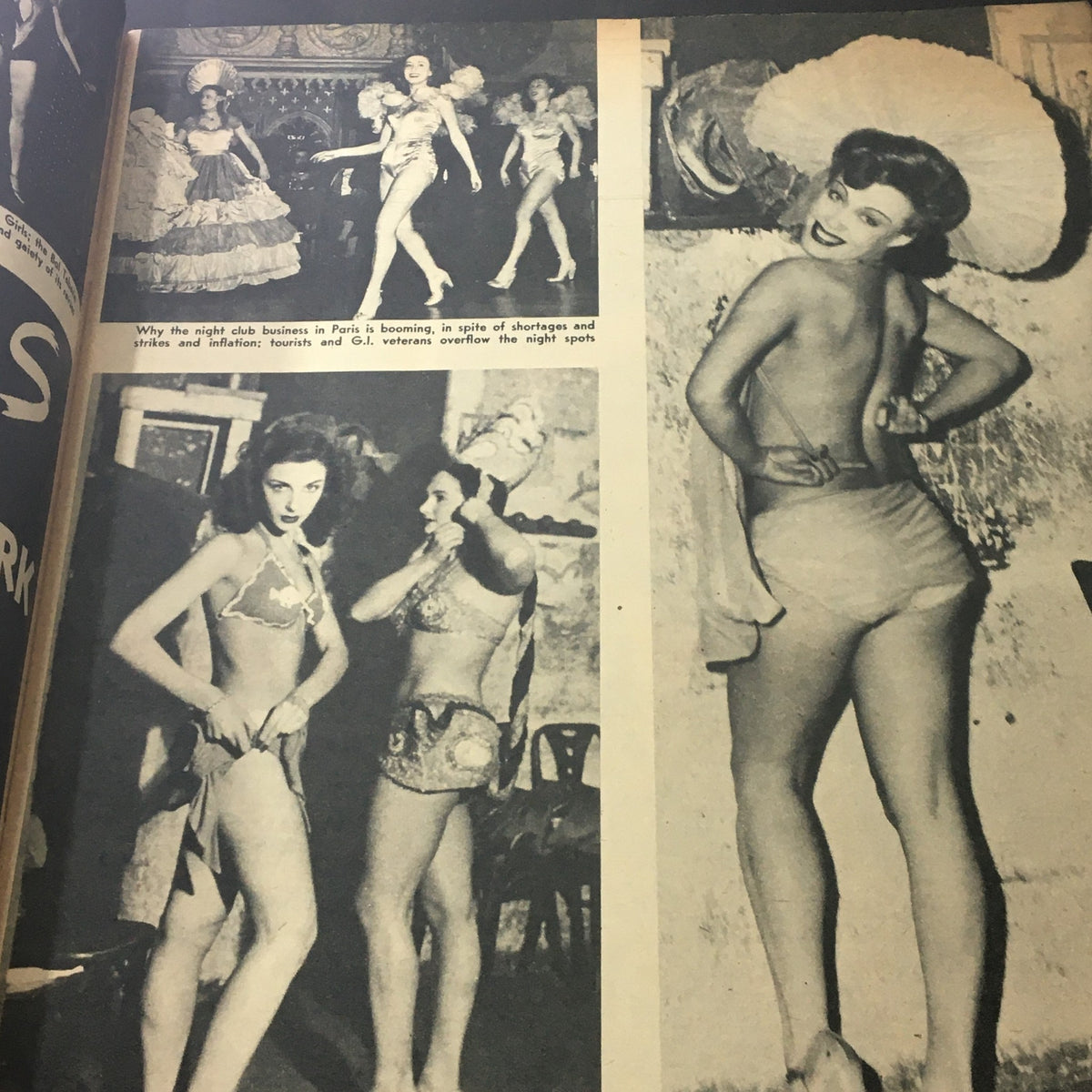
- Photography and editorial content reflecting the late studio system's approach to star image management — the carefully controlled glamour aesthetic that defined Hollywood's visual output in the final years before the Paramount Decree's full consequences reshaped the industry.
- Period advertising throughout the issue, documenting the postwar consumer landscape and the specific products and brands that were marketing themselves to male readers in 1949 — material that collectors of mid-century Americana treat as editorial content in its own right.
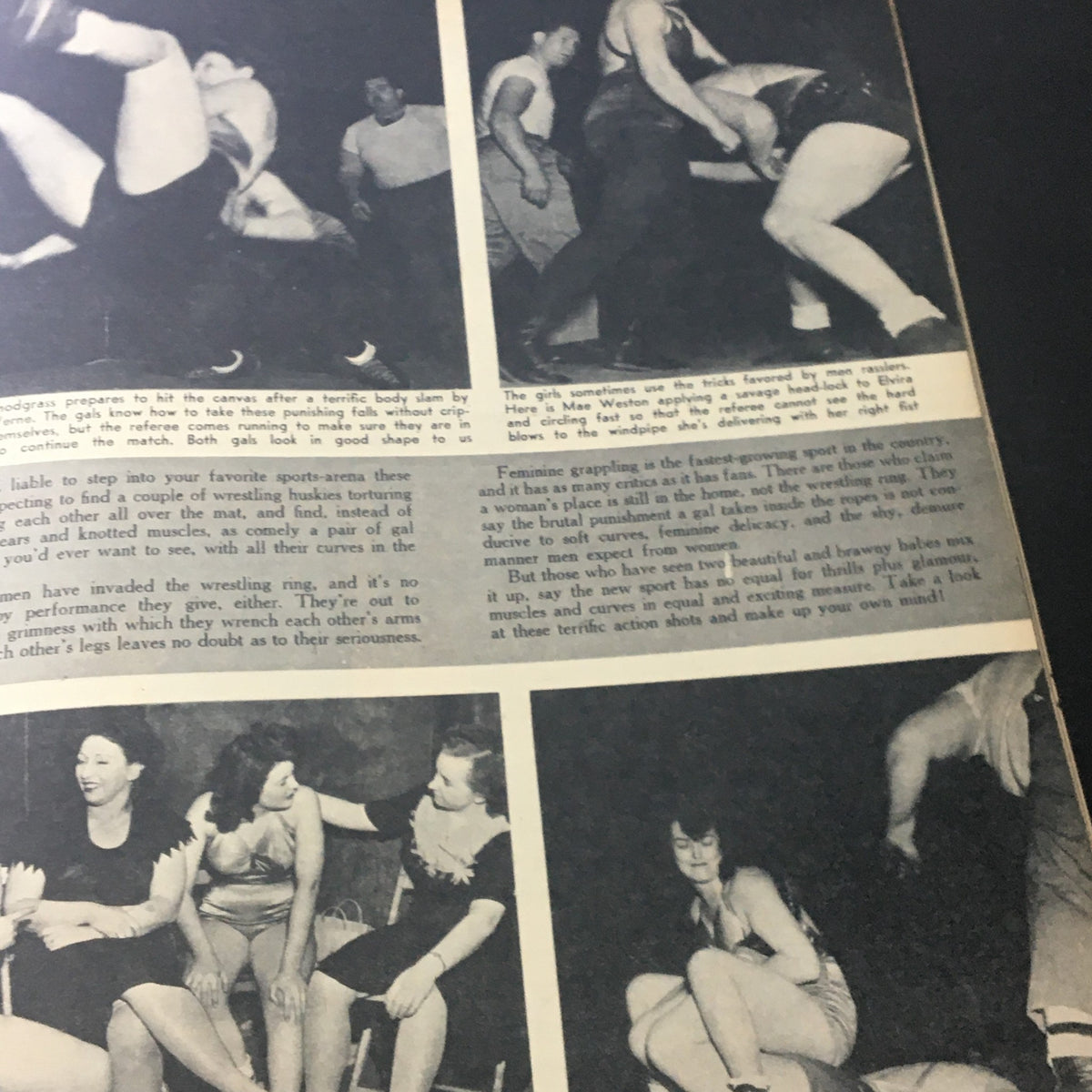
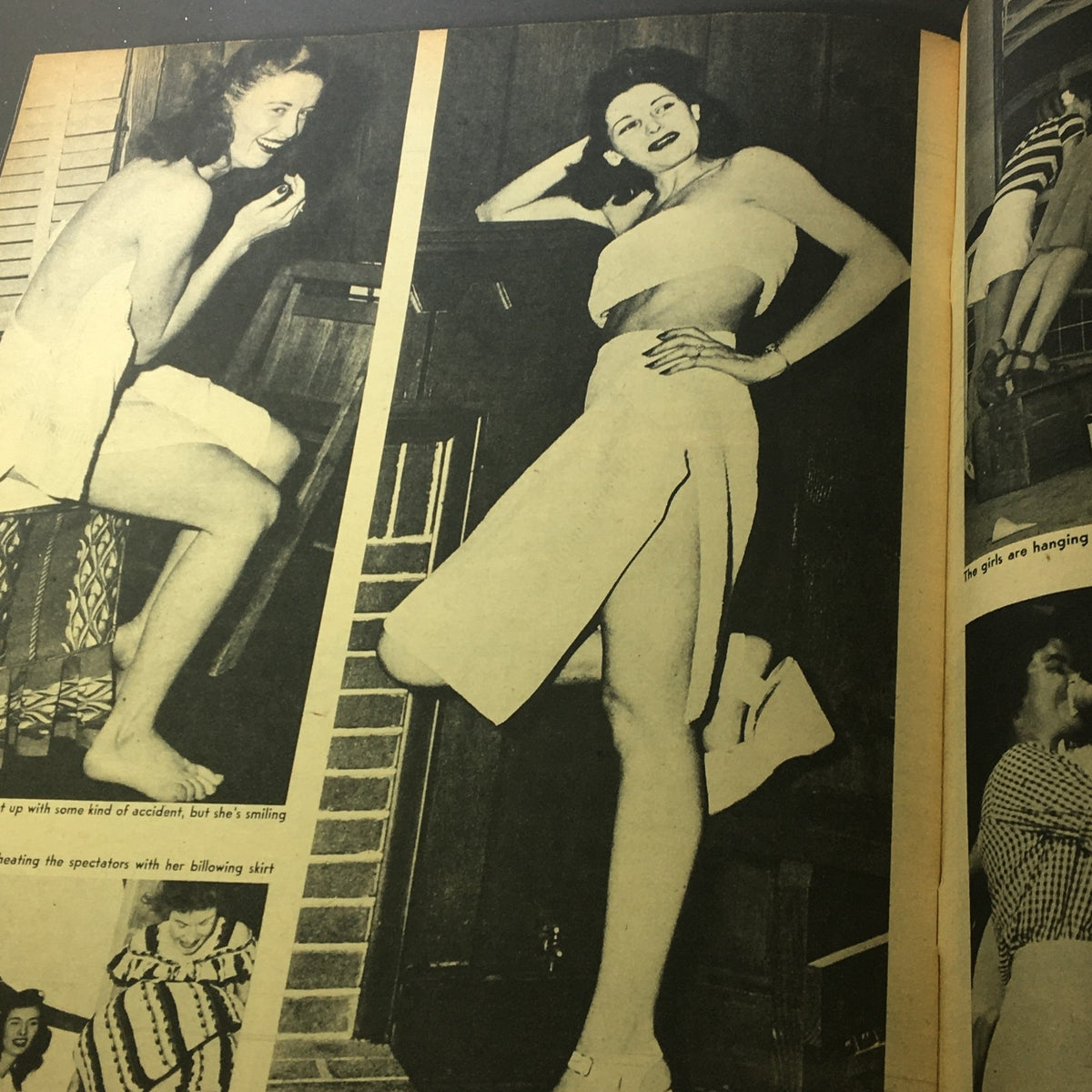
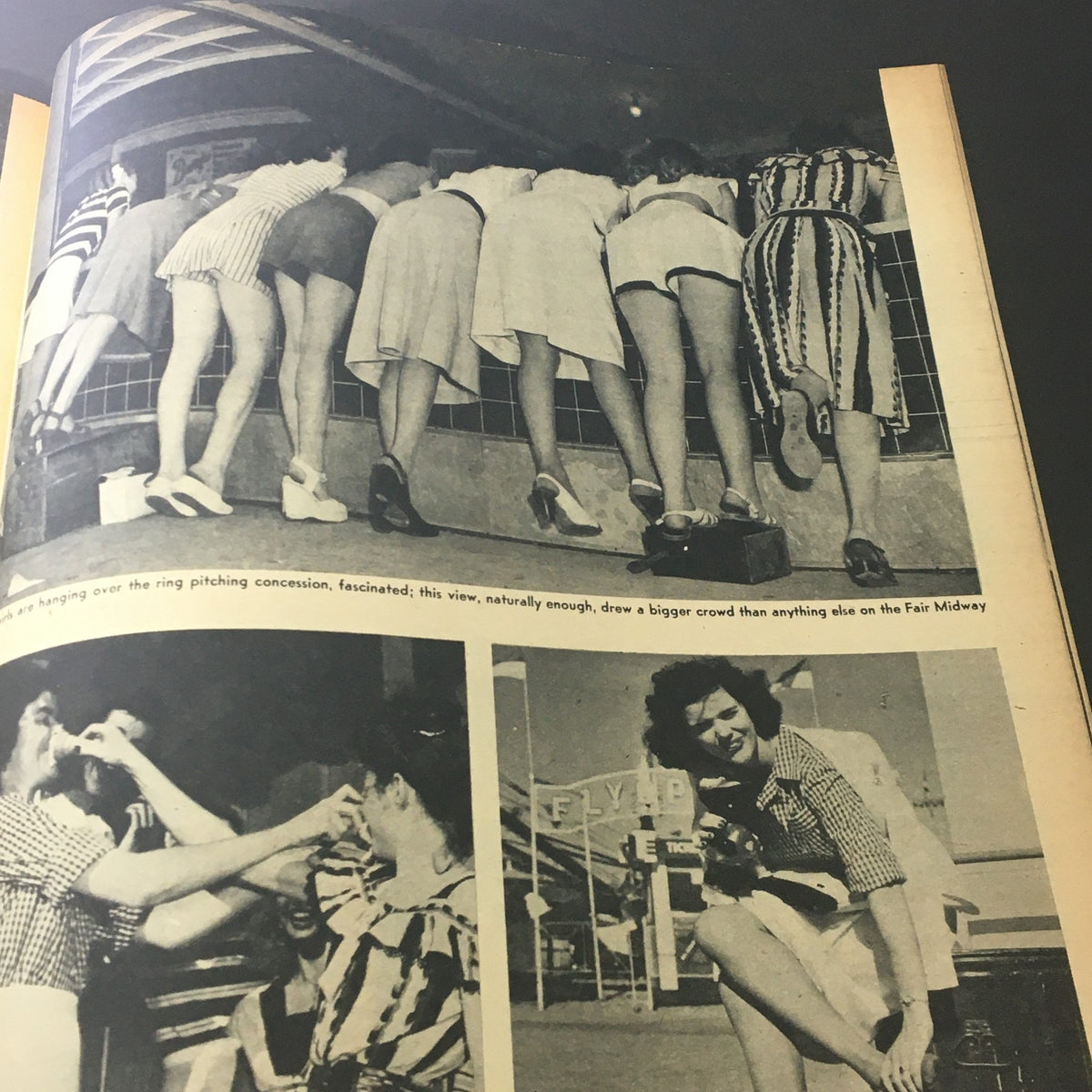
- Note: Specific interior articles, features, and additional stars profiled beyond the cover subjects are unconfirmed for this issue. The Mara and Mayo cover is the documented visual centerpiece. Collectors researching the precise contents would need to consult the issue directly.
Condition & Rarity
Newsstand origin with no address label is the preferred configuration for a collectible fan magazine from 1949, and it carries genuine significance in a category where subscription copies — carrying printed labels that obscure the cover image — make up a substantial portion of what survives. Good condition with minor edge wear, small rips or marks, and some surface marks is an honest and realistic assessment for a seventy-five-year-old monthly magazine; the paper stock used by fan publications in the late 1940s varied considerably in quality, and titles of this kind were not printed on archival-grade materials — they were entertainment publications intended for immediate consumption, and copies that have remained genuinely readable and displayable after more than seven decades reflect careful storage that was never guaranteed at the time of original sale. A plastic protective sleeve indicates deliberate preservation. When evaluating any surviving copy of this issue, the priority attributes are the legibility and surface condition of the Mara and Mayo cover photograph, the completeness of the page count, the flexibility and tanning level of the interior pages, and the integrity of the spine binding — fan magazines of this era used lightweight staple binding that is a frequent point of failure in surviving copies.
Looking for More Issues Like This?
Late 1940s fan magazines featuring named Hollywood stars in newsstand condition are a genuinely rewarding area of mid-century collecting, and publications that capture the specific visual culture of the final studio system years carry historical significance that grows as that world recedes further into the past. If this issue has already found a home, the 1949 magazine collection at OriginalMagazines.com spans multiple titles from the year and offers a broad cross-section of postwar American print culture — a rich place to keep exploring for anyone drawn to the glamour and complexity of Hollywood at its most powerful and most precarious moment simultaneously.