


Description
Collector's Note – Why This Issue Matters
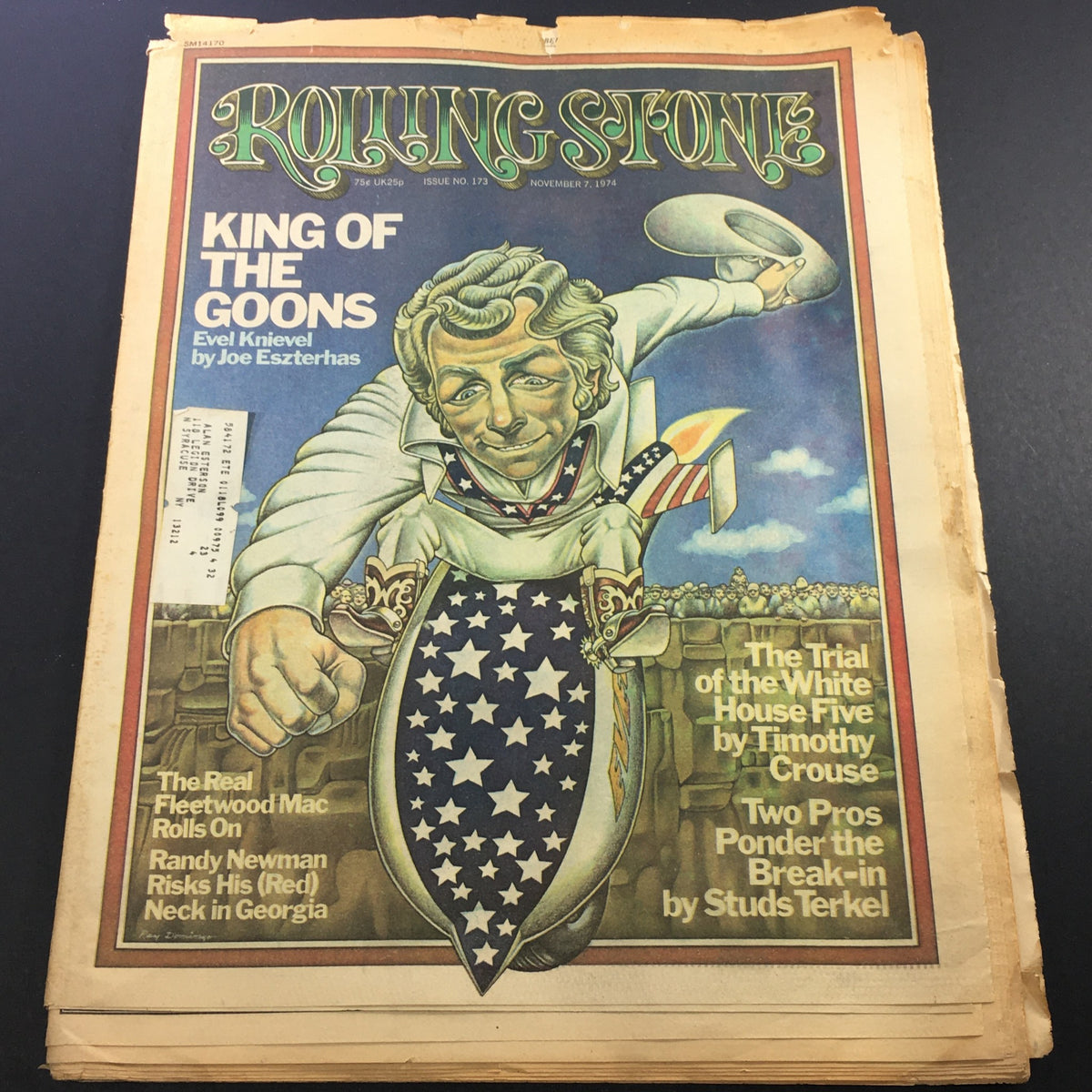
Rolling Stone Magazine dated November 7, 1974, featuring Evel Knievel and Fleetwood Mac, captures a vivid cross-section of 1970s popular culture. The listing identifies Knievel as a dominant cover subject and Fleetwood Mac as a major featured name, bringing together two very different forms of spectacle: the daredevil celebrity of live stunt performance and the evolving sound of rock music. Evel Knievel was one of the most recognizable American showmen of the decade, famous for motorcycle jumps that turned risk, injury, promotion, and personality into mass entertainment. For collectors researching Evel Knievel magazine appearances, this Rolling Stone issue is important because it places him within the broader cultural press, not only within sports or stunt-oriented coverage. It shows how Knievel’s public image had crossed into the same media world that covered musicians, filmmakers, political figures, and other symbols of the era.
The Fleetwood Mac connection gives the issue a second layer of historical interest. In 1974, Fleetwood Mac was in a transitional period before the group’s mid-to-late-1970s commercial peak, making magazine coverage from this date especially useful for understanding how the band was being discussed before its most famous lineup became dominant in popular memory. Rolling Stone was well positioned to document that kind of musical transition because the magazine regularly treated artists not only as entertainers, but as figures within a larger cultural and generational conversation. Within the broader archive of vintage Rolling Stone magazine issues, this November 1974 issue reflects the magazine’s range: rock music, celebrity, risk, performance, and the personalities that defined the decade. The issue is especially interesting because it places a daredevil and a rock band in the same cultural frame, showing how wide Rolling Stone’s definition of popular culture had become by the mid-1970s.
The November 7, 1974 date places the issue in a period when print magazines still played a central role in shaping how readers encountered music, fame, and spectacle. Rolling Stone was part of a media world where long-form articles, interviews, photography, and cover presentation helped give cultural meaning to figures who might otherwise be separated by category. Evel Knievel and Fleetwood Mac together show how the magazine could move between daredevil myth and rock culture within a single issue. As part of the wider field of collectible magazines from 1974, this issue is a useful artifact of the post-1960s entertainment landscape, when music journalism, celebrity reporting, and countercultural curiosity often overlapped. For collectors, that overlap is part of the issue’s appeal: it preserves a moment when danger, music, image, and personality all belonged to the same expanding conversation about fame.
About the Publication
Rolling Stone is an American magazine founded in 1967 and long associated with rock music, counterculture, politics, film, interviews, criticism, and long-form cultural journalism. Its 1970s readership included music fans, politically engaged readers, film enthusiasts, and people interested in the wider cultural world surrounding youth movements, celebrity, media, and social change. Unlike standard entertainment magazines, Rolling Stone often treated musicians, performers, actors, writers, and public figures as part of a larger cultural conversation. By 1974, the magazine had become an important publication for documenting the intersections of popular music, fame, politics, and generational identity. For collectors, Rolling Stone issues from this period are valuable because they preserve the editorial voice, design, advertising, photography, and cultural priorities of the era. An issue linking Evel Knievel and Fleetwood Mac shows how broadly the magazine defined pop culture, extending beyond record reviews and band profiles into the mythology of public performance itself. It also reflects Rolling Stone’s ability to treat spectacle seriously, whether that spectacle came from a concert stage, a motorcycle ramp, or the carefully constructed public image of a 1970s celebrity.
Key Highlights Inside
- Rolling Stone Magazine issue dated November 7, 1974, placing it within the publication’s influential early-1970s cultural journalism period.
- Features Evel Knievel, the legendary motorcycle daredevil and one of the most visible stunt performers of the 1970s.
- Also features Fleetwood Mac, placing the issue within the magazine’s rock and music-culture coverage during a transitional period for the band.
- The listing describes the issue as containing captivating articles and interviews connected to the 1970s music scene.
- The magazine includes an address label on the front, along with visible rips and possible marks, all important condition details for collectors.
- No specific article titles, interview subjects beyond the named figures, writers, photographers, or interior departments are confirmed in the provided listing, so additional contents should not be assumed without direct inspection.
Condition & Rarity
Collector-grade evaluation for this November 7, 1974 Rolling Stone issue should focus on the stated good used condition, minor edge wear, possible marks or rips, visible rips, front address label, and plastic protective covering. For Rolling Stone issues from the 1970s, handling wear is common because these magazines were often read, shared, folded, stored casually, or saved for specific musicians and cover subjects rather than preserved archivally from the beginning. The address label affects cover presentation and should be noted, especially when the cover subject is a major part of the issue’s collecting appeal. Visible rips and possible marks are meaningful condition factors and should be evaluated in relation to cover stability, page completeness, spine strength, and whether the Evel Knievel and Fleetwood Mac content remains intact and readable. The plastic protective covering can help limit additional handling damage, but it does not erase the importance of documenting the magazine’s actual paper condition. Stronger surviving examples of this issue would be judged by cover clarity, interior completeness, clean page edges, and the degree to which the original Rolling Stone presentation remains structurally sound. Because the issue draws interest from both Evel Knievel collectors and rock-music collectors, the condition of the front cover and the completeness of the named features are especially important. Even with visible wear, an intact example can retain historical value as a period artifact if the central content and cover identity remain recognizable.
Looking for More Issues Like This?
This November 7, 1974 Evel Knievel and Fleetwood Mac issue may be sold out, and Rolling Stone issues that bridge stunt celebrity and rock history can be difficult to replace once they enter private collections. Collectors researching related daredevil-era material may want to browse the Evel Knievel magazine collection for additional coverage of one of the most recognizable American showmen of the 1970s. That broader collection can help trace how Knievel’s image appeared across different publications, from sports-oriented coverage to celebrity and pop-culture magazines.
The broader Rolling Stone magazine collection is also useful for following how the publication documented music, fame, and counterculture across the decade. For year-based collecting, the 1974 magazine collection helps place this issue beside other publications from the same moment in rock journalism, celebrity culture, and American print history. Looking across the year gives collectors a fuller sense of how 1970s magazines documented spectacle, music, rebellion, and the expanding meaning of fame.