



Description
Collector's Note – Why This Issue Matters
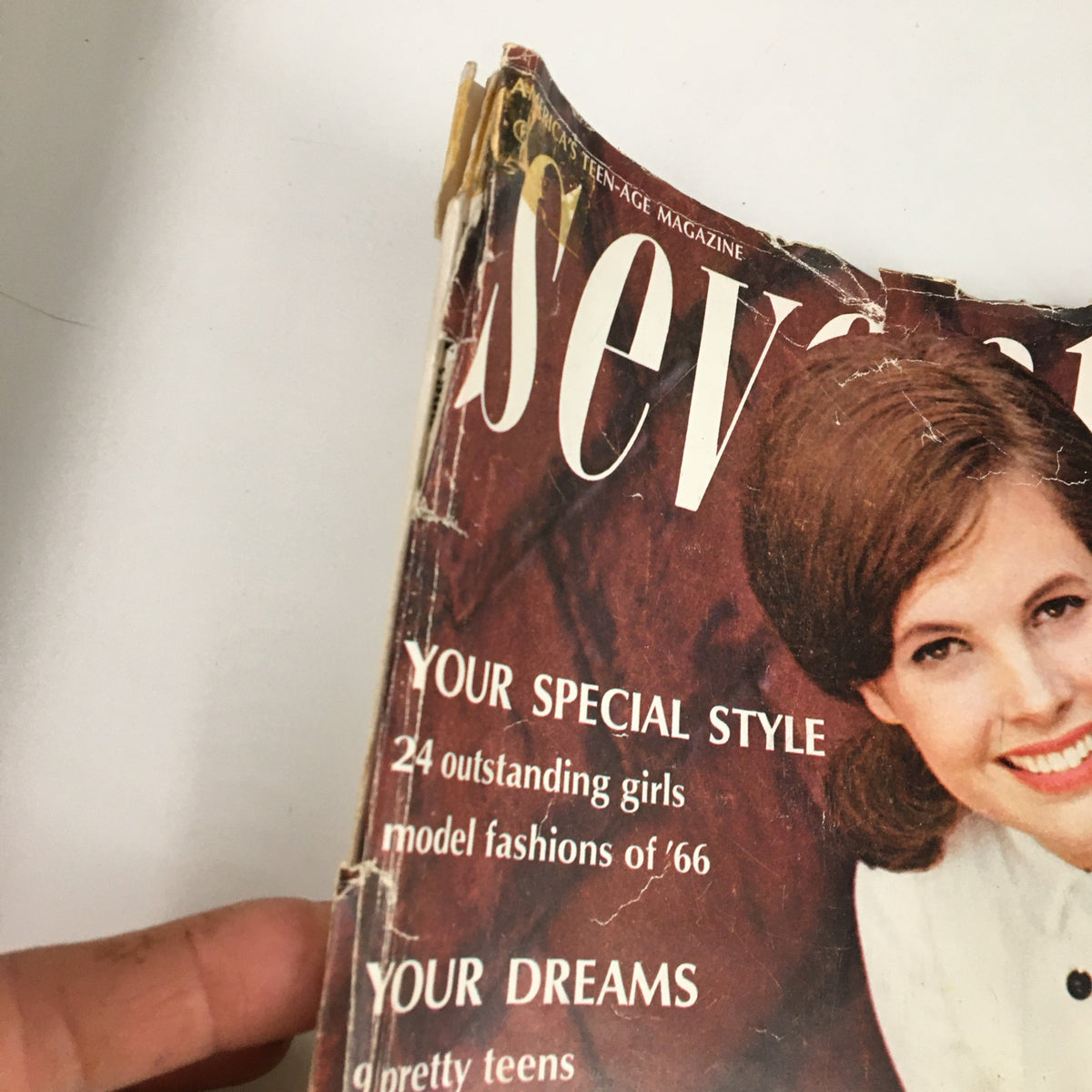
The January 1966 issue of Seventeen Magazine featuring Barbara Pendleton of Wellesley on its cover is a document of a specific and revealing editorial tradition that defined the magazine's identity through much of the mid-twentieth century. Seventeen regularly featured college women — real students from American universities rather than professional models — on its covers and in editorial features, a choice that reflected the magazine's consistent positioning as a publication for young women who were seriously engaged with their own futures. A Wellesley student on the January cover is a particular editorial statement: Wellesley was, and remains, one of the most academically distinguished women's colleges in America, and Barbara Pendleton's appearance on this cover signals the magazine's investment in a vision of young American womanhood that combined style and substance in equal measure.
January 1966 places this issue at a fascinating and genuinely transitional moment in American youth culture and women's fashion. The British Invasion had reshaped popular music, the mod aesthetic was crossing the Atlantic and transforming American fashion, and the first tremors of the women's movement that would define the late 1960s were beginning to be felt in the culture at large. Seventeen in early 1966 was navigating between the relatively conservative fashion and social expectations of the early 1960s and the rapidly accelerating changes that would transform young women's lives by decade's end. A January issue — traditionally a fresh-start, new-year number — from this specific year captures that navigation in progress. For collectors building archives of Seventeen's mid-1960s editorial run, this issue represents the magazine at a precise cultural inflection point.
The choice of a Wellesley student also resonates with what January 1966 meant in terms of women's educational aspirations. The women's colleges of the Northeast — the Seven Sisters — were at this moment educating a generation of young women who would go on to reshape American professional and public life, and their students' appearance in mainstream fashion magazines reflected both the social prestige those institutions carried and the genuine cultural currency of intellectual achievement among young American women of the era. Collectors interested in American women's culture and fashion publishing in 1966 will find this issue a particularly resonant example of Seventeen's editorial philosophy at a moment when that philosophy was being tested and transformed by the decade's accelerating changes.
About the Publication
Seventeen Magazine was founded in 1944 and quickly established itself as the defining American publication for teenage girls and young women, combining fashion, beauty, fiction, and editorial content that took its readership's intelligence and aspirations seriously. By the mid-1960s it had maintained that position for two decades, with a circulation in the millions and an editorial identity built around the premise that young women deserved a magazine that addressed them as thoughtful, engaged participants in American life rather than merely as consumers of fashion advice. Its cover choices — frequently featuring real students and young women from across the country rather than exclusively professional models — reflected that editorial philosophy in its most visible form.
Key Highlights Inside
- Cover featuring Barbara Pendleton of Wellesley College — a real American college student rather than a professional model, reflecting Seventeen's consistent editorial tradition of showcasing young women from distinguished academic institutions alongside fashion content.
- Fashion and beauty content reflecting the specific transitional moment of January 1966 — the mod aesthetic arriving from Britain, American youth fashion in rapid evolution, and the magazine navigating between the styles of the early and late decade.
- Editorial content typical of a mid-1960s Seventeen January issue, combining the magazine's standard complement of fashion advice, beauty tips, fiction, and cultural content aimed at the intelligent young American woman of the era.
Note: Specific interior articles and features beyond the cover subject are unconfirmed for this issue. The above reflects what is verifiable from the cover, publication format, and historical context of the date.
Condition & Rarity
Graded Good, with minor wear throughout, light marks, binding wear, and creases on the front corners — an honest condition profile for a monthly magazine now sixty years old. The no-label newsstand designation preserves the Barbara Pendleton cover portrait without address label defacement, which is the preferred form for display-oriented collectors and is a meaningful positive attribute at any condition grade. Creases on front corners and binding wear are the expected signatures of a publication of this age that has been stored without archival care over the decades; they speak to the magazine's history of use and do not affect the readability of the interior content. A protective plastic sleeve provides appropriate ongoing preservation. Mid-1960s Seventeen issues in any honest grade attract collectors of women's fashion history, 1960s youth culture ephemera, and vintage American magazine archives — a broad collecting community that sustains consistent interest in well-identified surviving copies.
Looking for More Issues Like This?
Mid-1960s Seventeen issues with college student covers are a specific and historically interesting subset of the magazine's long run, and the January 1966 Wellesley number is a particularly evocative example from a culturally transitional year. The full Seventeen Magazine collection at OriginalMagazines.com is the best place to explore available issues across the magazine's remarkable publishing history. For collectors building a broader archive of 1960s American women's culture and fashion publishing, the complete 1966 magazine archive offers a wide range of titles from one of the most culturally consequential years of the decade.