
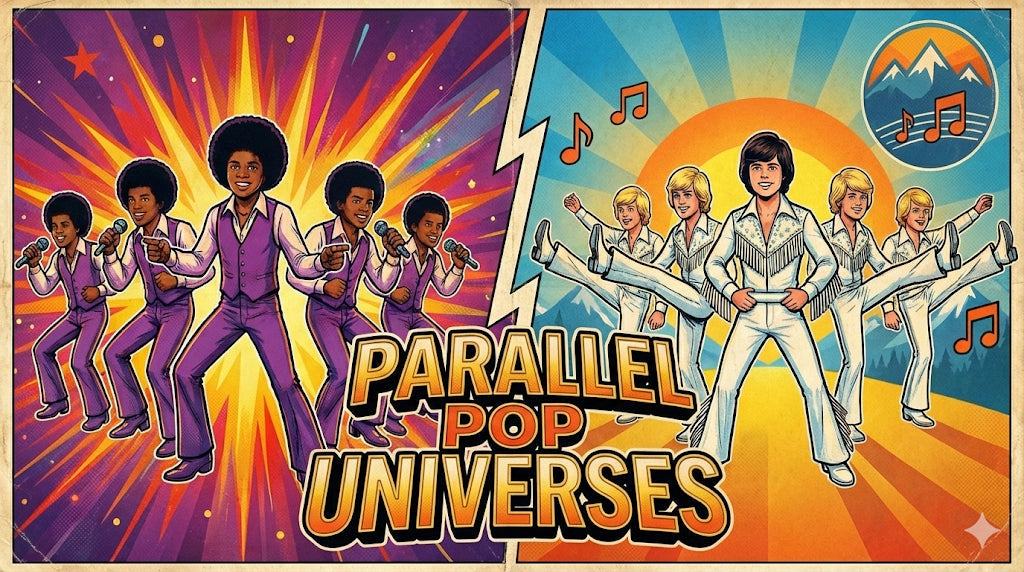
In the early 1970s, if you walked into any teenager's bedroom in America, you would see one of two things on the wall: The Jackson 5 or The Osmonds.
To the casual listener, they were just boy bands. But to industry insiders (and the editors of Tiger Beat), they were something fascinating: perfect mirror images of each other. One family from Gary, Indiana, and one from Ogden, Utah, following an almost identical blueprint to superstardom.
We dug into the archives to visualize exactly how these two musical dynasties mirrored each other—from the sound and style to the strict patriarchs who managed them.

Want to share this image on your site?
Just copy and paste the code below to embed it:
The Mirror Image Phenomenon (1970–1973)
As you can see in the graphic above, the similarities weren't accidental. After the Jackson 5 exploded onto the scene with Motown, MGM Records was desperate for a response. They found it in the Osmond Brothers.
1. The Sound
It was a battle of Motown’s "Funky Bubblegum Soul" versus MGM’s "Polished Sunshine Pop." While the Jacksons brought a grit and rhythm born in Gary, Indiana, the Osmonds delivered a barbershop-tight harmony perfected in Utah. Yet, to the 13-year-old ear, both provided the same sugar rush.
2. The Breakout Stars
Michael Jackson and Donny Osmond weren't just the lead singers; they were the "chosen ones." Both were younger, charismatic prodigies who would eventually outgrow the groups that made them famous. Their solo careers would go on to define the 80s and 90s, but it started here, shoulder-to-shoulder on magazine covers.
3. The Hits
Did you know The Osmonds' first massive hit, "One Bad Apple," was actually written for the Jackson 5? Motown rejected it. The Osmonds picked it up, and it went straight to #1, proving that the formula worked in reverse.
Own a Piece of the Rivalry
Looking back at these magazines in our archive, you realize this wasn't just music; it was a marketing war. 16 Magazine, Tiger Beat, and Right On! fueled a rivalry that drove millions in record sales.
We have the original source documents—the magazines that were actually on the newsstands when "ABC" and "One Bad Apple" were fighting for the #1 spot.