📖 About this Collection
Lee Harvey Oswald: The Name That Stopped the World
The Legend & The Legacy
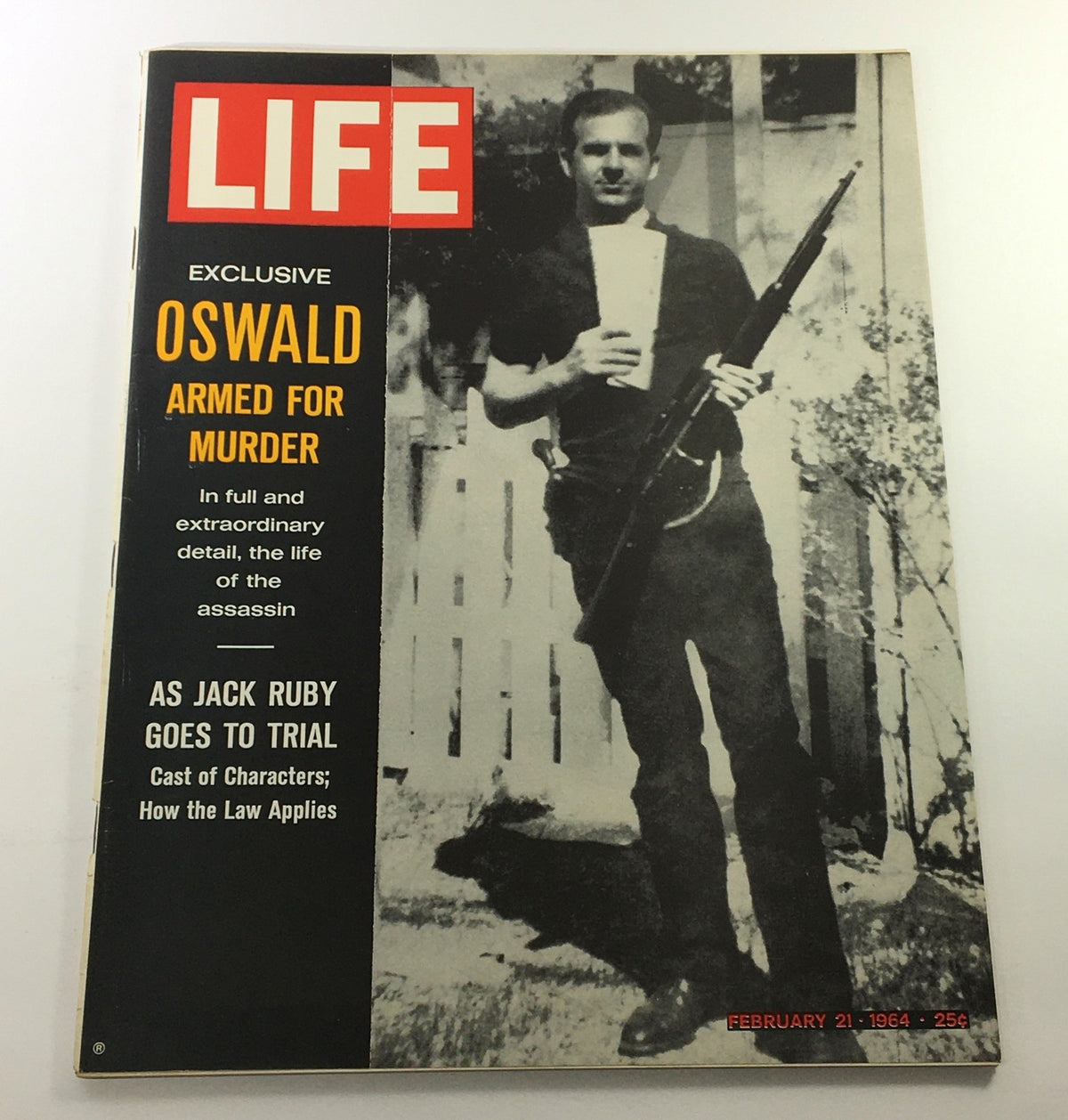
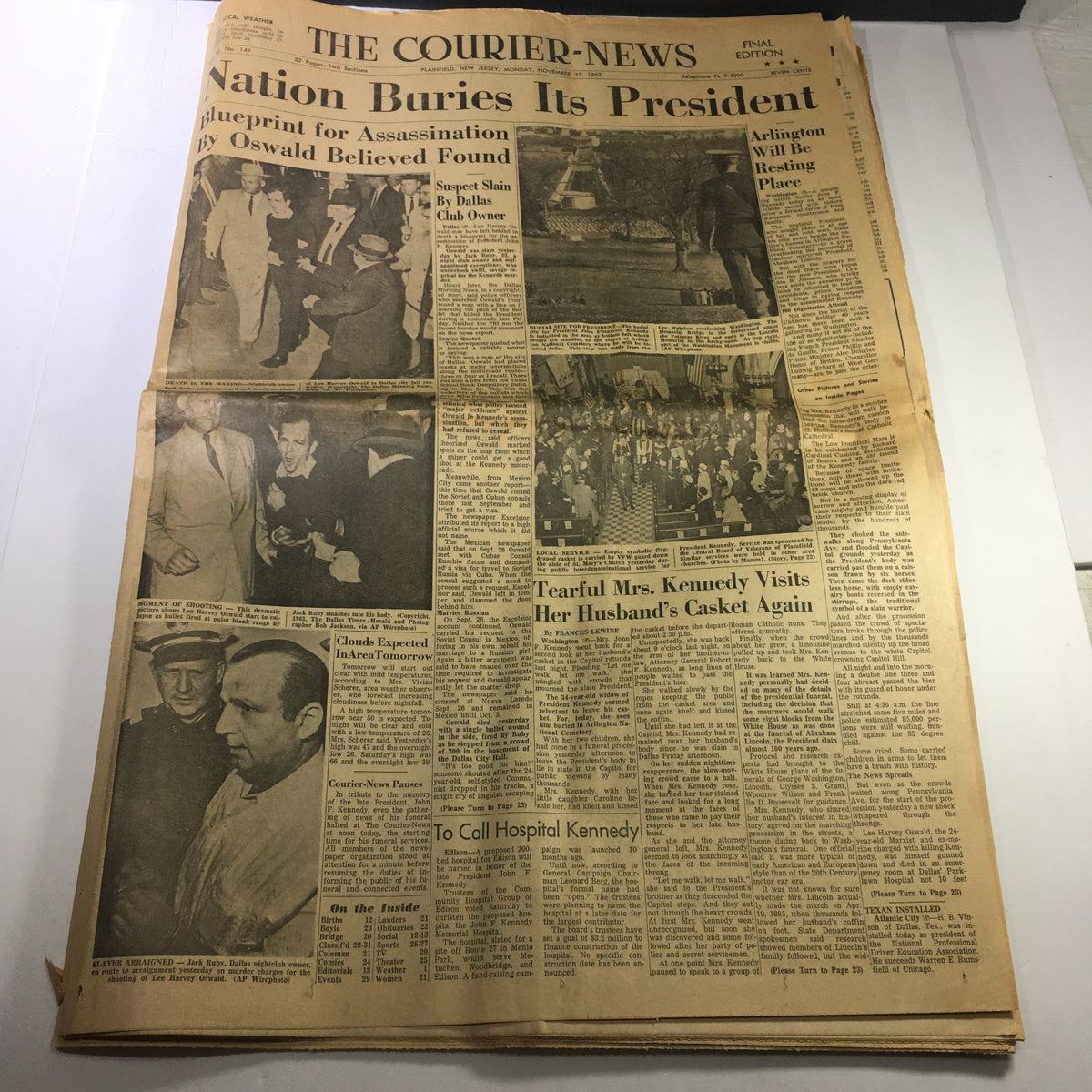
Few names in American history carry the weight — and the unresolved darkness — of Lee Harvey Oswald. On November 22, 1963, the assassination of President John F. Kennedy in Dealey Plaza, Dallas, fractured the American psyche in ways that still reverberate today. Oswald, the enigmatic ex-Marine with defector ties to the Soviet Union and murky connections to Cuba, became the most scrutinized man on earth in a matter of hours — only to be silenced by Jack Ruby's bullet just two days later, before a single word of testimony could be sworn. In an era without social media, without rolling digital newsfeeds, without instant analysis, the public turned — desperately, hungrily — to one source: print. Newspapers sold out on street corners within minutes. And then came the magazines: carefully edited, deeply reported, photographically stunning chronicles of a national wound that would never fully heal. The Warren Commission. The grassy knoll. The motorcade. The Zapruder film. These were not internet rumors — they were debated in ink, on glossy paper, in the living rooms of a stunned civilization.
Inside the Archive
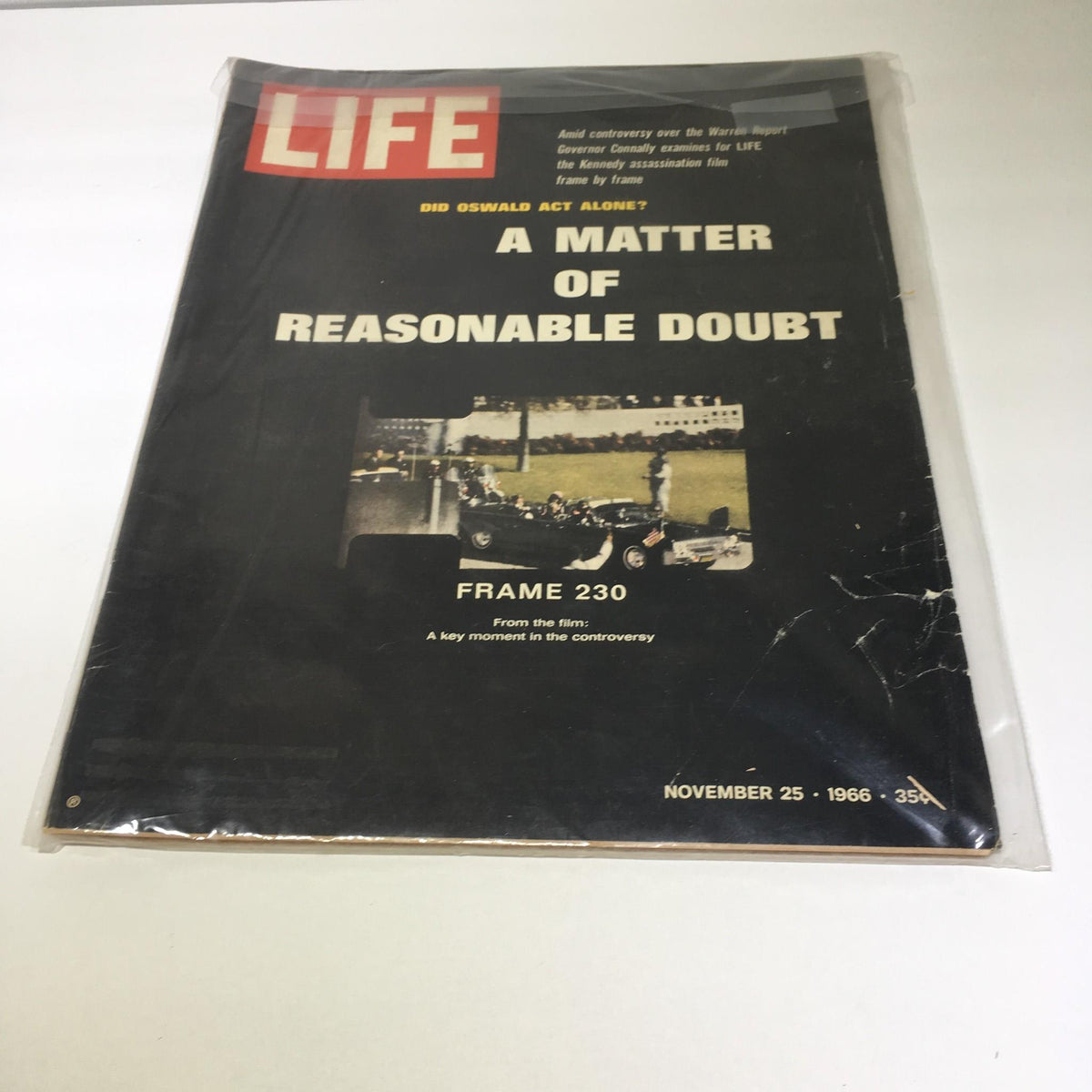
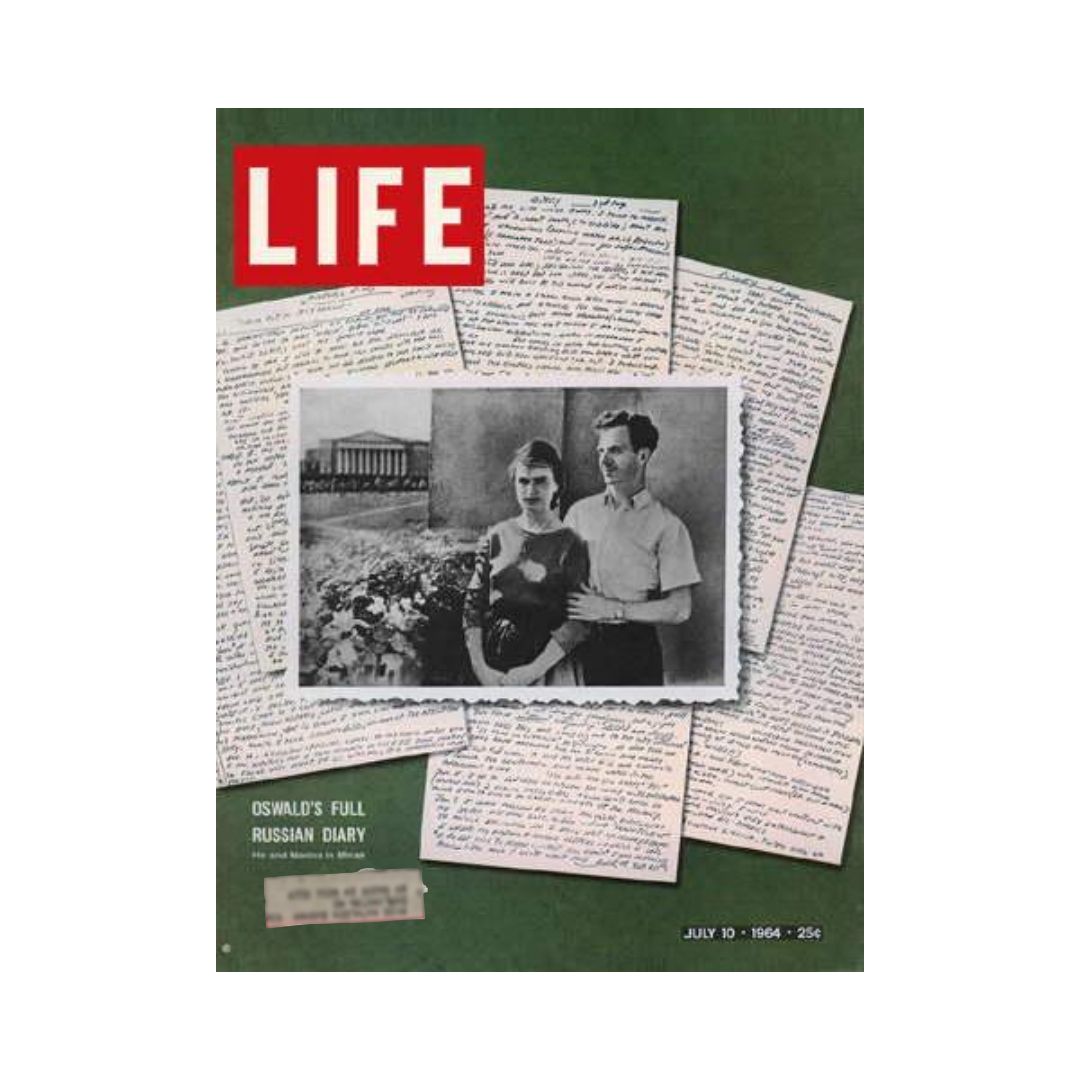
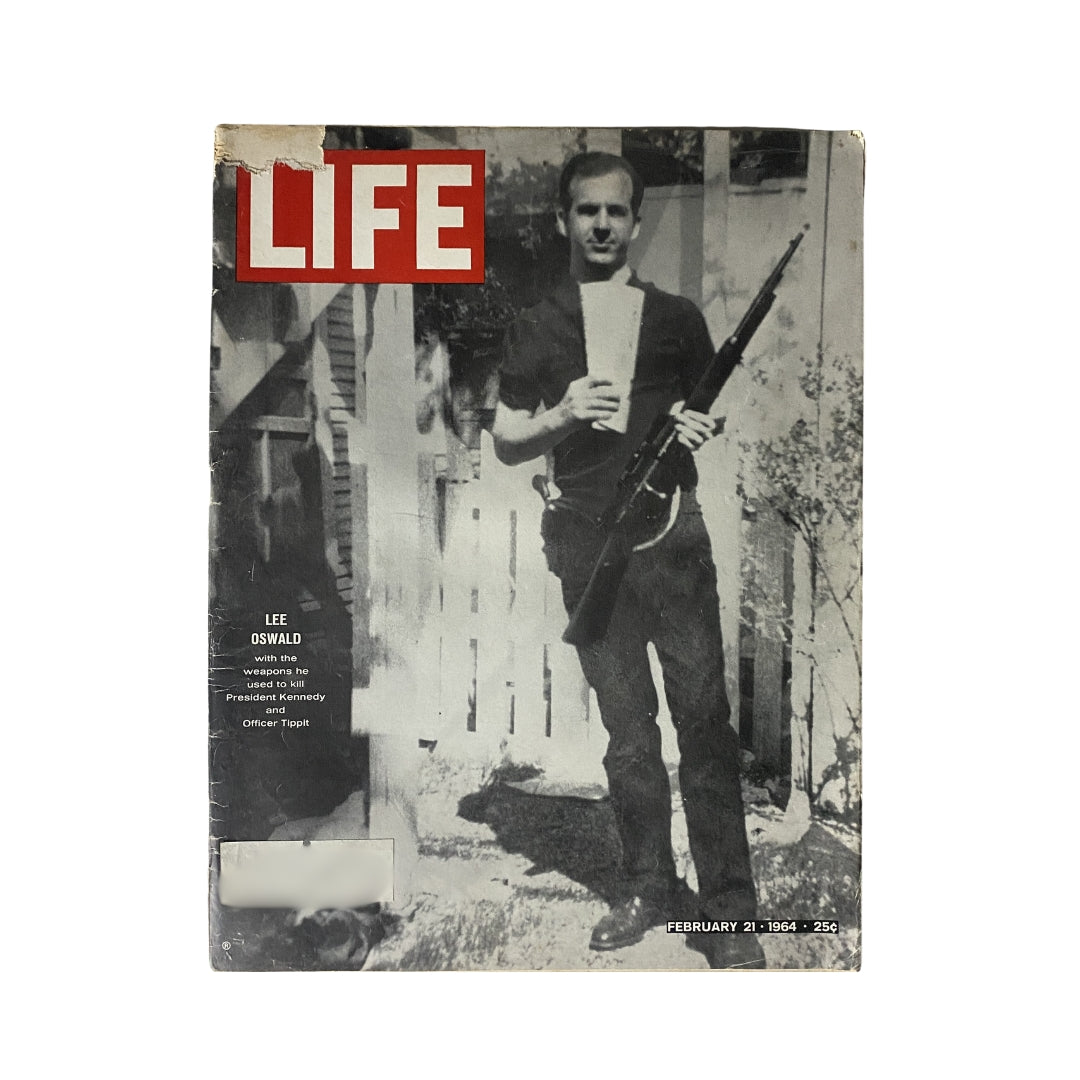
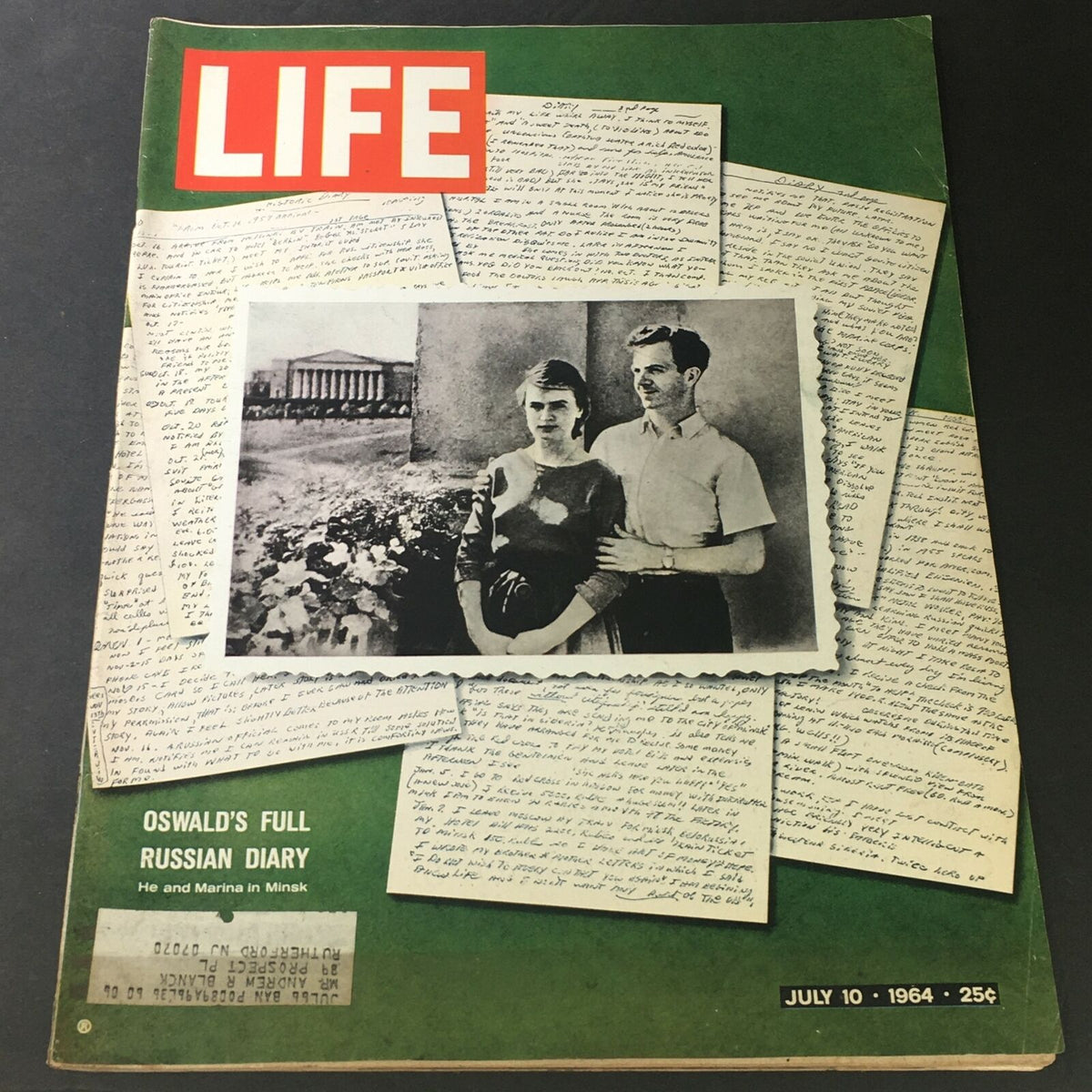
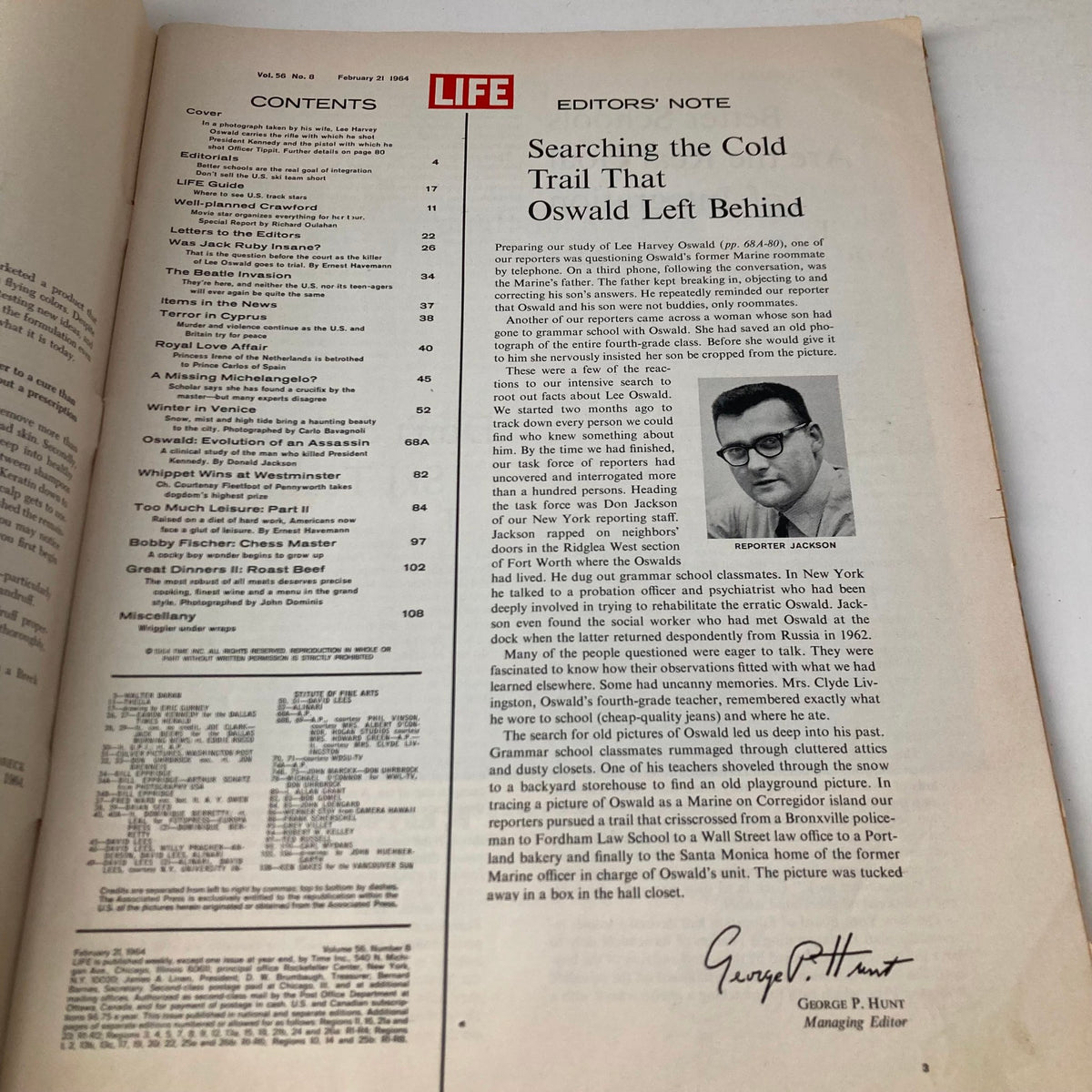
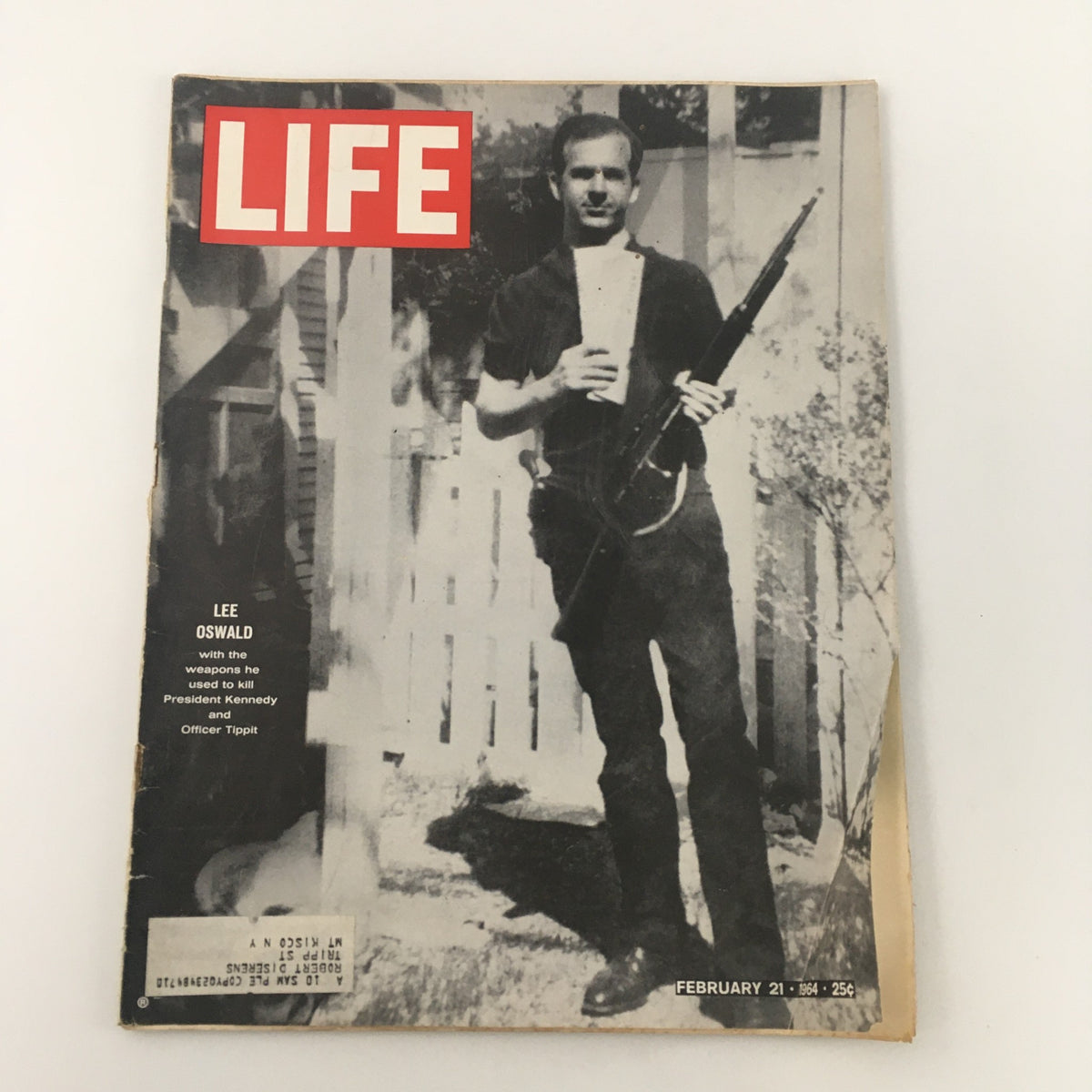
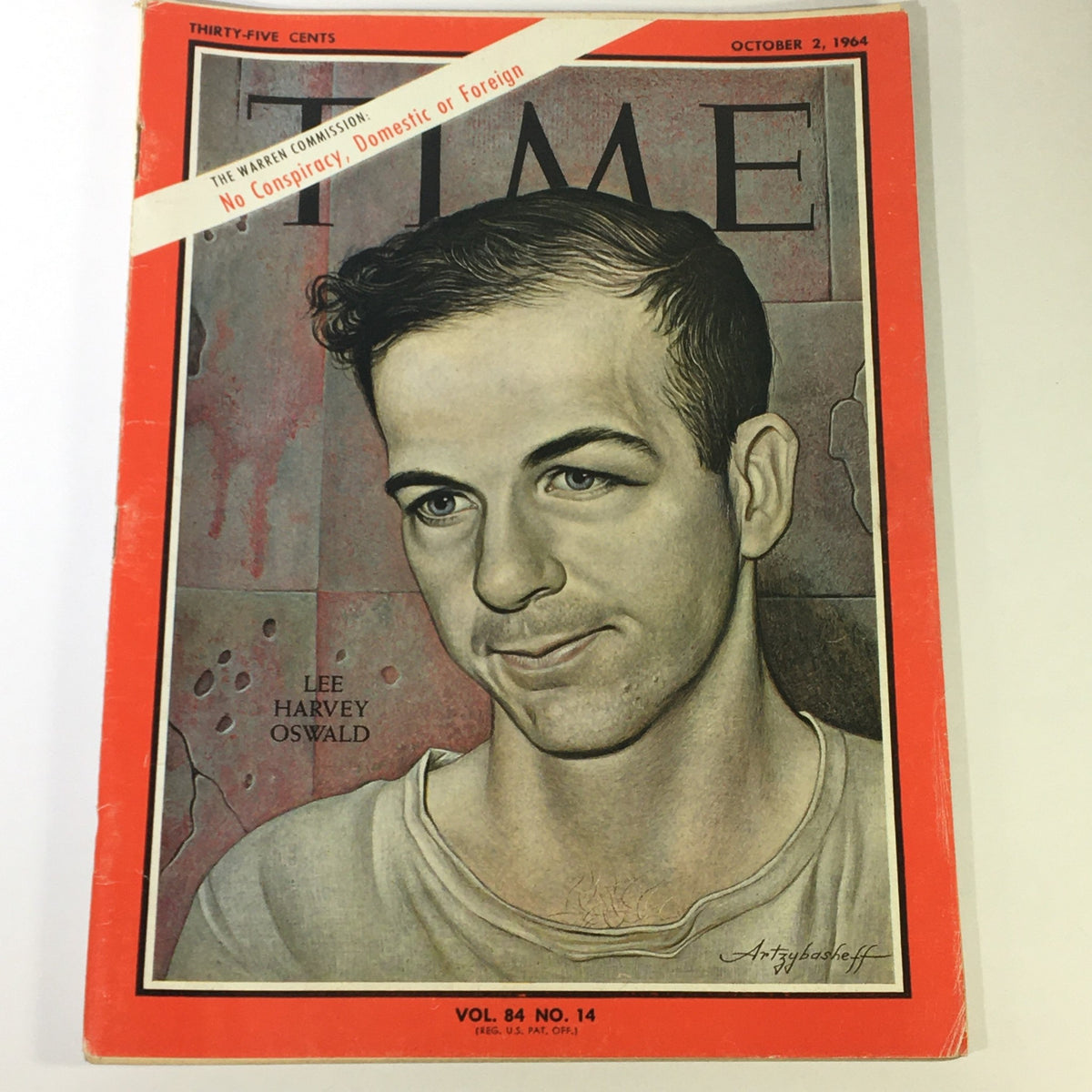
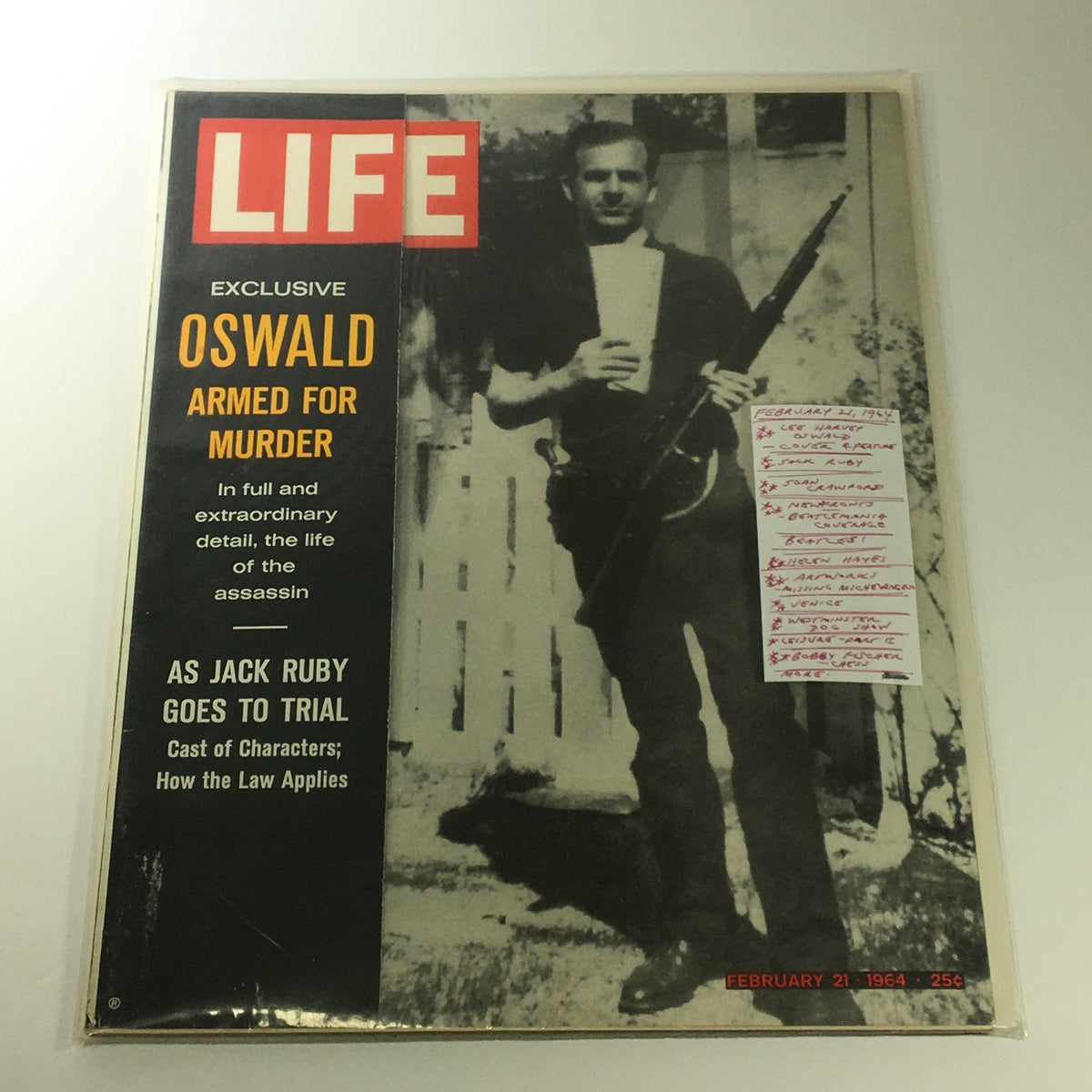
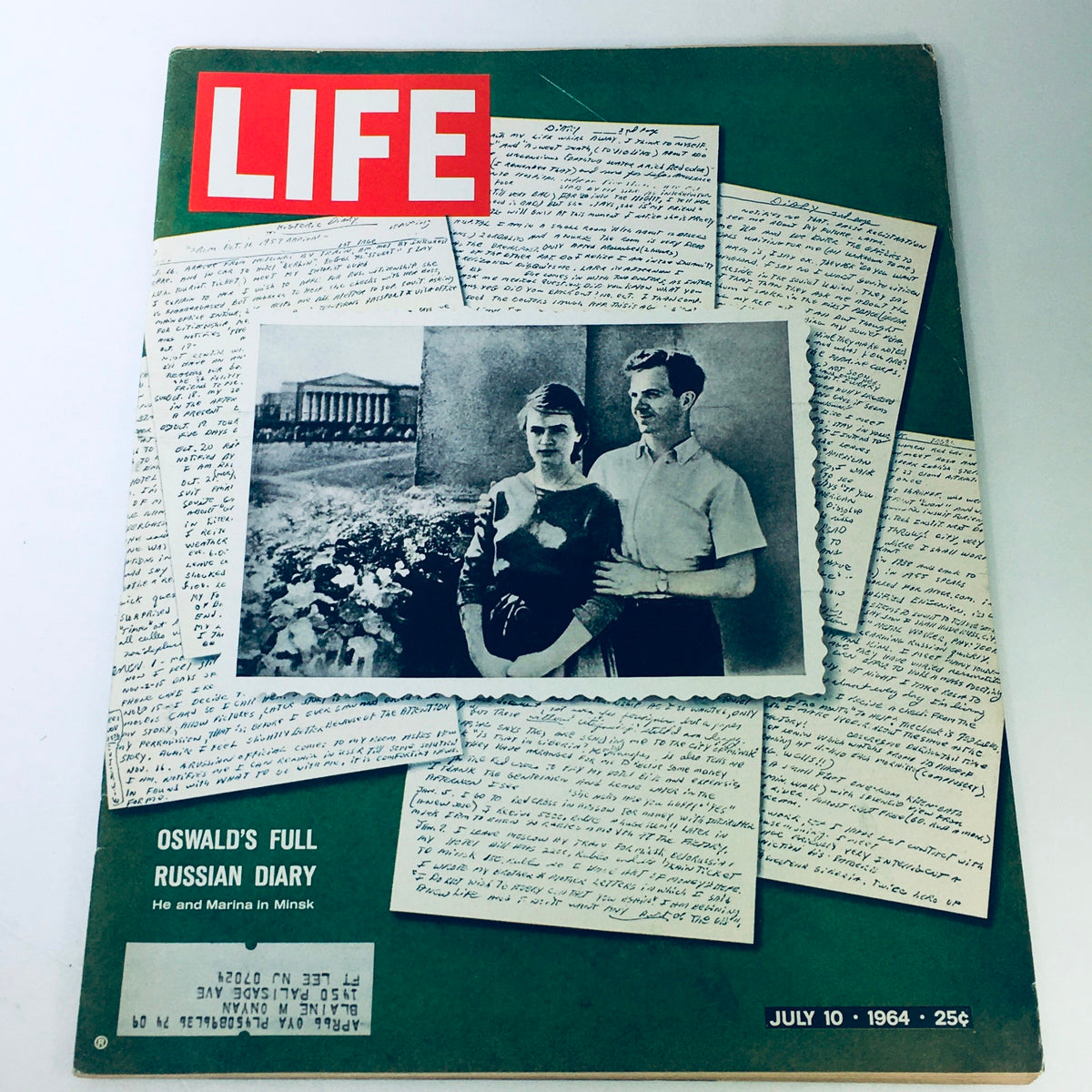
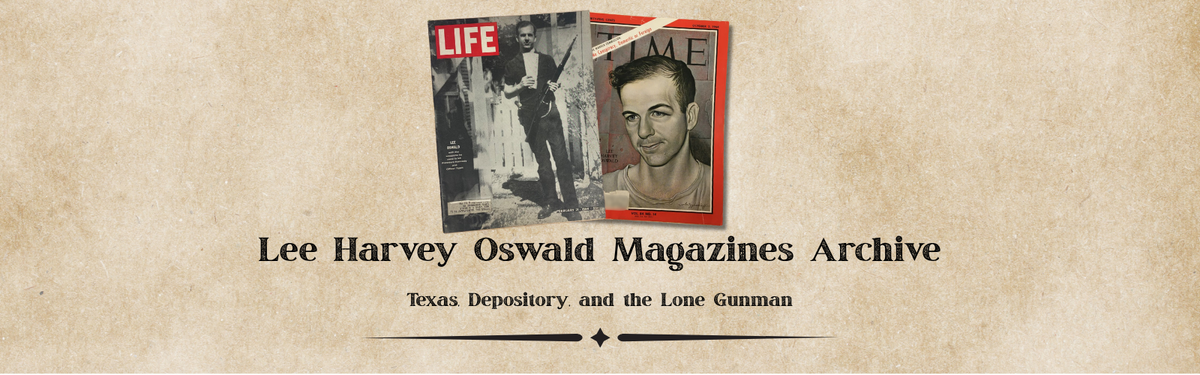
The photographic and editorial coverage of the assassination and its aftermath represents some of the most consequential journalism in the history of print media. Life magazine, perhaps more than any other publication, defined how America processed the tragedy — its November 29, 1963 commemorative issue and its subsequent coverage of the Warren Commission hearings became cultural artifacts in their own right, blending solemn portraiture with unflinching documentary photography. Time magazine transformed the accused assassin into a face the world memorized, its cover treatments cold, clinical, and deeply unsettling. Internationally, publications such as Paris Match brought the story to European audiences with a cinematic gravity, pairing sweeping photographic essays with the kind of long-form narrative journalism that made the tragedy feel both intimate and monumental. Beyond the mainstream, investigative and political journals of the mid-to-late 1960s and into the 1970s returned obsessively to the questions Oswald's death left unanswered — conspiracy, cover-up, and the machinery of a government under scrutiny. The editorial tone across these publications shifts fascinatingly over the decades: shock and mourning in 1963, institutional deference through the mid-decade, and a rising, skeptical fury by the time the House Select Committee on Assassinations reopened the case in the late 1970s.
Curator's Checklist: Highlights Often Include
- Assassination commemorative issues (1963): Immediate post-November 22nd coverage featuring breaking-news photography, early biographical profiles of Oswald, and the raw, unfiltered grief of a nation — among the most emotionally charged issues ever printed in American magazine history.
- Warren Commission era reporting (1964): Features analyzing the Commission's findings, presenting the "lone gunman" conclusion alongside the first seeds of public doubt, often illustrated with courtroom sketches, evidence photographs, and timeline diagrams.
- JFK assassination anniversary retrospectives: Annual and milestone commemorative issues — particularly the 5th, 10th, 25th, and 50th anniversaries — in which Oswald's role, motives, and legacy were re-examined through the lens of evolving historical scholarship.
- Conspiracy and Cold War political coverage (late 1960s–1970s): Publications from the era of Watergate and institutional distrust, in which investigative features explored Oswald's Soviet defection, his pro-Castro activities, and the CIA's surveillance file on him — coverage that reads today as both prescient and haunting.
- International press coverage: Foreign editions and overseas publications offering a striking non-American perspective on the assassination, Oswald's biography, and what his existence suggested about Cold War America from the outside looking in.
The Collector's Value
To hold one of these magazines in your hands is to hold a document of civilizational shock. The slightly coarse, heavy stock of a 1963 Life issue; the faint, sweet-acidic smell of ink and aged paper that no digital archive can replicate; the surrounding advertisements for Chevrolets and cigarettes and household appliances that serve as a quiet, devastating reminder of the ordinary world that existed just before everything changed — these details are not incidental. They are the entire point. A screen can show you the image. Only the original print can make you feel the era. For collectors of Cold War history, presidential assassination ephemera, or mid-century American journalism, these publications offer an irreplaceable primary source — a direct, tactile connection to one of the most consequential and contested moments of the 20th century, curated for those who understand that some history is too important to exist only as a pixel. Explore our current available inventory below, and discover which pieces of this extraordinary, troubling chapter of history are waiting to find their next custodian.